
Insect · GBIF taxon 1938810
Apollo
Parnassius apolloAlso known as Apollo Butterfly, Mountain Apollo
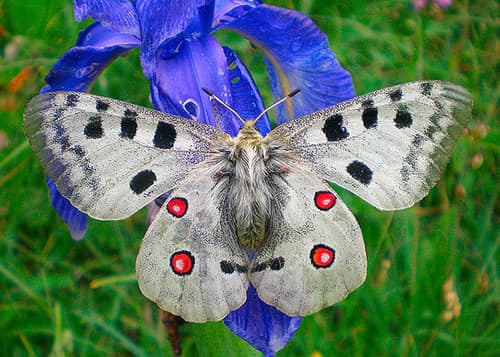
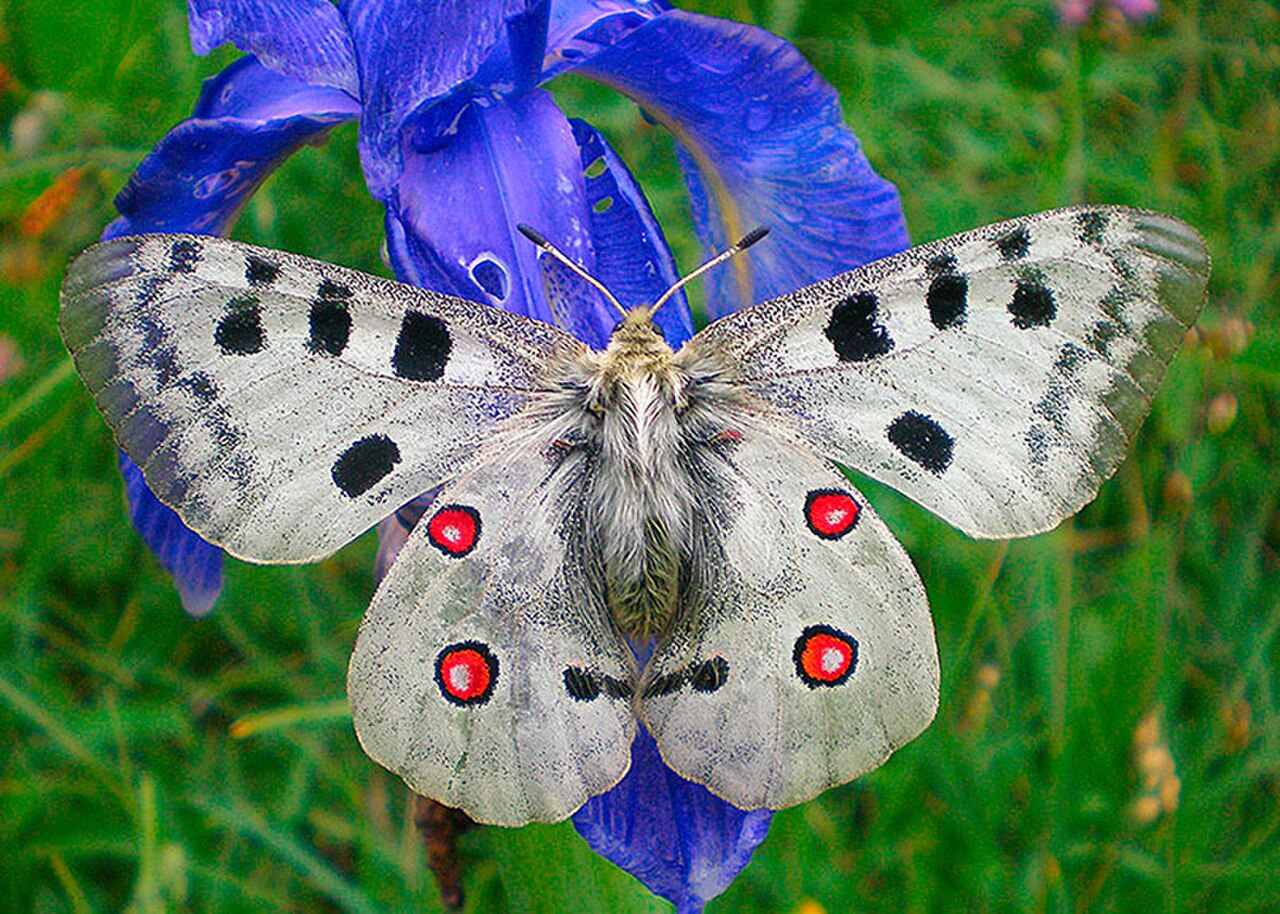
Apollo butterflies have large white, partly translucent wings marked with black spots and red-centered eyespots on the hindwings. They fly over sunny mountain slopes where caterpillars feed on stonecrops and adults visit open flowers.
mountain butterflyred eyespotsstonecrop specialist
—observations
—countries
—peak records
Least ConcernConservation statusIUCN Red List categoriesLCNTVUENCREWEXLeast ConcernRed List categories, explained →
Diet & prey
- Adults drink nectar; caterpillars feed mainly on stonecrops and related succulent hosts
Predators
- birds
- spiders
- predatory wasps
ThreatsClimate warming, habitat fragmentation, collecting, pesticide drift, and loss of open mountain habitat
HabitatsAlpine and subalpine meadows, rocky slopes, scree, open woodland, and limestone grassland
Life spanAdults live for several weeks; the species usually completes one generation per year
Size / weightNot available
Classification
- FamilyPapilionidae
- SpeciesParnassius apollo
Range data is not available yet.
Interaction riskLow
- Low
- Moderate
- High
- Very high
- Why interaction risk is low
- Do not net or collect adults, and avoid crushing low stonecrop host plants.
- What to notice
- Large translucent white wings with black marks and red-centered hindwing eyespots distinguish an adult from other mountain butterflies.
- Support conservation
- Never net, capture, or handle an Apollo, avoid trampling stonecrop hosts, and withhold precise locations of small colonies.
Responsible observation
- Identify: Look for translucent white wings with red-centered hindwing spots.
- Observe: Wait beside flowers rather than chasing a low, drifting butterfly.
Help improve the field guideSomething wrong?
Checking your Fauna account…Report a name, category, or profile issue for review.