
Insect · GBIF taxon 1938446
Clodius Parnassian
Parnassius clodiusAlso known as Clodius Apollo
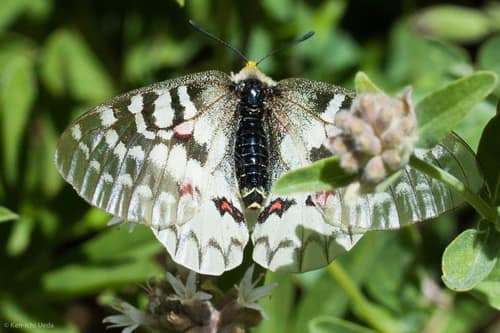
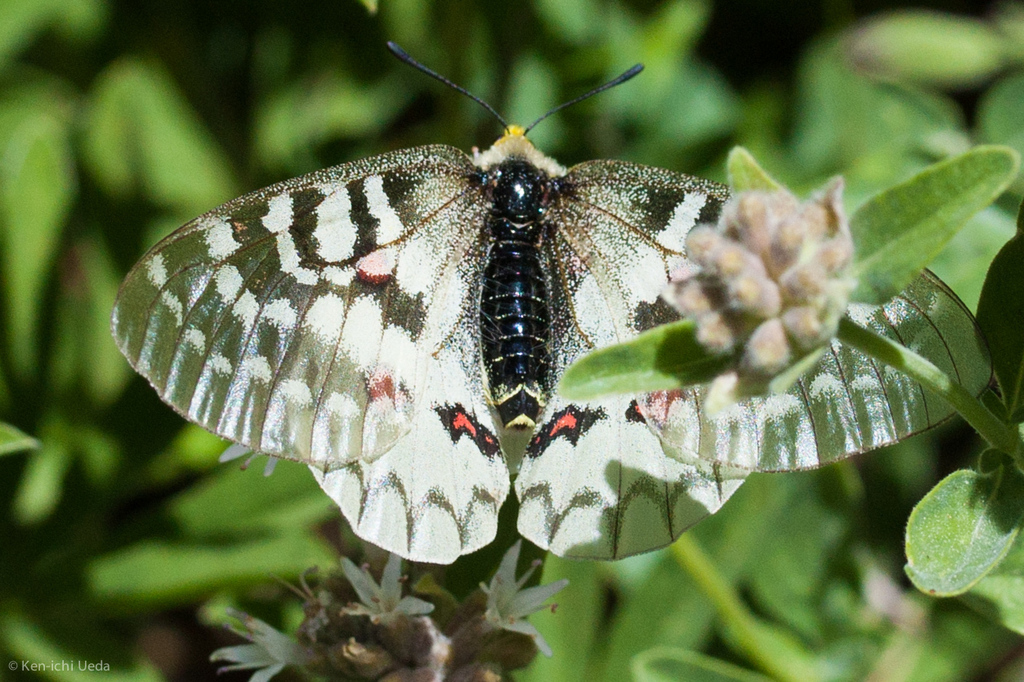
The Clodius Parnassian is a montane butterfly with translucent cream-white wings, dark veins and patches, and red or orange spots on the hindwings. Adults fly slowly over sunny meadows, while caterpillars feed mainly on bleeding-heart relatives.
Montane ButterflyTranslucent WingsBleeding-heart Specialist
—observations
—countries
—peak records
Not EvaluatedConservation statusIUCN Red List categoriesLCNTVUENCREWEXNot Evaluated — not placed on the risk ladderRed List categories, explained →
Diet & prey
- Adults drink flower nectar, while caterpillars eat foliage of bleeding-hearts and related fumitory plants
Predators
- Insect-eating birds
- Crab spiders
- Parasitoid wasps
ThreatsClimate-driven habitat shifts, meadow development, pesticide exposure, host-plant loss, and collecting
HabitatsMontane and subalpine meadows, open forest, moist slopes, avalanche tracks, and sunny stream corridors
Life spanOne generation generally takes a year, while the winged adult stage lasts only a few weeks
Size / weightNot available
Classification
- FamilyPapilionidae
- SpeciesParnassius clodius
Range data is not available yet.
Interaction riskLow
- Low
- Moderate
- High
- Very high
- Why interaction risk is low
- Observe without netting or handling because wing scales and delicate meadow vegetation are easily damaged.
Responsible observation
- Wings: Note the translucent pale ground color, dark markings, and red hindwing spots.
- Weather: Search open flower fields during warm, calm, sunny conditions.
- Habitat: Stay on durable routes and leave butterflies and host plants untouched.
Help improve the field guideSomething wrong?
Checking your Fauna account…Report a name, category, or profile issue for review.