
Insect
Postman
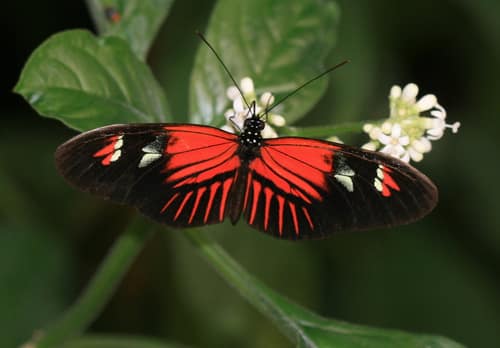
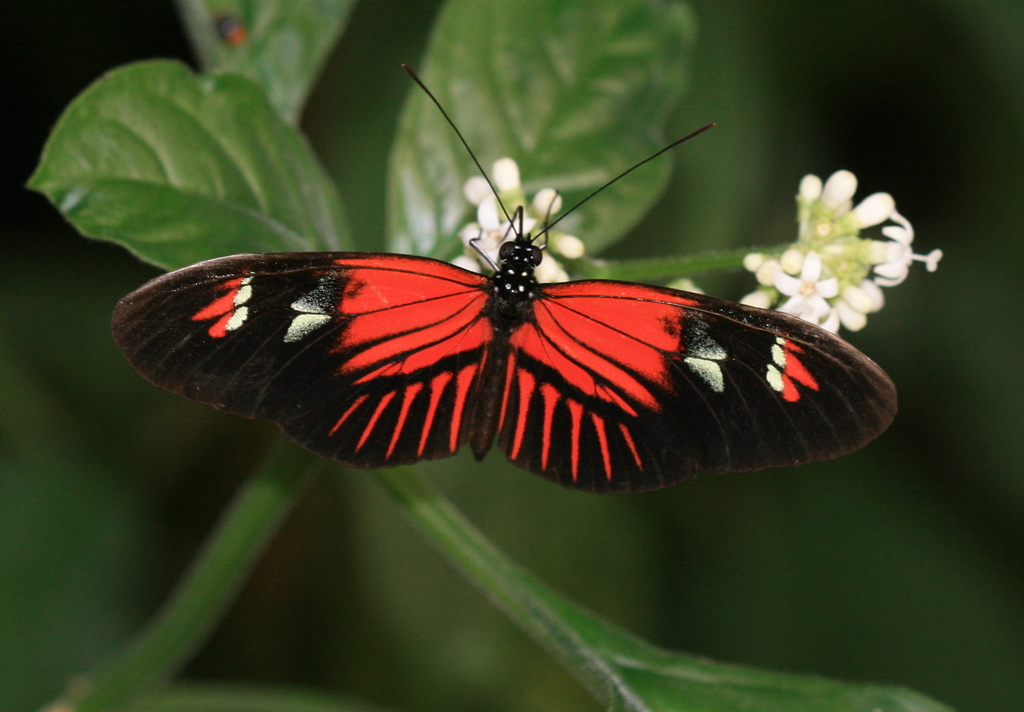
Heliconius melpomeneAlso known as Postman Butterfly, Common Postman
Postman butterflies glide lazily through sunlit forest understories, flaunting vivid crimson patches on velvety black wings to warn birds of internal cyanogenic toxins. Uniquely among most butterflies, adults actively collect and digest pollen grains alongside nectar, absorbing amino acids that grant them exceptionally long lifespans of up to nine months. At dusk, individuals gather in small communal roosts on low twigs, returning faithfully to the exact same perch night after night.
PollinatorColorfulTropical
—observations
—countries
—peak records
Least ConcernConservation statusIUCN Red List categoriesLCNTVUENCREWEXLeast ConcernRed List categories, explained →
Diet & preyPassionflower foliage, Psiguria pollen and nectar, Lantana nectar
Predators
- Rufous-tailed Jacamar
- Praying Mantis
- Orb-weaver Spider
ThreatsDeforestation, habitat fragmentation, and agricultural pesticide drift.
HabitatsTropical rainforests, forest edges, second-growth woodlands, and riverbanks.
Life spanUp to 6–9 months as adults
Classification
- OrderLepidoptera
- FamilyNymphalidae
- GenusHeliconius
- SpeciesHeliconius melpomene
Range data is not available yet.
Interaction riskLow
- Low
- Moderate
- High
- Very high
- Why interaction risk is low
- Safe to observe at a normal distance.
Responsible observation
- Morning observation: Watch for adults visiting bright orange and red flowers during early morning hours to feed on nectar and pollen.
- Nocturnal roosts: Look closely under low hanging vines near dusk to locate quiet communal sleeping clusters.
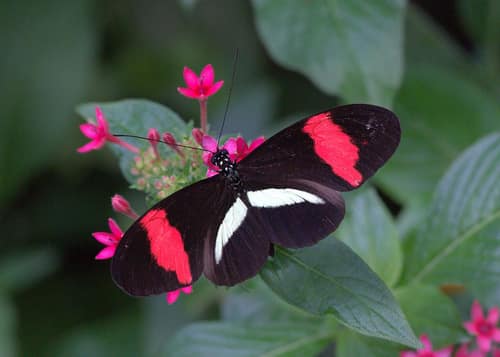
Mimic Greg Hume / CC BY-SA 3.0 · cc-by-sa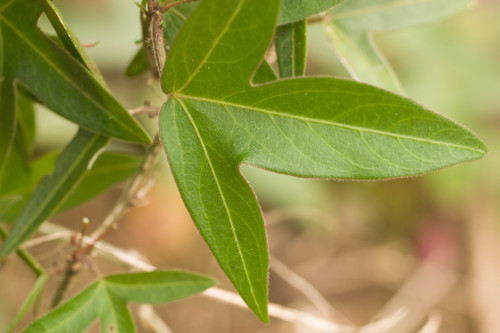
Host Plant (c) Kevin Faccenda, some rights reserved (CC BY) · cc-by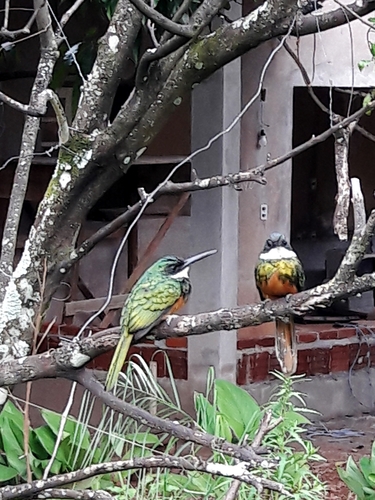
Predator (c) Douglas, some rights reserved (CC BY) · cc-by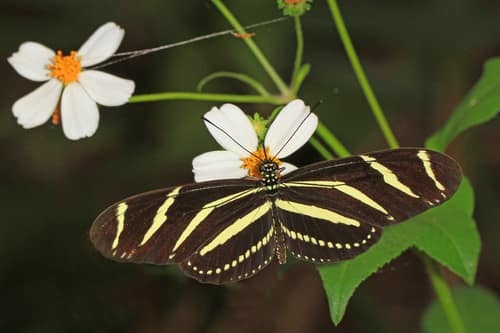
Close Relative (c) Judy Gallagher, some rights reserved (CC BY) · cc-by
Keep collecting in Fauna
Found in Collections
Ecosystem chain Pro
Mystic Meadows
Postman is found in this collection. Identify it in Fauna to fill this slot and continue your progress.
Unlock to track progress
Help improve the field guideSomething wrong?
Checking your Fauna account…Report a name, category, or profile issue for review.