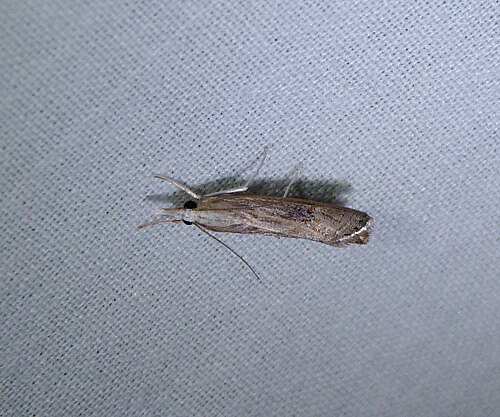
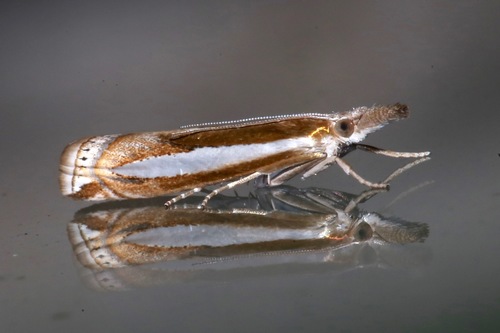
Sod Webworm Moth
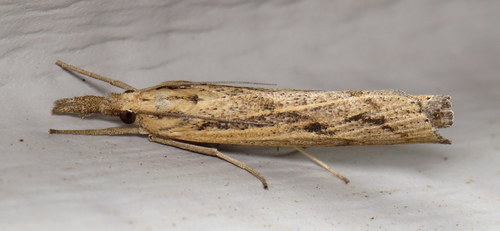
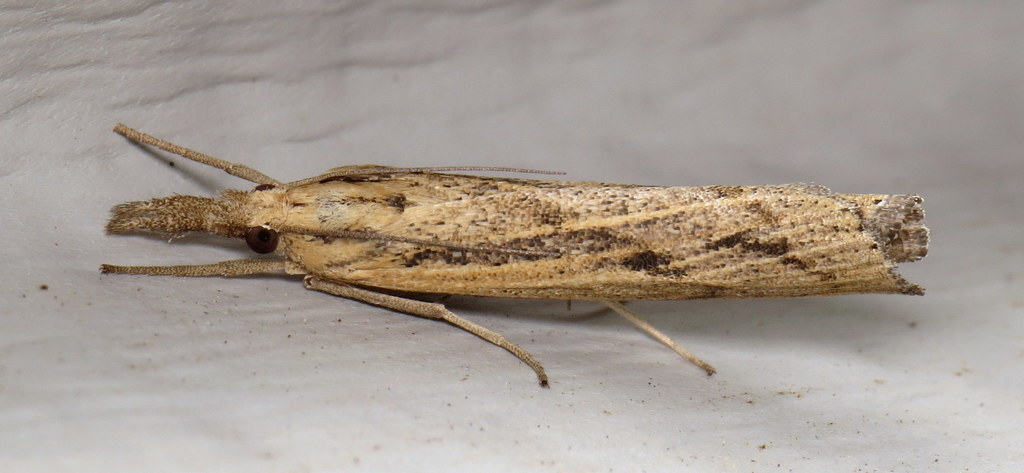
Pediasia trisectaAlso known as Large Sod Webworm, Greater Sod Webworm
Sod webworm moths rest head-down along grass stems during daylight, tightly rolling their pale tan wings around their bodies to blend seamlessly into dry thatch. At dusk, females fly low across lawns and pastures to scatter hundreds of eggs onto the turf, where hatching larvae build silk-lined subterranean burrows and graze on grass blades near the crown. While heavy larval feeding can leave unsightly brown patches in domestic lawns, the fluttering adults provide an abundant food source for insectivorous birds, bats, and predatory beetles.

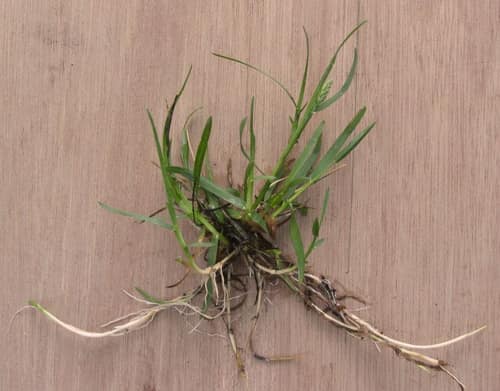
1 / 7- Kentucky Bluegrass
- Fine Fescue
- Flower Nectar
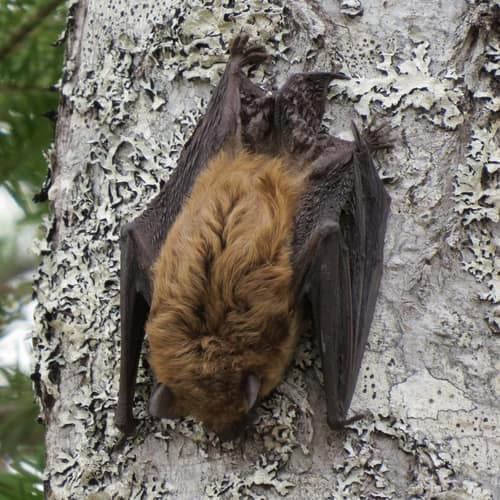
- Big Brown Bat
- American Robin
- Ground Beetle
- OrderLepidoptera
- FamilyCrambidae
- GenusPediasia
- SpeciesPediasia trisecta
- Low
- Moderate
- High
- Very high
- Why interaction risk is low
- Safe to observe at a normal distance.
- Flushing moths: Walk through unmown turf on late summer afternoons to watch them flutter short zig-zag flights before dropping back down.
- Night observation: Attract adult moths for close study by setting up a blacklight or illuminated white sheet near a lawn edge.
- Identifying damage: Part dead brown patches in turfgrass to look for silk-lined tubes containing caterpillars and green frass pellets.
Found in Collections
Moonlight Marvels
Sod Webworm Moth is found in this collection. Identify it in Fauna to fill this slot and continue your progress.
Report a name, category, or profile issue for review.