
Insect · GBIF taxon 1887122
Celery Leaftier Moth
Udea rubigalisAlso known as Greenhouse Leaftier
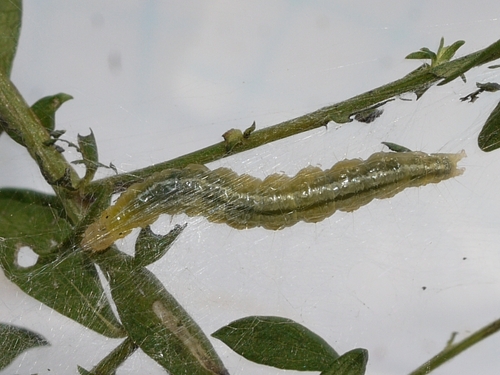
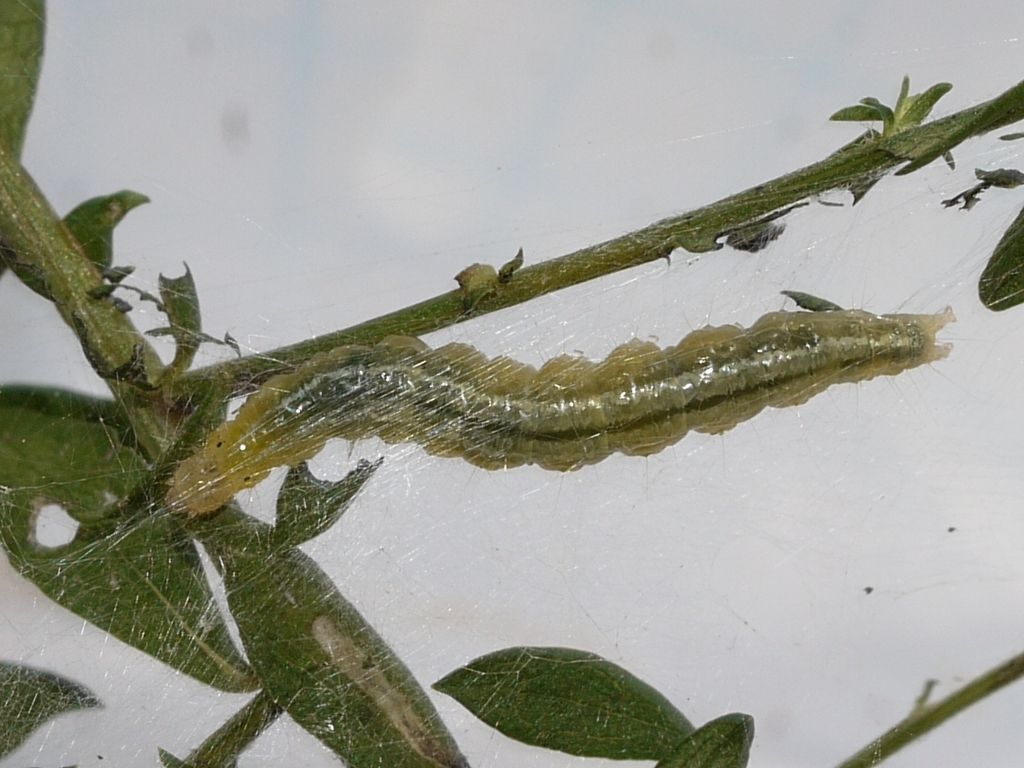
Celery leaftier moths are subtle yellowish-brown crambids easily recognized at rest by their neat triangular profile and tan forewings marked with dark wavy lines. Larvae earn their common name by binding leaves of host plants together with fine silk strands, creating sheltered feeding nests inside the foliage. Widespread across North and South America, these adaptable insects thrive in crop fields, vegetable gardens, and climate-controlled greenhouses.
Crambid MothAgricultural InsectAmericas
—observations
—countries
—peak records
Not EvaluatedConservation statusIUCN Red List categoriesLCNTVUENCREWEXNot Evaluated — not placed on the risk ladderRed List categories, explained →
Diet & prey
- Celery Foliage
- Spinach Leaves
- Beet Leaves
Predators
- Insectivorous Birds
- Spiders
- Parasitoid Wasps
ThreatsInsecticide application and intensive agricultural tillage
HabitatsAgricultural fields, greenhouses, home gardens, meadows, and suburban yards
Life span1–2 months total; adults live 2–3 weeks
Classification
- OrderLepidoptera
- FamilyCrambidae
- GenusUdea
- SpeciesUdea rubigalis
Range data is not available yet.
Interaction riskLow
- Low
- Moderate
- High
- Very high
- Why interaction risk is low
- Safe to observe at a normal distance.
Responsible observation
- Nighttime Spotting: Check outdoor porch lights or white sheets illuminated with ultraviolet light after dark.
- Foliage Inspection: Look for rolled or silk-bound leaves on garden crops to spot active larvae.
- Delicate Handling: Avoid touching the wings directly, as gentle contact removes fragile scales.
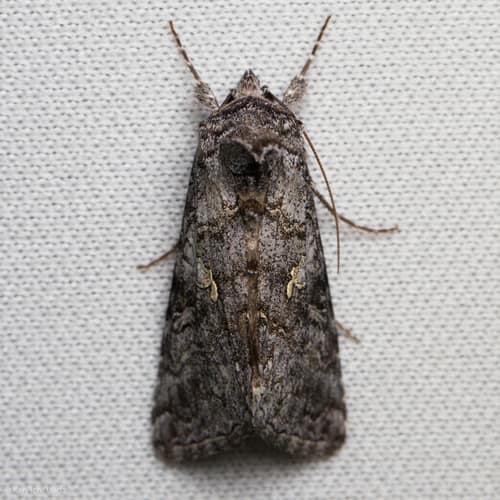
Competitor (c) Ken-ichi Ueda, some rights reserved (CC BY), uploaded by Ken-ichi Ueda · cc-by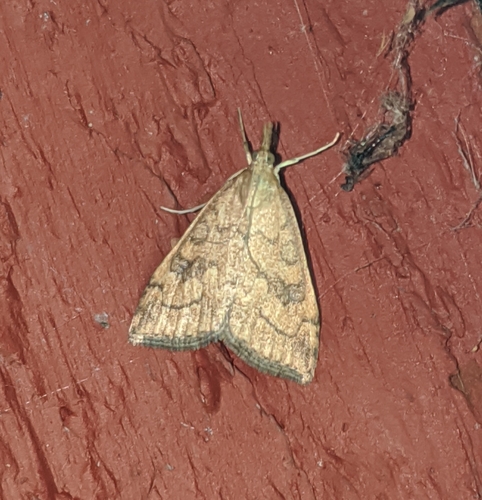
Close Relative no rights reserved, uploaded by Ben Keen · cc0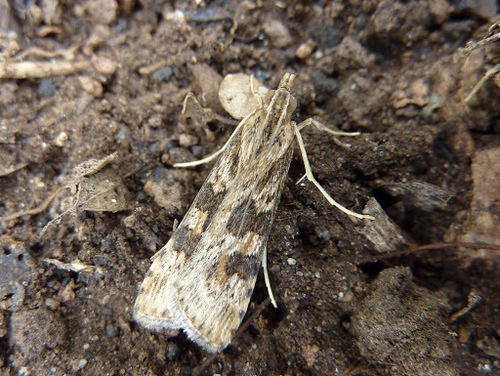
Family Member (c) 116916927065934112165, some rights reserved (CC BY), uploaded by 116916927065934112165 · cc-by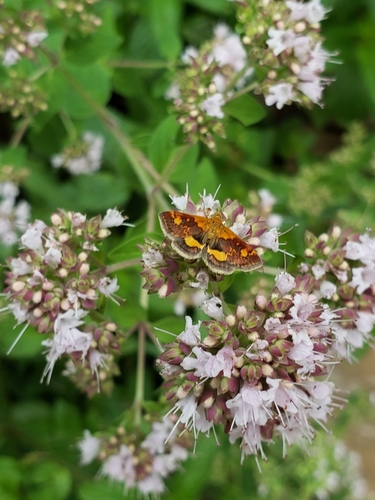
Family Relative (c) Andy Deans, some rights reserved (CC BY) · cc-by
Keep collecting in Fauna
Found in Collections
Species set
Moonlight Marvels
Celery Leaftier Moth is found in this collection. Identify it in Fauna to fill this slot and continue your progress.
—/7
Help improve the field guideSomething wrong?
Checking your Fauna account…Report a name, category, or profile issue for review.