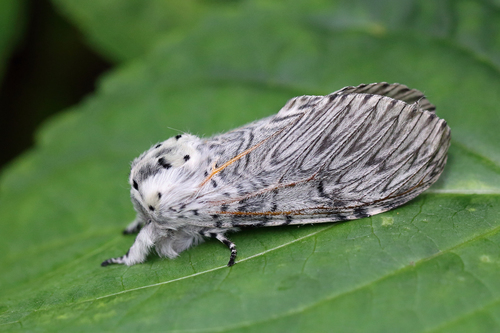
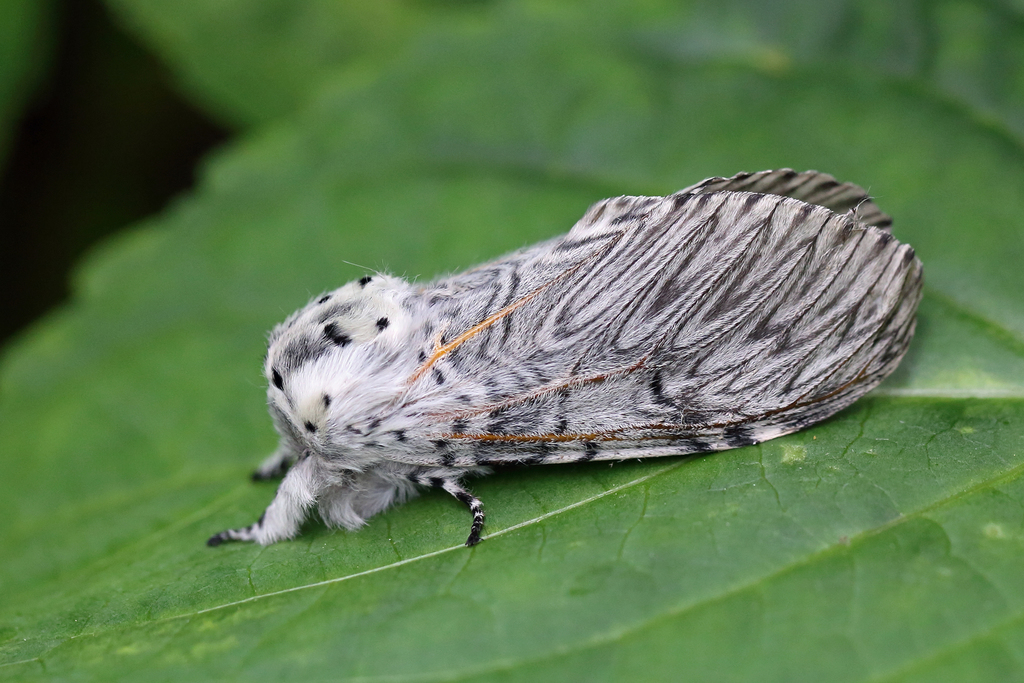
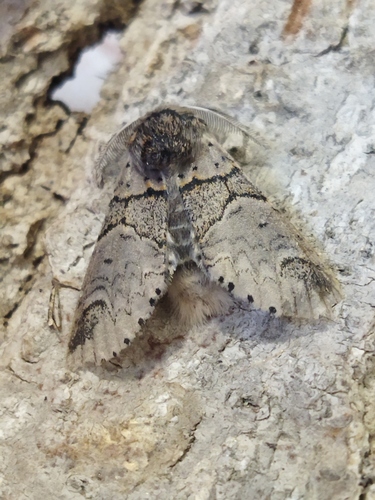
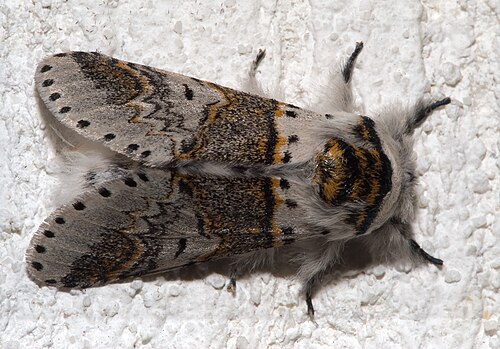
Adult puss moths are heavily furred, pale grey insects whose dense white down and marbling evoke the coat of a cat. The caterpillar is renowned for its theatrical defense display, rearing up to reveal an intimidating red-rimmed false face while lashing two bright red tail-whips. When persistently provoked, the larva can spray an accurate jet of formic acid from a gland beneath its head to deter predators.
ThreatsHabitat loss, hedgerow removal, pesticide use, and light pollution
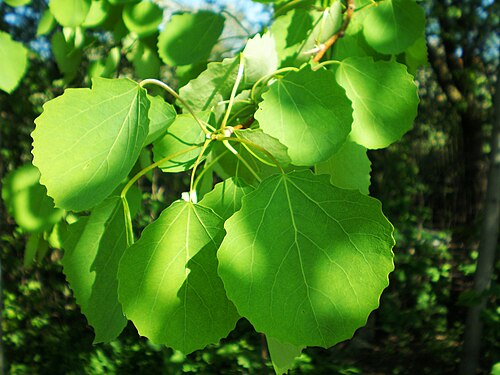
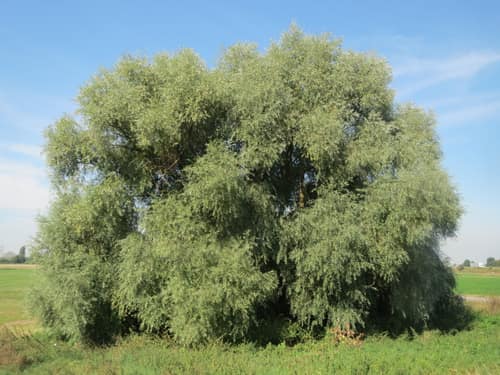
HabitatsDeciduous woodlands, riverbanks, damp meadows, hedgerows, and gardens
Life span1 year (adults live 1 to 2 weeks)
Classification
FamilyNotodontidae
SpeciesCerura vinula
Range & activity
Range data is not available yet.
Safe observation
Interaction riskLow
Low
Moderate
High
Very high
Why interaction risk is low
Larvae can squirt irritating formic acid toward eyes and skin if handled; observe without touching.
Why it is dangerous
Threatened caterpillars eject concentrated formic acid from a slit beneath the head, which causes painful burning and inflammation on contact with sensitive skin or eyes.
How to recognize a risky encounter
Look for a bright green caterpillar with a purplish-brown saddle, two tail whips, and a rounded red face ring bearing two dark false eyes.
What to do
Do not poke, handle, or lean closely over the caterpillar, giving it space to resume feeding calmly.
Responsible observation
Viewing distance: Keep back from defensive larvae to avoid irritating chemical sprays directed at the face.
Cocoon searching: Look on lower tree bark in winter for rock-hard cocoons reinforced with chewed wood.
Night spotting: Check external lights or set a moth trap near damp woodland margins during early summer.