
Hickory Tussock Moth
Lophocampa caryaeAlso known as Hickory Tiger Moth, Hickory Halisidota
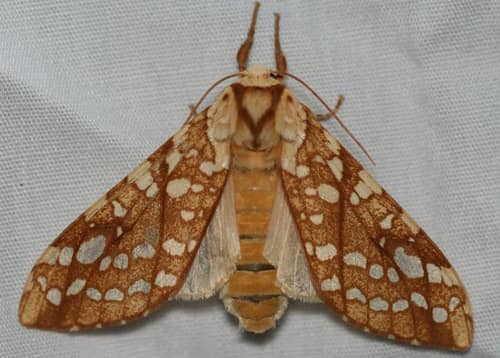
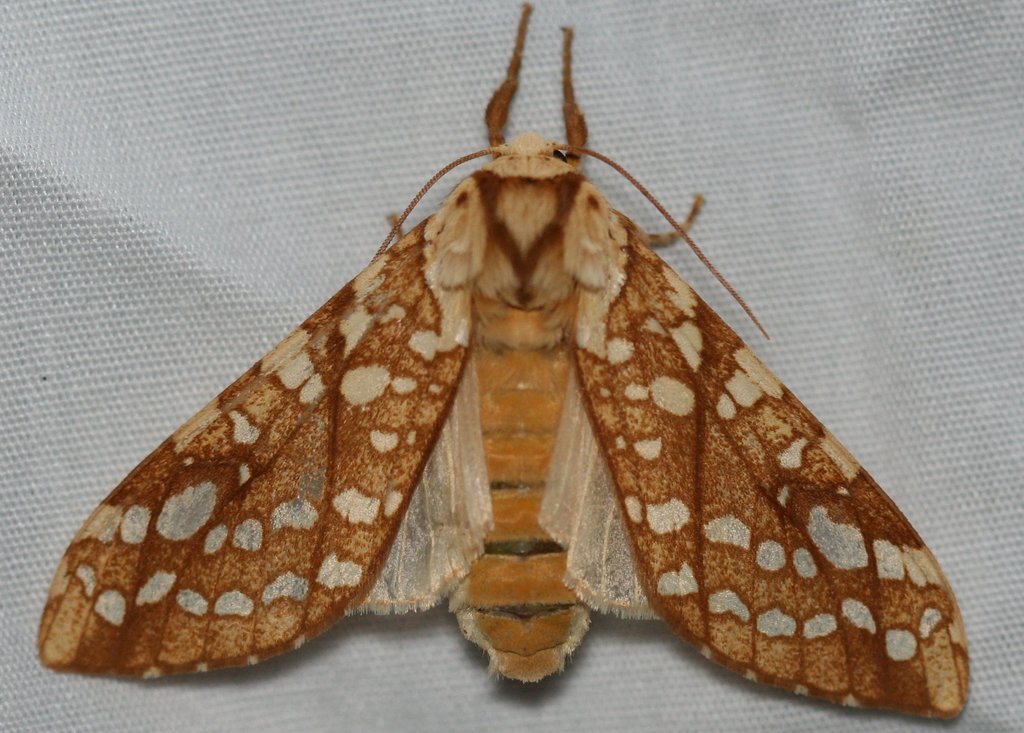
Hickory tussock moth caterpillars are conspicuous late-summer feeders, covered in dense white and black hair tufts with two pairs of long black sensory pencils near the head and tail. While adult moths are cryptically patterned in warm yellowish brown and silvery cream, the fuzzy larvae are famous for microscopic barbed setae that cause contact dermatitis in sensitive skin. Females lay clusters of eggs on the undersides of hardwood leaves, where early-instar caterpillars feed communally before dispersing across the forest canopy.
- Hickory Leaves
- Walnut Leaves
- Ash Leaves
- Cuckoos
- Parasitoid Wasps
- Lacewings
- OrderLepidoptera
- FamilyErebidae
- GenusLophocampa
- SpeciesLophocampa caryae
- Low
- Moderate
- High
- Very high
- Why interaction risk is low
- Barbed caterpillar hairs cause contact dermatitis; observe without touching bare-handed.
- Why it is dangerous
- Microscopic barbed setae break off caterpillar bodies and lodge into skin, triggering localized rash and irritation.
- How to recognize a risky encounter
- Recognize caterpillars by their white fluffy bodies, black back line, and long black hair pencils at front and rear.
- What to do
- Observe without touching, and use adhesive tape to remove hairs from skin if accidental contact occurs.
- Observation: Look for fuzzy white caterpillars feeding on hardwood leaves from July through October.
- Handling: Do not pick up larvae with bare hands, as barbed hairs embed easily in skin.
- Yard Care: Leave fallen leaf litter around trees to protect overwintering cocoons.
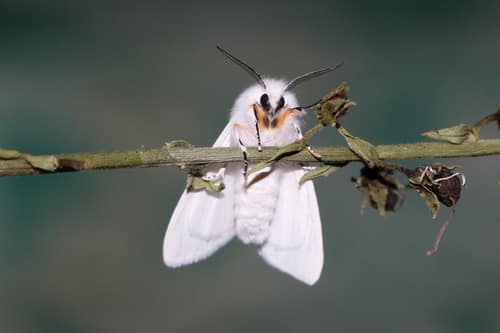
Competitor no rights reserved, uploaded by Liubov Ilminska · cc0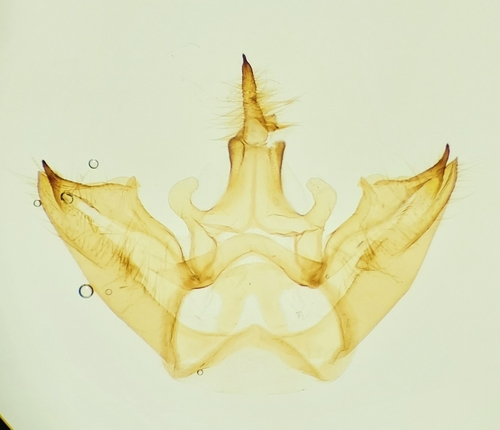
Close Relative (c) Laura Gaudette, some rights reserved (CC BY), uploaded by Laura Gaudette · cc-by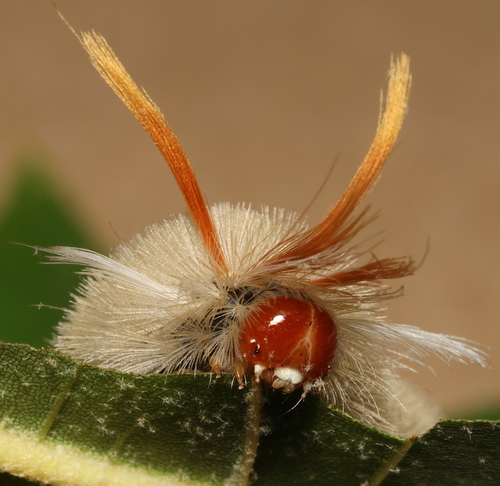
Close Relative (c) David George, some rights reserved (CC BY), uploaded by David George · cc-by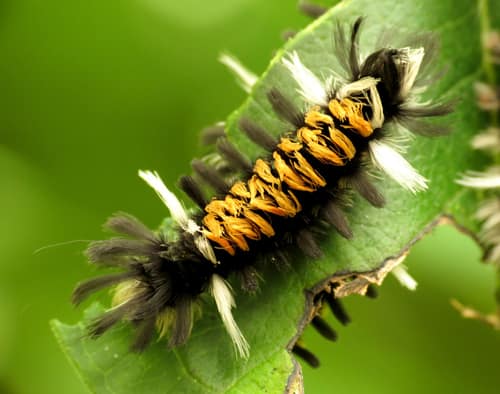
Close Relative (c) Katja Schulz, some rights reserved (CC BY) · cc-by
Found in Collections
Moonlight Marvels
Hickory Tussock Moth is found in this collection. Identify it in Fauna to fill this slot and continue your progress.
Report a name, category, or profile issue for review.