
Insect
Common Looper Moth
Autographa precationisAlso known as Precation Looper Moth
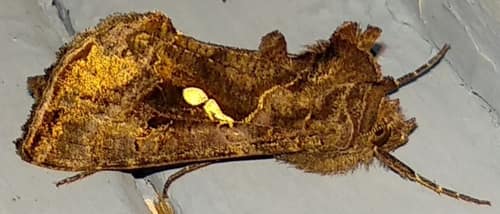
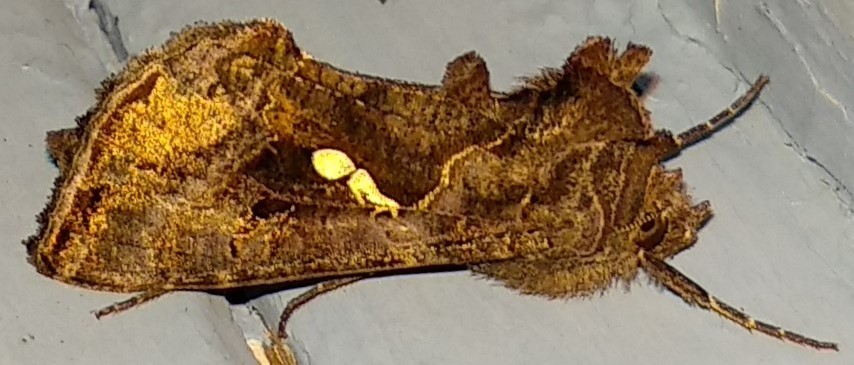
Tufted crests of scales give the thorax a prominent hunch, while mottled bronze and brown forewings feature a bright, metallic silver stigma shaped like a comma or prayer mark. Larvae are true loopers possessing only two pairs of abdominal prolegs, forcing them to arch their midsections in an undulating crawl across foliage. Multiple overlapping generations emerge between spring and autumn, hovering nimbly around nectar-rich flowers at twilight.
NocturnalMothPollinator
—observations
—countries
—peak records
Not EvaluatedConservation statusIUCN Red List categoriesLCNTVUENCREWEXNot Evaluated — not placed on the risk ladderRed List categories, explained →
Diet & preyFlower nectar, Asteraceae leaves, Brassicaceae leaves
Predators
- Bats
- Insectivorous birds
- Parasitoid wasps
ThreatsBroad-spectrum pesticides and artificial light pollution
HabitatsMeadows, agricultural fields, roadsides, and suburban gardens
Life span1 to 2 months from egg to adult
Classification
- OrderLepidoptera
- FamilyNoctuidae
- GenusAutographa
- SpeciesAutographa precationis
Range data is not available yet.
Interaction riskLow
- Low
- Moderate
- High
- Very high
- Why interaction risk is low
- Safe to observe at a normal distance.
Responsible observation
- Night Lighting: Hang a porch light over a white sheet on warm summer evenings to attract adults.
- Foliage Inspection: Check the undersides of garden weeds and crops for green caterpillars arching in loops.
- Dusk Flowers: Watch flowering composite plants at sunset to view adults hovering while feeding.
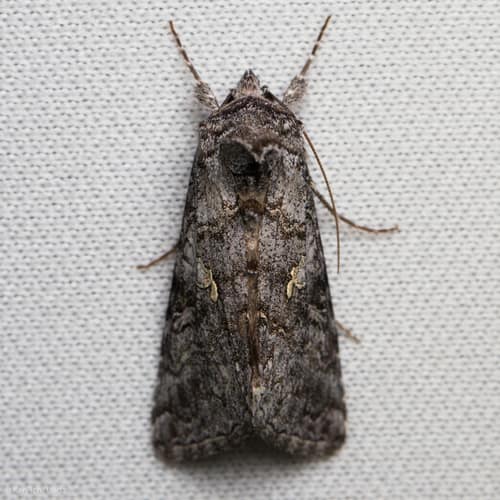
Close Relative (c) Ken-ichi Ueda, some rights reserved (CC BY), uploaded by Ken-ichi Ueda · cc-by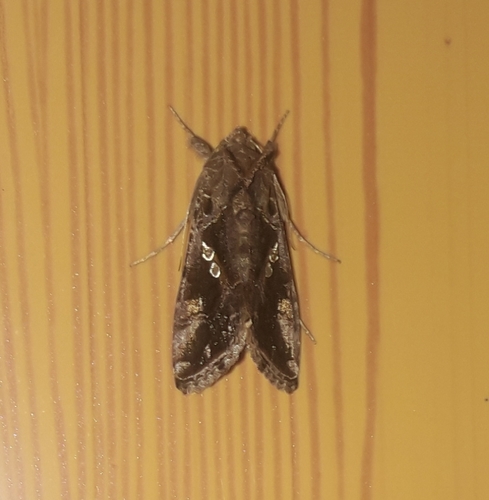
Close Relative (c) Arthur de Jesús Chavarría Pérez, some rights reserved (CC BY) · cc-by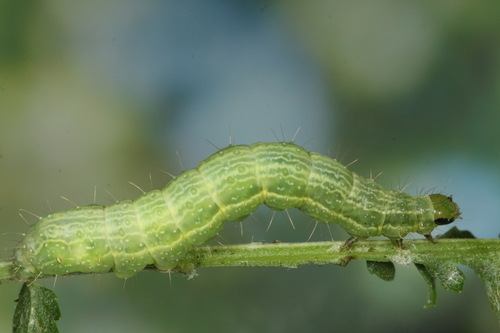
Close Relative (c) ingridaltmann, some rights reserved (CC BY) · cc-by
Keep collecting in Fauna
Found in Collections
Species set
Moonlight Marvels
Common Looper Moth is found in this collection. Identify it in Fauna to fill this slot and continue your progress.
—/7
Help improve the field guideSomething wrong?
Checking your Fauna account…Report a name, category, or profile issue for review.