
Insect · GBIF taxon 1725128
Little Barrier Giant Wētā
Deinacrida heteracanthaAlso known as Wētāpunga, Wetapunga, Little Barrier Island Giant Weta
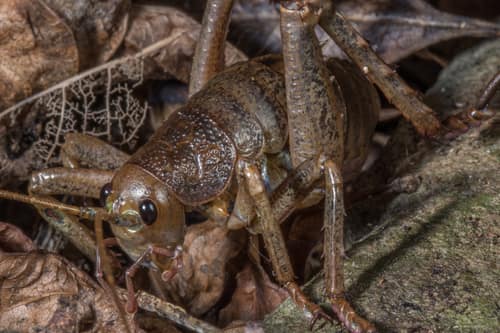
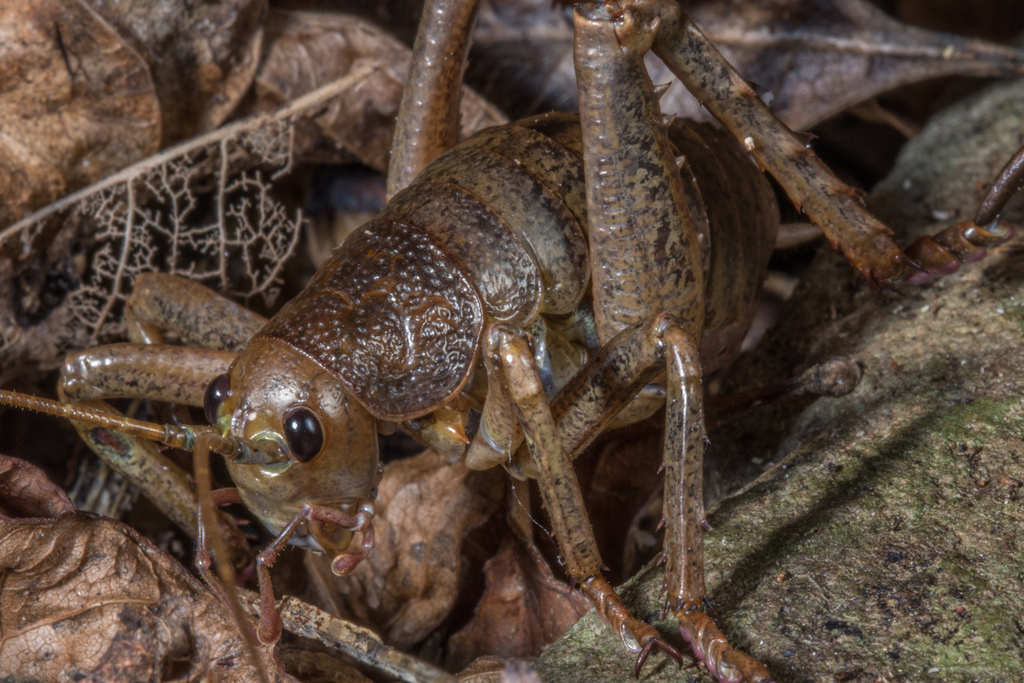
Wētāpunga are among the heaviest insects on Earth, filling an ecological role similar to small rodents in New Zealand forest ecosystems. Nocturnal and canopy-dwelling, adults emerge at night to browse on foliage, taking refuge during the day inside bark crevices and epiphyte clumps. Though once driven to near extinction by introduced predators, intensive conservation and island translocations are helping this ancient giant return to its historical range.
FlightlessNocturnalGiant Insect
—observations
—countries
—peak records
VulnerableConservation statusIUCN Red List categoriesLCNTVUENCREWEXVulnerableRed List categories, explained →
Diet & prey
- Broadleaf foliage
- Native fruits
- Fungi
Predators
- Polynesian rats
- Ship rats
- Moreporks
ThreatsIntroduced mammalian predators and habitat destruction
HabitatsLowland native forests and island sanctuaries
Life span2–3 years
Size / weightNot available
Classification
- FamilyAnostostomatidae
- SpeciesDeinacrida heteracantha
Range data is not available yet.
Interaction riskLow
- Low
- Moderate
- High
- Very high
- Why interaction risk is low
- May deliver a sharp pinch with strong jaws if cornered; observe from a polite distance.
- What to notice
- Recognizable as a massive, flightless brown insect with spiny hind legs and antennae longer than its body.
- Support conservation
- Observe quietly from a distance without touching or removing them from foliage, and report unmapped sightings to conservation managers.
Responsible observation
- Night Observations: Use a soft red flashlight beam while searching native canopy foliage after dark.
- Respectful Distances: Avoid touching or disturbing roosts in tree cavities or epiphyte clumps.
 Image unavailable
Close Relative 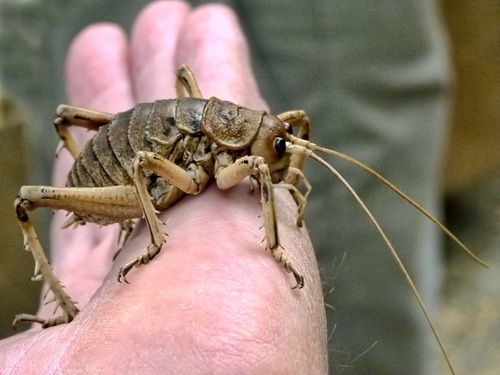
Close Relative (c) Sid Mosdell, some rights reserved (CC BY) · cc-by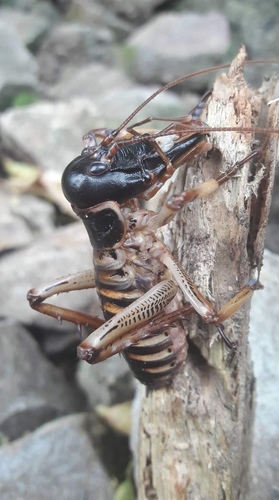
Distant Relative no rights reserved, uploaded by Jaco Grundling · cc0
Help improve the field guideSomething wrong?
Checking your Fauna account…Report a name, category, or profile issue for review.