
Insect
Migratory Locust
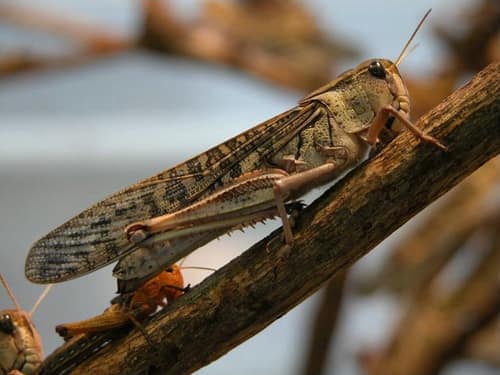
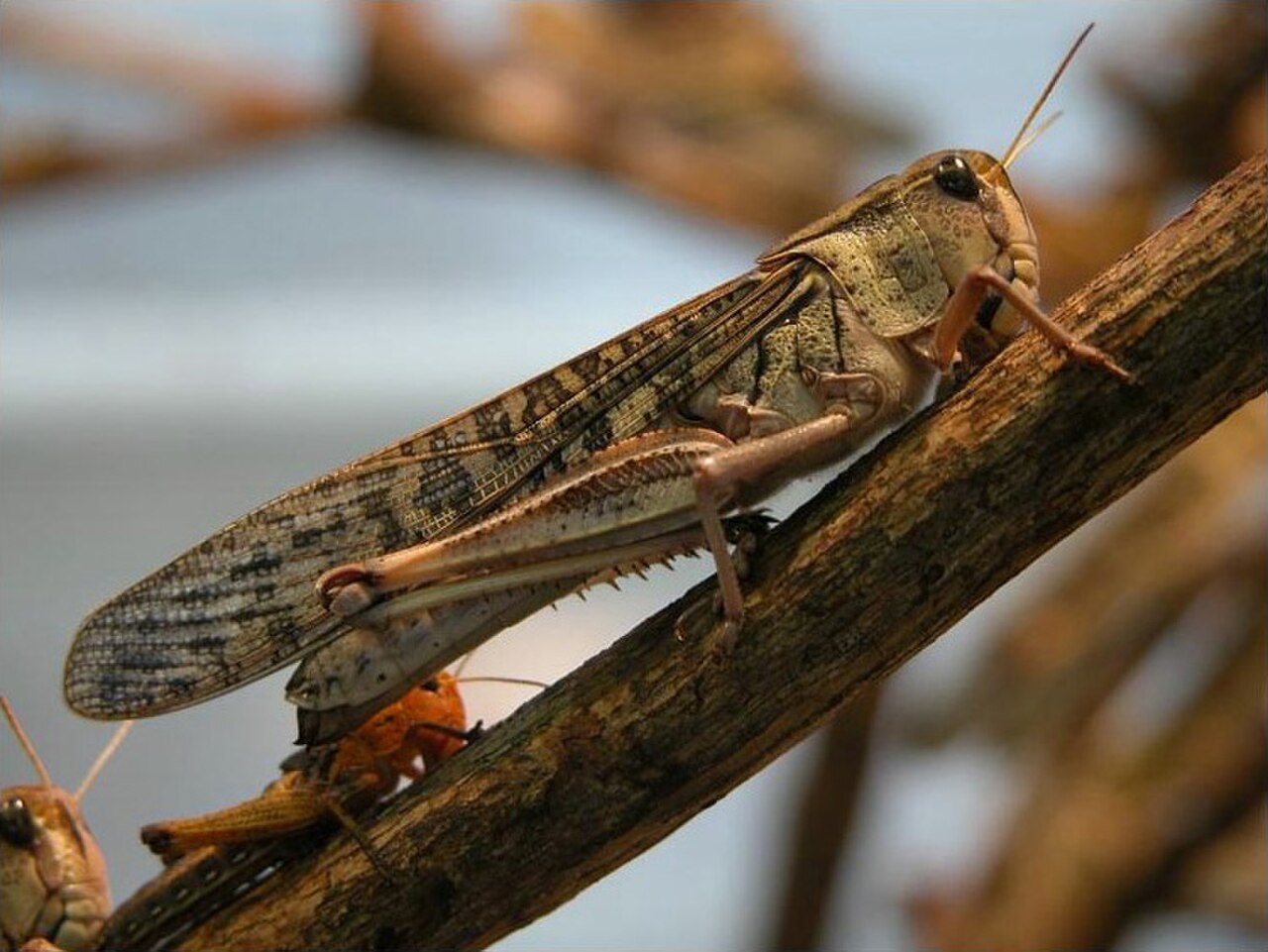
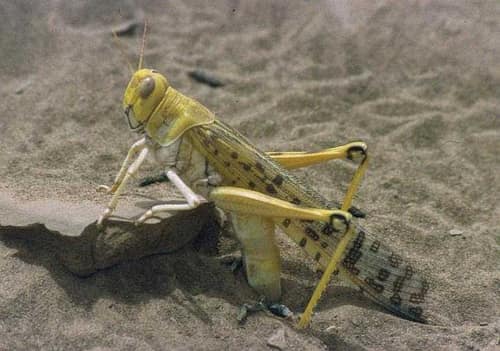
Locusta migratoriaMigratory locusts exhibit striking polyphenism, shifting between a solitary green phase and a social, gregarious brown or yellow phase triggered by crowding and tactile stimulation. When populations surge, gregarious nymphs march in coordinated bands before developing into vast flying swarms capable of covering hundreds of kilometers on prevailing winds. Though solitary individuals live unobtrusively in floodplains and grasslands, swarming aggregations can strip farmland and natural vegetation across vast landscapes.
HerbivoreSwarmingGrassland
—observations
—countries
—peak records
Least ConcernConservation statusIUCN Red List categoriesLCNTVUENCREWEXLeast ConcernRed List categories, explained →
Diet & preyPoaceae grasses, Cereal crops, Common reed foliage
Predators
- White Stork
- Common Kestrel
- Insectivorous bats
ThreatsTargeted chemical control, wetland drainage, and drought-induced population crashes
HabitatsRiver deltas, grasslands, reed beds, steppes, and agricultural fields
Life span3–5 months
Classification
- FamilyAcrididae
- SpeciesLocusta migratoria
Range data is not available yet.
Interaction riskLow
- Low
- Moderate
- High
- Very high
- Why interaction risk is low
- Safe to observe at a normal distance; harmless to humans despite agricultural impacts.
Responsible observation
- Observation Timing: Seek solitary adults in late summer within dense, low vegetation bordering wetlands or fields.
- Handling Precaution: Adults jump forcefully with spine-bearing hind legs, which can give a startling, scratchy kick.
- Phase Identification: Note whether specimens are solitary green or gregarious yellow-brown to assess local population density.
Same Family Christiaan Kooyman / Public domain · cc0
Same Family (c) Gilles San Martin, some rights reserved (CC BY-SA), uploaded by Gilles San Martin · cc-by-sa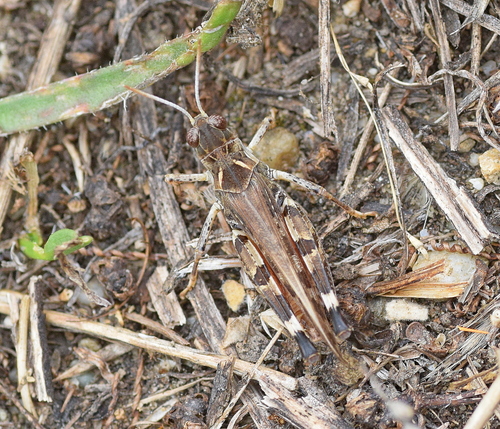
Same Family (c) Kostas Zontanos, some rights reserved (CC BY), uploaded by Kostas Zontanos · cc-by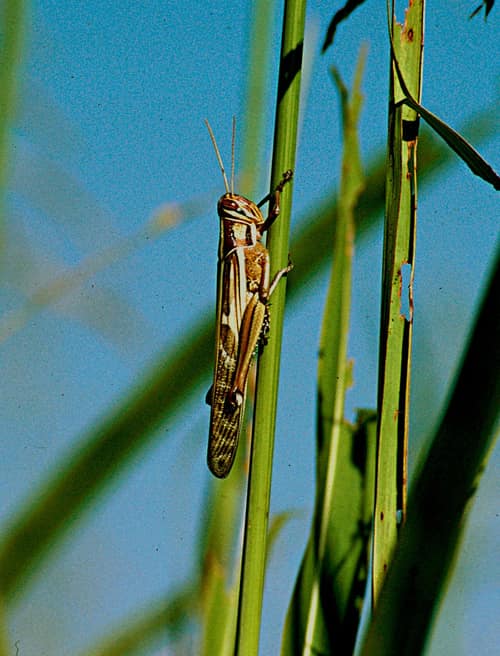
Same Family Christiaan Kooyman / Public domain · cc0
Help improve the field guideSomething wrong?
Checking your Fauna account…Report a name, category, or profile issue for review.