
Insect
Desert Locust
Schistocerca gregariaDesert locusts exhibit remarkable phase polymorphism, transforming from solitary green or brown grasshoppers into striking yellow, long-winged gregarious forms when crowding triggers serotonin release. Flying in vast swarms that can span hundreds of square kilometers, millions of individuals ride prevailing winds to invade new agricultural areas. Each adult consumes its own body weight in vegetation every day, making periodic plagues a catastrophic threat to regional food security.
MigratorySwarmingHerbivorous
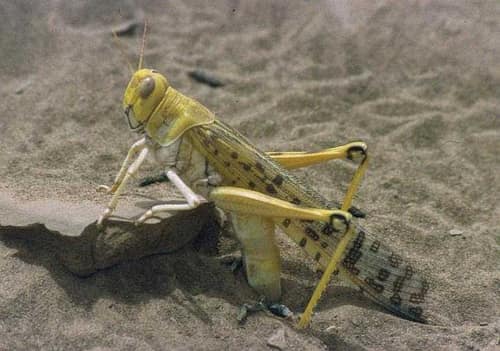

—observations
—countries
—peak records
Not EvaluatedConservation statusIUCN Red List categoriesLCNTVUENCREWEXNot Evaluated — not placed on the risk ladderRed List categories, explained →
Diet & preyCrop leaves, Wild grasses, Tree foliage
Predators
- Birds
- Lizards
- Spiders
ThreatsTargeted chemical and biological pest control programs
HabitatsArid regions, semi-desert scrub, croplands, grasslands
Life span3–5 months
Classification
- FamilyAcrididae
- SpeciesSchistocerca gregaria
Range data is not available yet.
Interaction riskLow
- Low
- Moderate
- High
- Very high
- Why interaction risk is low
- Safe to observe at a normal distance.
Responsible observation
- Observation: Look for solitary green forms on low shrubs or yellow swarming forms in outbreak years.
- Handling: Handle gently if captured, as the spiny rear legs can scratch bare skin.
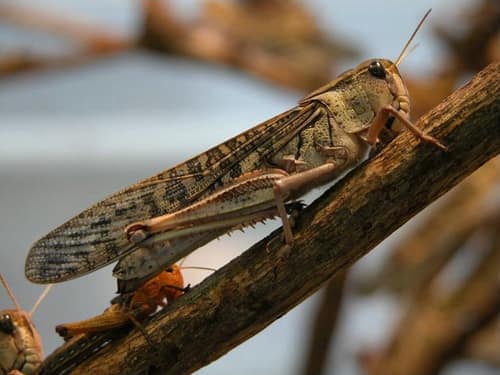
Swarming Relative Jonathan Hornung / CC BY-SA 2.0 de · cc-by-sa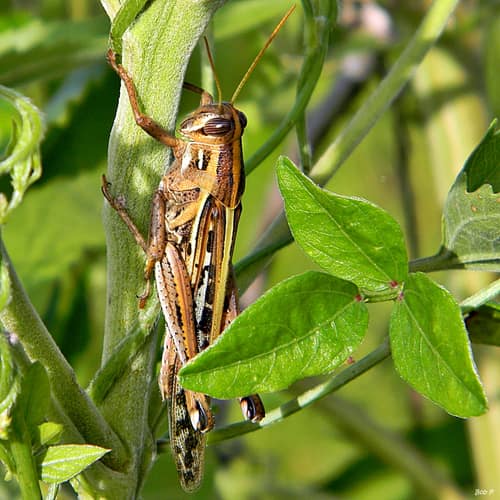
Close Relative Bob Peterson from North Palm Beach, Florida, Planet Earth! / CC BY-SA 2.0 · cc-by-sa Image unavailable
Close Relative
Help improve the field guideSomething wrong?
Checking your Fauna account…Report a name, category, or profile issue for review.