
Insect
Round-tipped Conehead
Neoconocephalus retususAlso known as Round-tipped Conehead Katydid
Round-tipped coneheads spend the warm late summer and autumn nights perched among tall grasses, where males produce a continuous, high-pitched buzz that carries across open fields. Both bright green and tan color morphs occur within the same population, allowing individuals to match drying meadow vegetation. Females use their long, blade-like ovipositors to insert eggs directly into grass sheaths, where the embryos overwinter until spring.
NocturnalAcousticCamouflaged
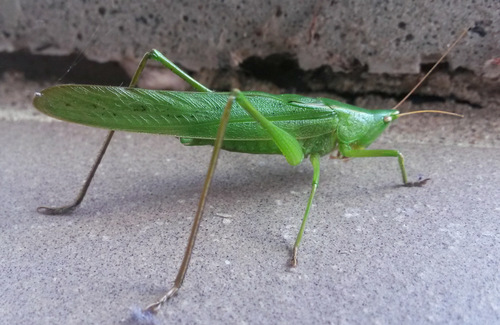
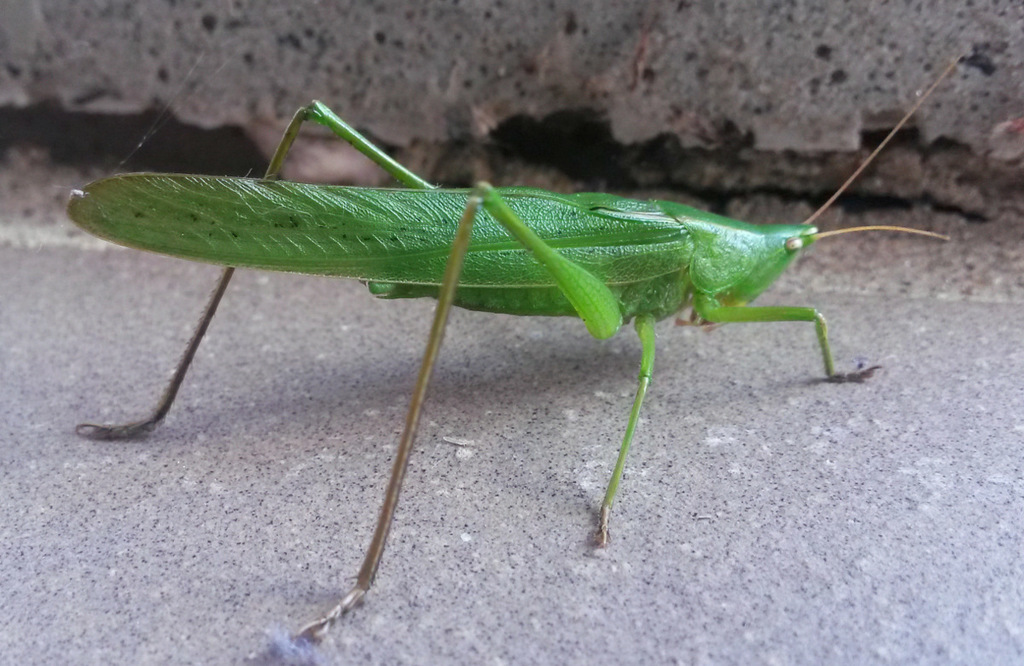
—observations
—countries
—peak records
Least ConcernConservation statusIUCN Red List categoriesLCNTVUENCREWEXLeast ConcernRed List categories, explained →
Diet & preyGrass Seeds, Sedge Seeds, Plant Foliage
Predators
- Insectivorous Birds
- Bats
- Orb-weaver Spiders
ThreatsHabitat loss from development, intensive mowing, and broad-spectrum insecticides
HabitatsOld fields, damp meadows, roadside ditches, and tall grasslands
Life span1 year (active adults live 2–3 months)
Classification
- OrderOrthoptera
- FamilyTettigoniidae
- GenusNeoconocephalus
- SpeciesNeoconocephalus retusus
Range data is not available yet.
Interaction riskLow
- Low
- Moderate
- High
- Very high
- Why interaction risk is low
- Safe to observe at a normal distance.
Responsible observation
- Acoustic Tracking: Follow its steady, continuous high-frequency buzz on warm autumn evenings to locate its perch.
- Night Spotting: Use a soft light to scan grass stems, as harsh direct beams often prompt singing males to freeze.
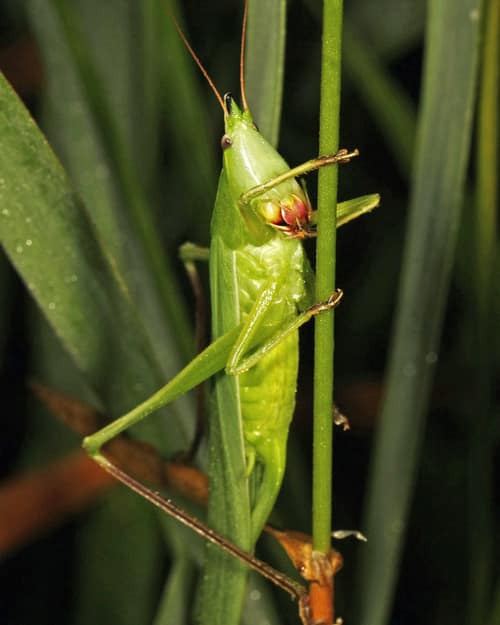
Close Relative (c) Marlo Perdicas, some rights reserved (CC BY), uploaded by Marlo Perdicas · cc-by Image unavailable
Close Relative 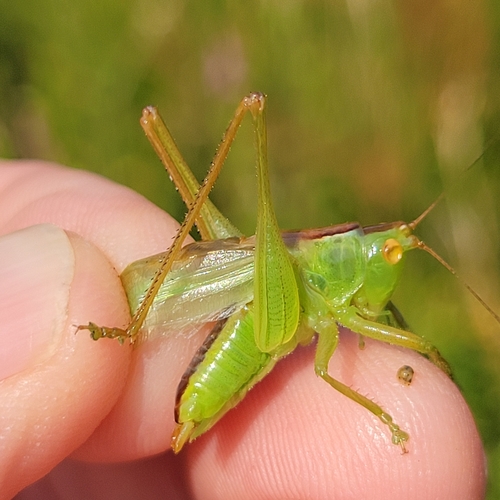
Same Family (c) Matt Pelikan, some rights reserved (CC BY) · cc-by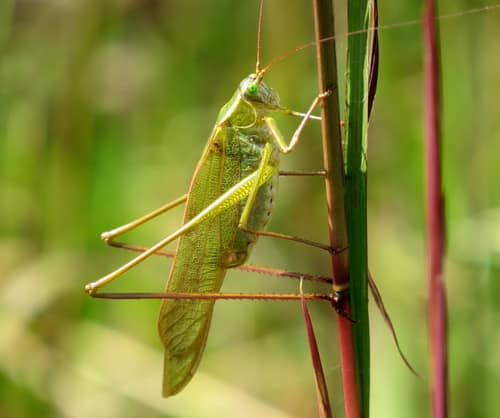
Same Family (c) David Hill, some rights reserved (CC BY) · cc-by
Keep collecting in Fauna
Found in Collections
Ecosystem chain Pro
Mystic Meadows
Round-tipped Conehead is found in this collection. Identify it in Fauna to fill this slot and continue your progress.
Unlock to track progress
Help improve the field guideSomething wrong?
Checking your Fauna account…Report a name, category, or profile issue for review.