
Insect · GBIF taxon 1689606
Giant Katydid
Stilpnochlora coulonianaAlso known as Florida Giant Katydid, Cuban Giant Katydid
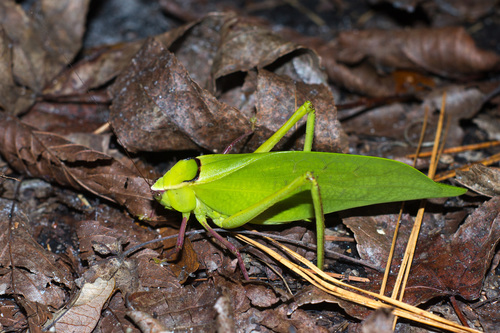
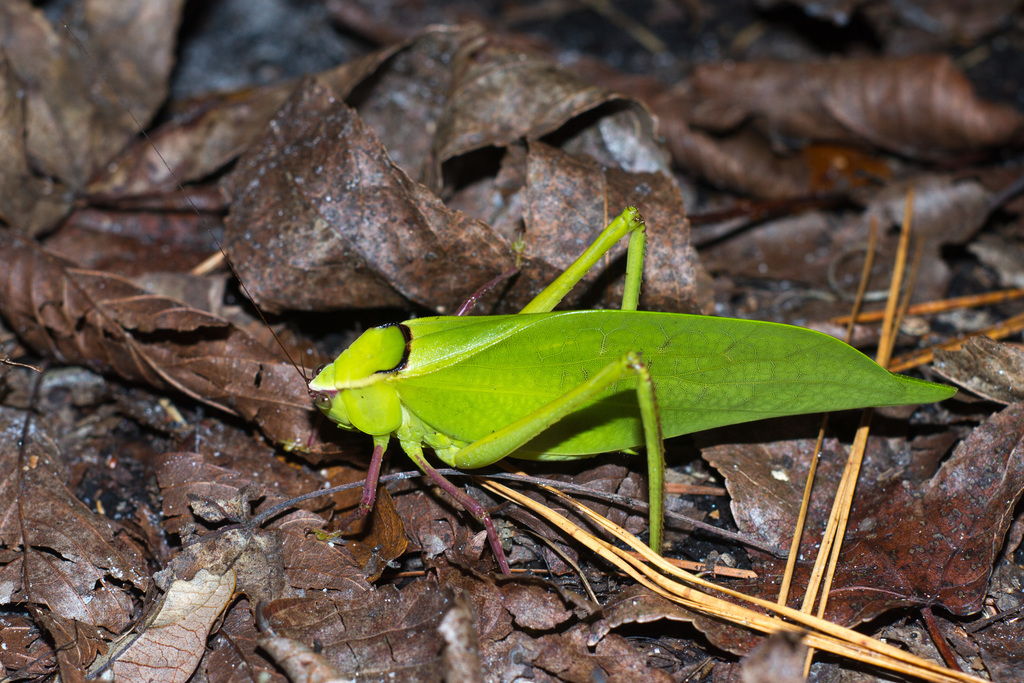
Giant katydids spend their lives perched high in subtropical tree canopies, blending seamlessly into foliage with broad, leaf-veined forewings. Males produce quiet, high-pitched acoustic clicks to court females, who respond with subtle answering taps rather than the loud choruses typical of smaller katydids. After mating, females lay overlapping, scale-like rows of flat oval eggs cemented along tree twigs.
CamouflageNocturnalArboreal
 1 / 7
1 / 7—observations
—countries
—peak records
Not EvaluatedConservation statusIUCN Red List categoriesLCNTVUENCREWEXNot Evaluated — not placed on the risk ladderRed List categories, explained →
Diet & prey
- Broadleaf foliage, flower petals, and tender twigs
Predators
- Eastern screech-owl
- Evening bat
- Green anole
ThreatsHabitat clearance, severe tropical storms, and localized pesticide spraying
HabitatsSubtropical hardwood hammocks, pine rocklands, citrus groves, and suburban gardens
Life span8–12 months
Classification
- FamilyTettigoniidae
- SpeciesStilpnochlora couloniana
Range data is not available yet.
Interaction riskLow
- Low
- Moderate
- High
- Very high
- Why interaction risk is low
- Safe to observe at a normal distance.
Responsible observation
- Spotting by Night: Scan dense tree crowns and garden shrubbery after dusk with a flashlight to detect reflective eye-shine.
- Porch Light Encounters: Check outdoor wall fixtures in warm months, where dispersing adults are often drawn to bright lights.
- Gentle Handling: Allow an individual to walk onto an open hand rather than gripping its delicate, leaf-like wings.
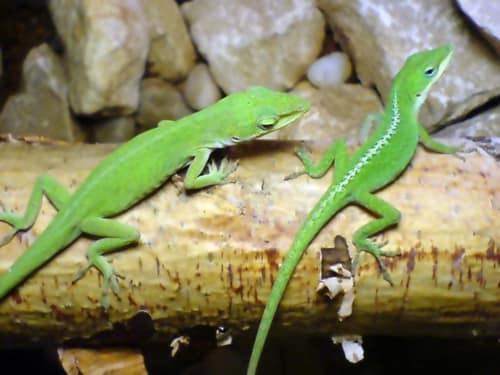
Predator (c) Robert Michniewicz (edited by Ark), some rights reserved (CC BY-SA) · cc-by-sa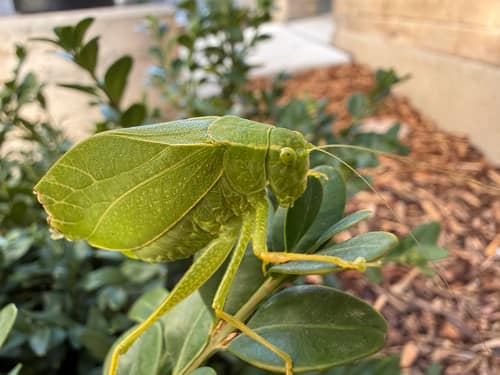
Close Relative (c) Zach Earl, some rights reserved (CC BY) · cc-by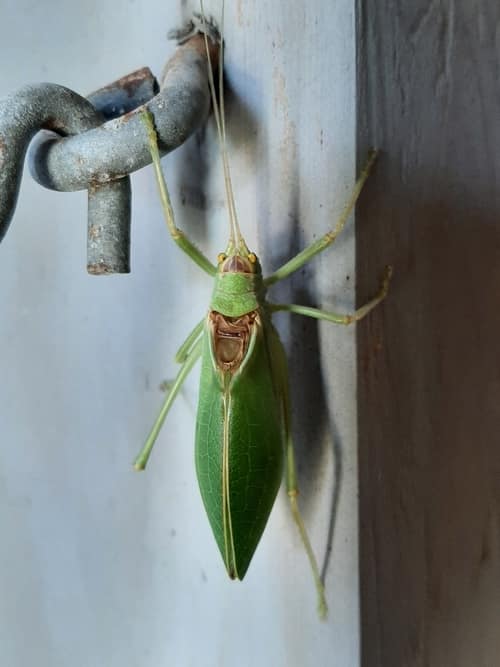
Same Family (c) florawhite, some rights reserved (CC BY) · cc-by
Help improve the field guideSomething wrong?
Checking your Fauna account…Report a name, category, or profile issue for review.