
Insect
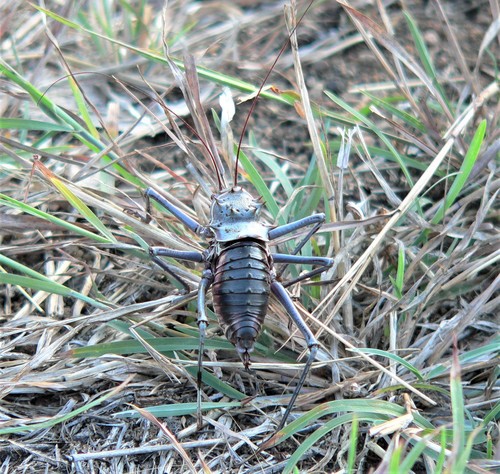
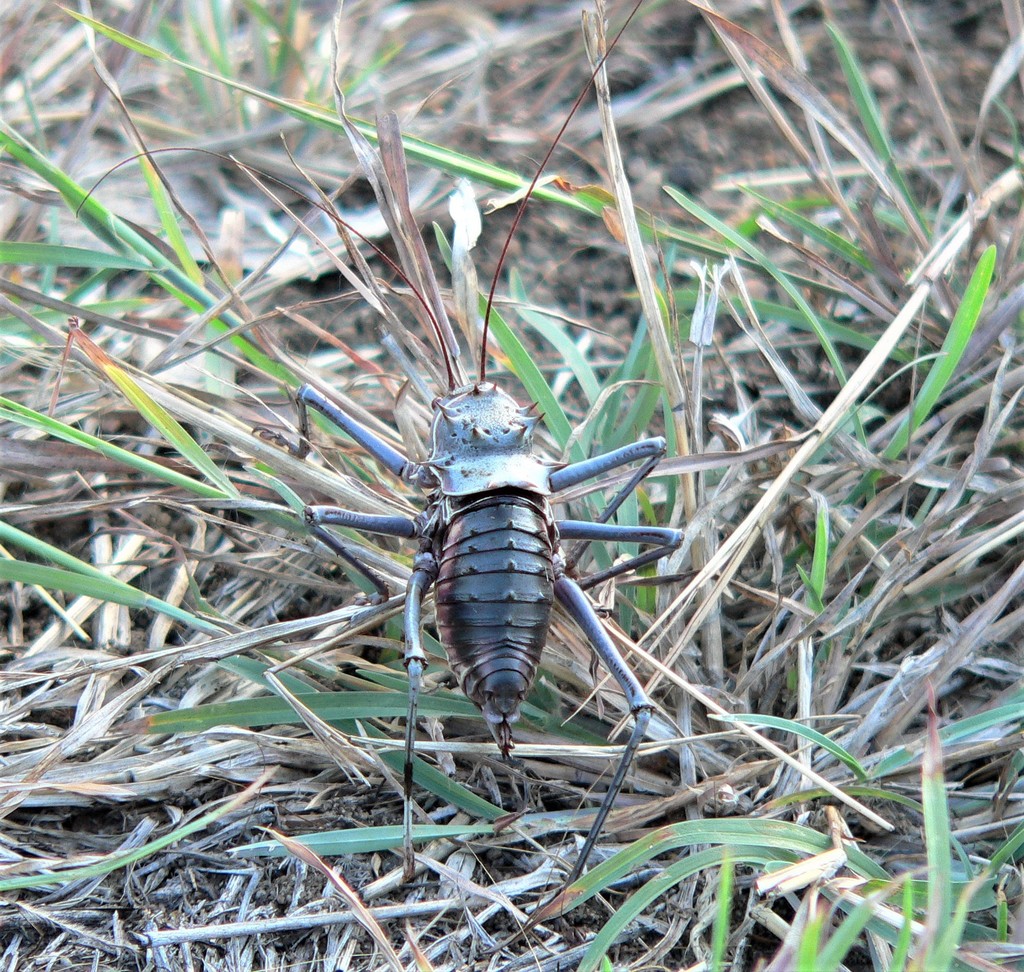
Brown Armoured Corncricket
Acanthoplus discoidalisAlso known as Armoured Ground Cricket, Armoured Katydid, Koringkriek, Setotojane
Heavy-bodied and flightless, these armored katydids are famous for their spiky pronotums and formidable defense mechanisms. When threatened, adults squirt foul-smelling hemolymph up to thirty centimeters from pores near their legs while stridulating loudly to deter predators. They feed opportunistically on crops, wild vegetation, and even dead or injured members of their own species during mass outbreaks.
FlightlessSpikyDefense Mechanism
—observations
—countries
—peak records
Least ConcernConservation statusIUCN Red List categoriesLCNTVUENCREWEXLeast ConcernRed List categories, explained →
Diet & preySorghum crops, Pearl millet, Carrion
Predators
- Kori Bustard
- Yellow Mongoose
- Fiscal Shrike
ThreatsPesticide applications, localized control measures
HabitatsArid savannas, grasslands, dry bushveld, agricultural fields
Life span1–2 years
Classification
- FamilyTettigoniidae
- SpeciesAcanthoplus discoidalis
Range data is not available yet.
Interaction riskLow
- Low
- Moderate
- High
- Very high
- Why interaction risk is low
- Possesses sharp thoracic spines and powerful mandibles capable of giving a painful bite if handled.
- Why it is dangerous
- Equipped with strong mandibles capable of breaking skin, sharp spines, and defensive hemolymph squirting.
- How to recognize a risky encounter
- Bulky, brownish flightless body with a distinct collar of sharp spines around the thorax.
- What to do
- Observe without touching, as defensive handling triggers reflex bleeding and strong bites.
Responsible observation
- Observation: Watch from a short distance to avoid triggering reflex bleeding or defensive stridulation.
- Handling: Avoid picking up by hand because powerful mandibles can inflict a painful pinch.
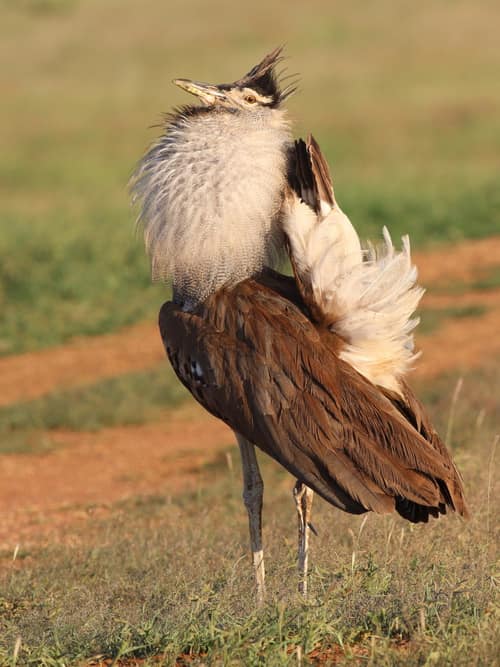
Predator (c) Jan Ebr & Ivana Ebrová, some rights reserved (CC BY), uploaded by Jan Ebr & Ivana Ebrová · cc-by
Host Plant (c) L.J. Lamera, some rights reserved (CC BY), uploaded by L.J. Lamera · cc-by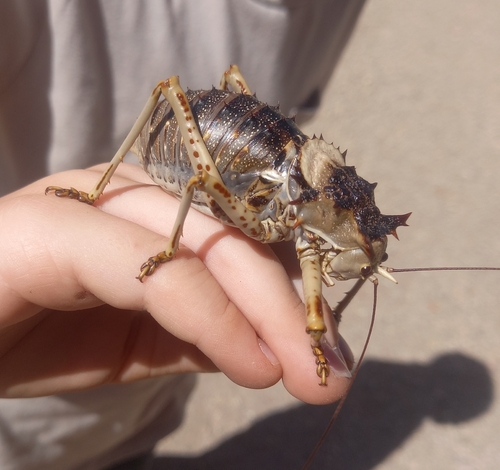
Subfamily Relative (c) kevin koen, some rights reserved (CC BY-SA), uploaded by kevin koen · cc-by-sa
Help improve the field guideSomething wrong?
Checking your Fauna account…Report a name, category, or profile issue for review.