
Insect · GBIF taxon 1659610
Northeastern Hammertail
Efferia aestuansAlso known as Summer Robber Fly, Hammer-tailed Robber Fly
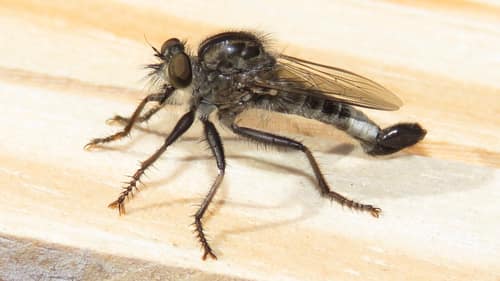
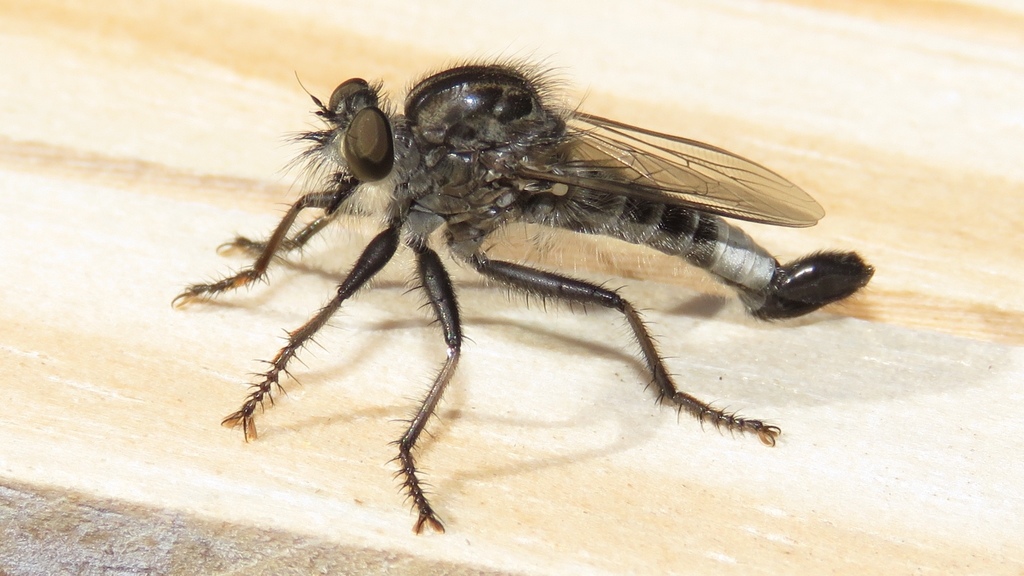
Northeastern hammertails are stealthy aerial predators that perch on sunny twigs or bare ground, waiting to ambush passing insects mid-flight. Females feature a distinctive swollen, hammer-shaped tip at the end of their abdomen, which they use to insert eggs safely into soil crevices or plant stems. Their fierce hunting style and powerful proboscis allow them to overpower flying prey much larger than themselves.
PredatoryFast FlyerInsect Hunter
 1 / 7
1 / 7—observations
—countries
—peak records
Not EvaluatedConservation statusIUCN Red List categoriesLCNTVUENCREWEXNot Evaluated — not placed on the risk ladderRed List categories, explained →
Diet & prey
- Bees
- Flies
- Grasshoppers
Predators
- Birds
- Spiders
- Larger Robber Flies
ThreatsHabitat destruction and broad-spectrum pesticide use
HabitatsOpen fields, forest edges, meadows, and sandy clearings
Life span1–2 years (including larval stage)
Size / weightNot available
Classification
- OrderDiptera
- FamilyAsilidae
- GenusEfferia
- SpeciesEfferia aestuans
Range data is not available yet.
Interaction riskLow
- Low
- Moderate
- High
- Very high
- Why interaction risk is low
- Capable of a painful bite if handled; observe perched flies from a short distance.
- Why it is dangerous
- Injects digestive enzymes through a stiff proboscis that can cause a sharp, painful bite if squeezed or handled.
- How to recognize a risky encounter
- Identified by large bulging eyes, a bristly facial beard, and a greyish body with a distinct swollen abdominal tip on females.
- What to do
- Observe perched flies from a comfortable distance without attempting hand capture.
Responsible observation
- Observation Spot: Look along sunny forest clearings, gravel paths, and low foliage where adults like to perch while scanning for prey.
- Photography Tip: Approach slowly without blocking direct sunlight, as sudden shadows easily startle perched flies into taking flight.
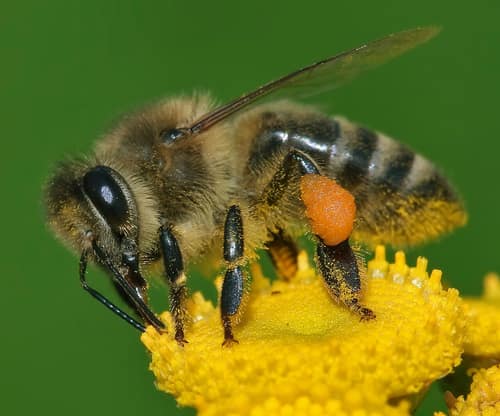
Prey Andreas Trepte / CC BY-SA 2.5 · cc-by-sa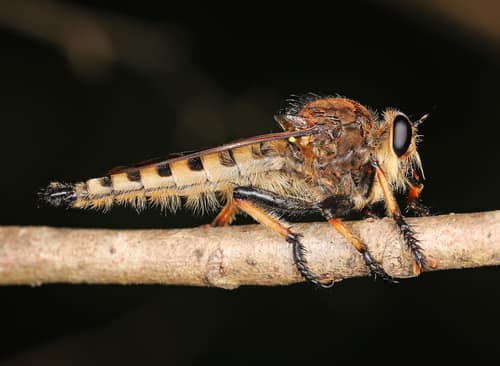
Family Member (c) Judy Gallagher, some rights reserved (CC BY-SA), uploaded by Judy Gallagher · cc-by-sa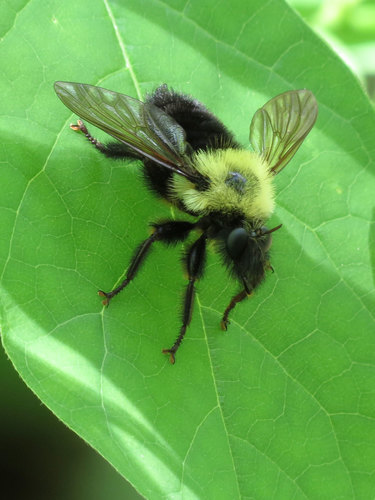
Family Member (c) Katja Schulz, some rights reserved (CC BY) · cc-by
Help improve the field guideSomething wrong?
Checking your Fauna account…Report a name, category, or profile issue for review.