
Insect
Asian Tiger Mosquito
Aedes albopictusAlso known as Tiger Mosquito, Forest Mosquito
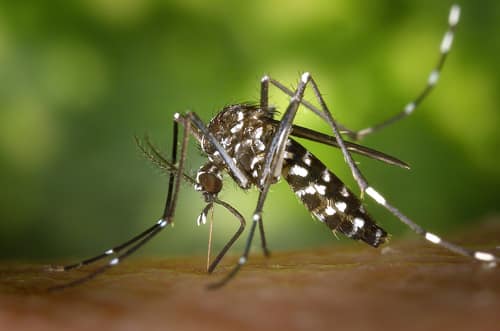
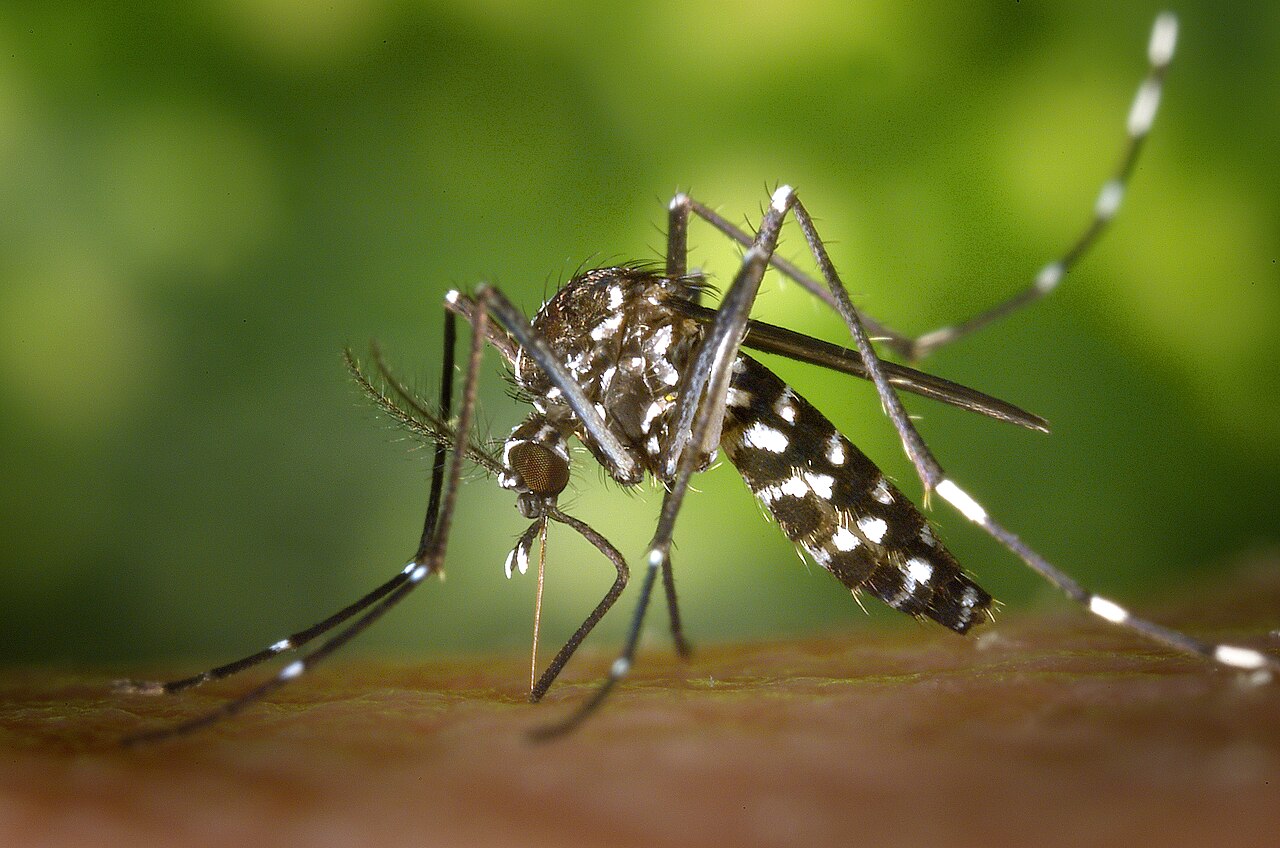
Asian tiger mosquitoes are distinguished by their striking black-and-white striped bodies and a bold silvery line running down the center of the head and thorax. Unlike many nocturnal mosquito species, aggressive females hunt during daylight hours, feeding on a wide range of mammalian hosts to sustain egg development. Their ability to breed in tiny volumes of standing water, from discarded tires to flowerpot saucers, has facilitated rapid global spread.
InvasiveDaytime ActiveVector
—observations
—countries
—peak records
Not EvaluatedConservation statusIUCN Red List categoriesLCNTVUENCREWEXNot Evaluated — not placed on the risk ladderRed List categories, explained →
Diet & preyMammalian Blood, Plant Nectar, Avian Blood
Predators
- Dragonflies
- Bats
- Mosquitofish
ThreatsInsecticide control programs and targeted vector eradication
HabitatsUrban yards, suburban gardens, deciduous forests, and brushlands
Life span1 to 3 weeks
Classification
- OrderDiptera
- FamilyCulicidae
- GenusAedes
- SpeciesAedes albopictus
Range data is not available yet.
Interaction riskModerate
- Low
- Moderate
- High
- Very high
- Why interaction risk is moderate
- Carries pathogens like dengue and chikungunya; wear repellent and cover skin during peak daytime activity.
- Why it is dangerous
- Vectors viral diseases like dengue, chikungunya, Zika, and West Nile virus, while bites trigger localized skin irritation.
- How to recognize a risky encounter
- Look for jet-black legs with white bands and a single prominent white stripe down the center of the thorax.
- What to do
- Avoid bites by dumping outdoor standing water, applying repellent, and keeping window screens intact.
Responsible observation
- Eliminate Standing Water: Dump water from saucers, buckets, and gutters weekly to prevent breeding.
- Wear Protective Clothing: Cover skin with long sleeves and loose trousers during peak daylight hours.
- Apply Insect Repellent: Use EPA-registered repellents containing DEET, Picaridin, or Oil of Lemon Eucalyptus.
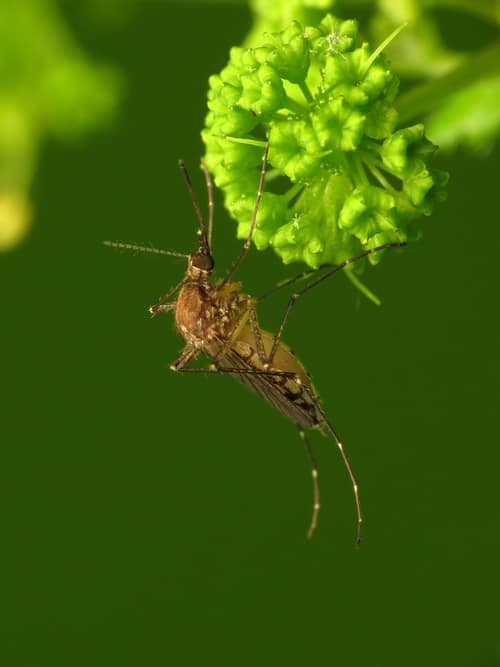
Genus Member "Inland Floodwater Mosquito" by treegrow is licensed under CC BY 2.0. To view a copy of this license, visit https://creativecommons.org/licenses/by/2.0/. · cc-by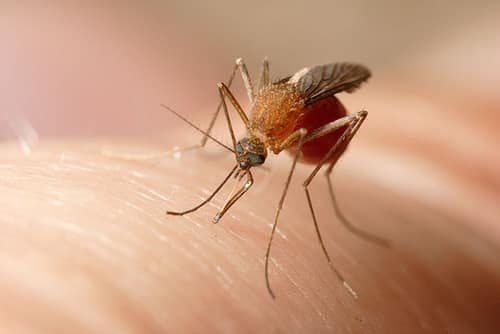
Competitor Urmas Tartes / CC BY-SA 4.0 · cc-by-sa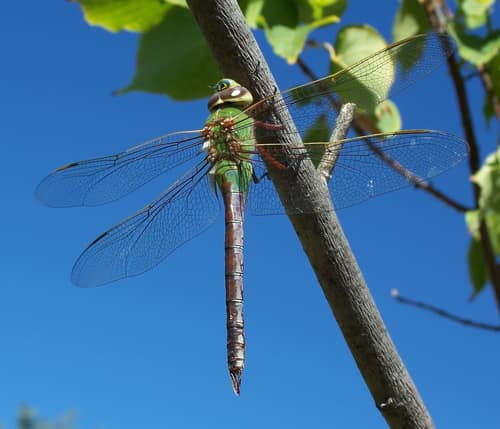
Predator (c) Eugene Zelenko, some rights reserved (CC BY-SA) · cc-by-sa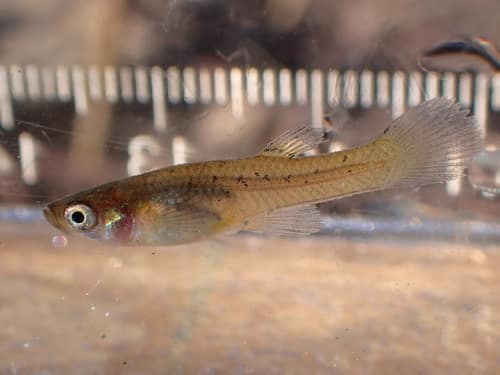
Predator (c) Zakqary Roy, some rights reserved (CC BY), uploaded by Zakqary Roy · cc-by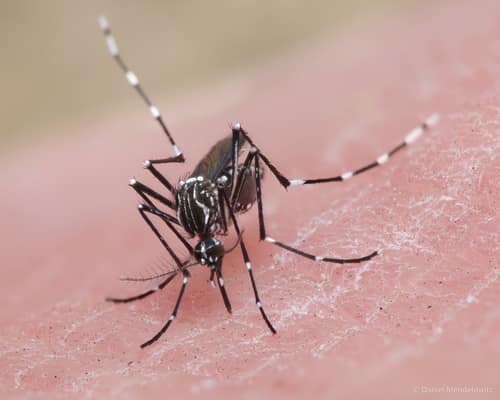
Close Relative (c) Dan Mendelowitz, some rights reserved (CC BY), uploaded by Dan Mendelowitz · cc-by
Keep collecting in Fauna
Found in Collections
Ecosystem chain
Wetland Territory
Asian Tiger Mosquito is found in this collection. Identify it in Fauna to fill this slot and continue your progress.
—/12
Help improve the field guideSomething wrong?
Checking your Fauna account…Report a name, category, or profile issue for review.