
Insect · GBIF taxon 1646610
Eastern Phantom Crane Fly
Bittacomorpha clavipesAlso known as Phantom Crane Fly, Eastern Phantom-Fly
Eastern phantom crane flies drift ghostlike through wet woodlands, balancing upright on inflated, air-filled tarsal segments that catch light breezes like tiny sails. Their legs display bold, contrasting black-and-white bands that break up their silhouette in dappled shade, making them surprisingly hard to track despite their slow speed. Aquatic larvae dwell in rich mud along marshy borders, breathing through long siphon tubes pushed above the shallow waterline.
StrikingFlyWetlands
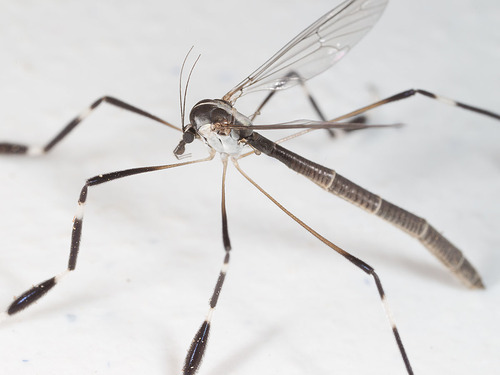
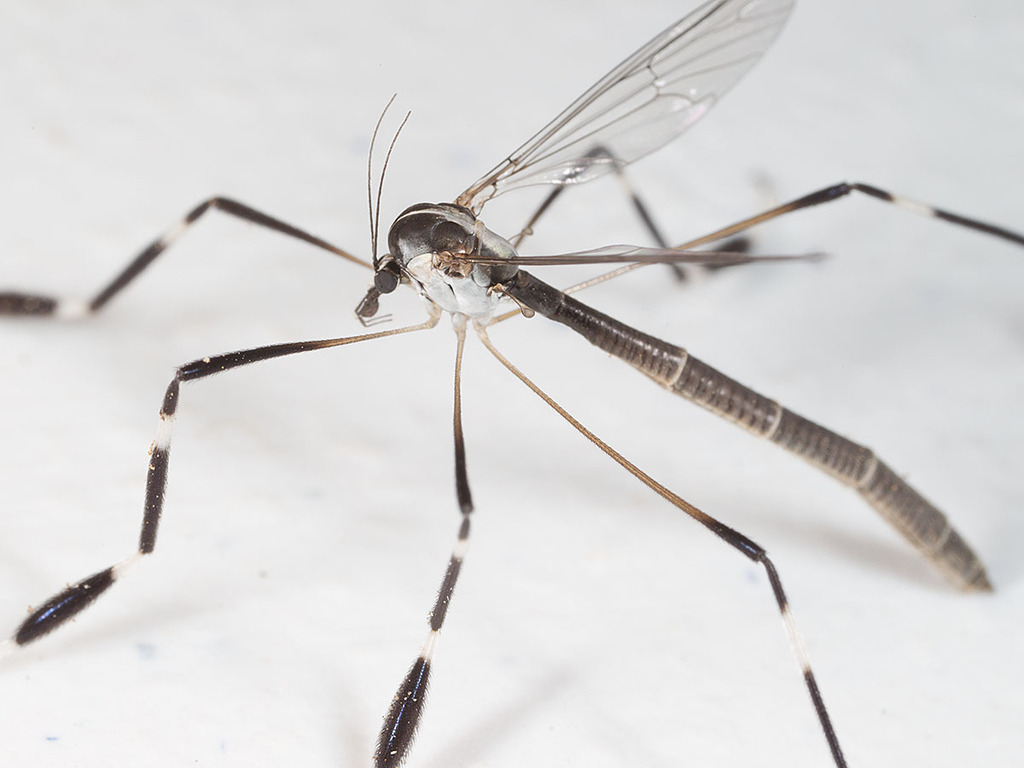
—observations
—countries
—peak records
Not EvaluatedConservation statusIUCN Red List categoriesLCNTVUENCREWEXNot Evaluated — not placed on the risk ladderRed List categories, explained →
Diet & prey
- Nectar
- Decaying organic matter
- Microorganisms
Predators
- Spiders
- Orb weavers
- Frogs
ThreatsWetland drainage, canopy clearing, and aquatic pollution.
HabitatsShaded wetlands, swamp margins, forested streams, and damp marshes.
Life span1 to 2 weeks as adults; larvae live up to a year.
Classification
- OrderDiptera
- FamilyPtychopteridae
- GenusBittacomorpha
- SpeciesBittacomorpha clavipes
Range data is not available yet.
Interaction riskLow
- Low
- Moderate
- High
- Very high
- Why interaction risk is low
- Safe to observe at a normal distance.
Responsible observation
- Location: Scan shaded, wet stream margins and swamp edges during late spring through early autumn.
- Observation: Watch how they hang motionless in air currents, propelled by swollen air sacs in their feet.
- Photography: Use a soft flash or indirect lighting to capture the stark black-and-white leg bands.
 Image unavailable
Ecological Neighbor Close Relative 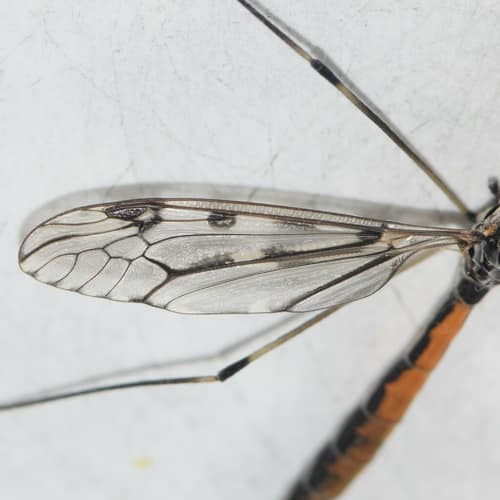
Distant Relative (c) Douglas Hooper, some rights reserved (CC BY), uploaded by Douglas Hooper · cc-by
Help improve the field guideSomething wrong?
Checking your Fauna account…Report a name, category, or profile issue for review.