
Insect · GBIF taxon 1590174
Common Lovebug
Plecia nearcticaAlso known as Honeymoon Fly, Double-Headed Bug, Telephone Bug
Common lovebugs are famous for emerging in dense swarms across the southeastern United States, floating through the air attached as mating pairs. Larvae perform a vital ecological service by decomposing decaying vegetation and enriching soil organic matter. Though completely harmless to humans, their acidic body fluids can etch automotive paint if smashed against windshields and left to dry.
SwarmingDiurnalHarmless
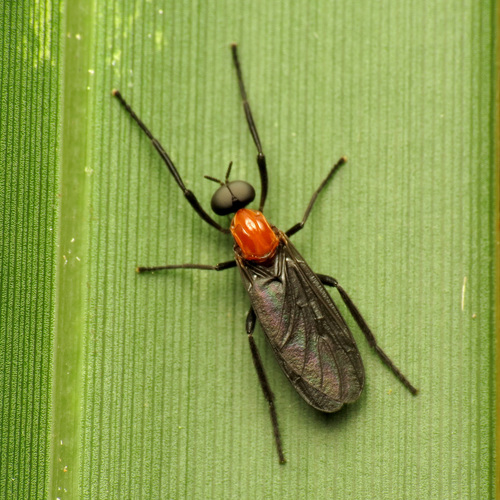
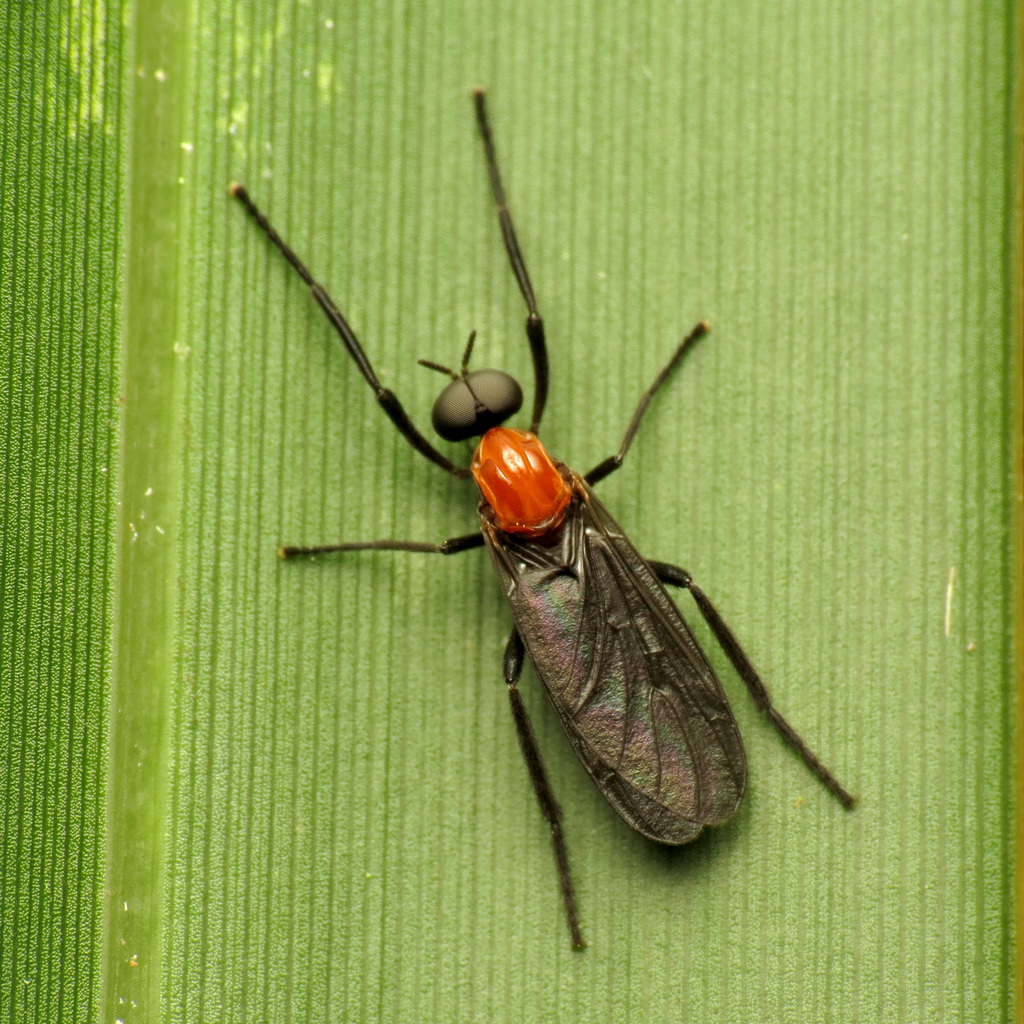
—observations
—countries
—peak records
Not EvaluatedConservation statusIUCN Red List categoriesLCNTVUENCREWEXNot Evaluated — not placed on the risk ladderRed List categories, explained →
Diet & prey
- Nectar
- Decaying Leaves
Predators
- Spiders
- Dragonflies
- Robber Flies
ThreatsVehicle collisions, pesticide applications, and severe cold snaps
HabitatsSubtropical woodlands, pastures, lawns, and grassy roadsides
Life span3–4 months (larval stage); 3–5 days (adults)
Classification
- OrderDiptera
- FamilyBibionidae
- GenusPlecia
- SpeciesPlecia nearctica
Range data is not available yet.
Interaction riskLow
- Low
- Moderate
- High
- Very high
- Why interaction risk is low
- Harmless to humans, though vehicle owners should rinse off insect remains promptly.
Responsible observation
- Observe Flying Pairs: Look for coupled pairs drifting low over sunny fields and roadsides during May and September.
- Protect Vehicles: Wash insect splatter from car bumpers promptly to prevent acidic fluids from pitting paint.
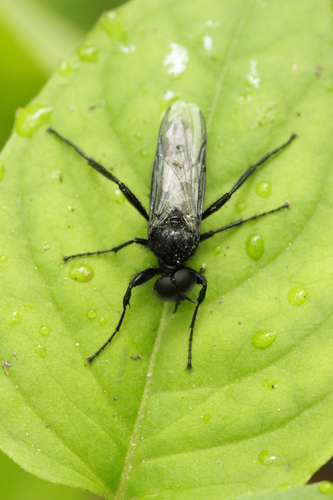
Family Relative (c) Björn Sothmann, some rights reserved (CC BY-SA), uploaded by Björn Sothmann · cc-by-sa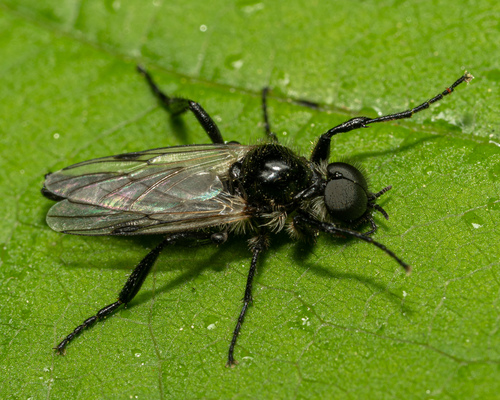
Family Relative (c) Curtis Meyers, some rights reserved (CC BY-SA) · cc-by-sa
Help improve the field guideSomething wrong?
Checking your Fauna account…Report a name, category, or profile issue for review.