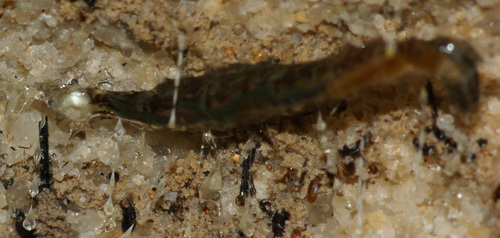
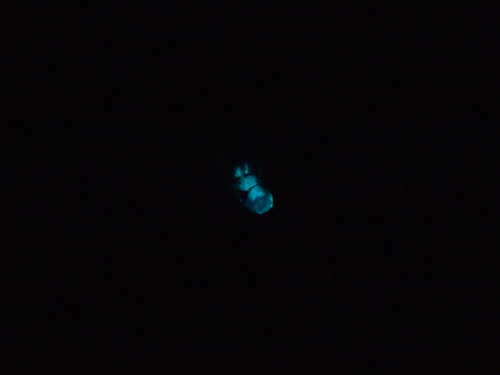
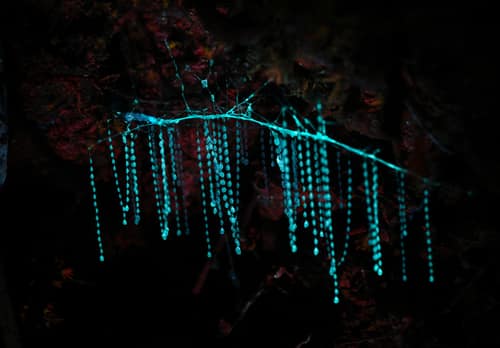
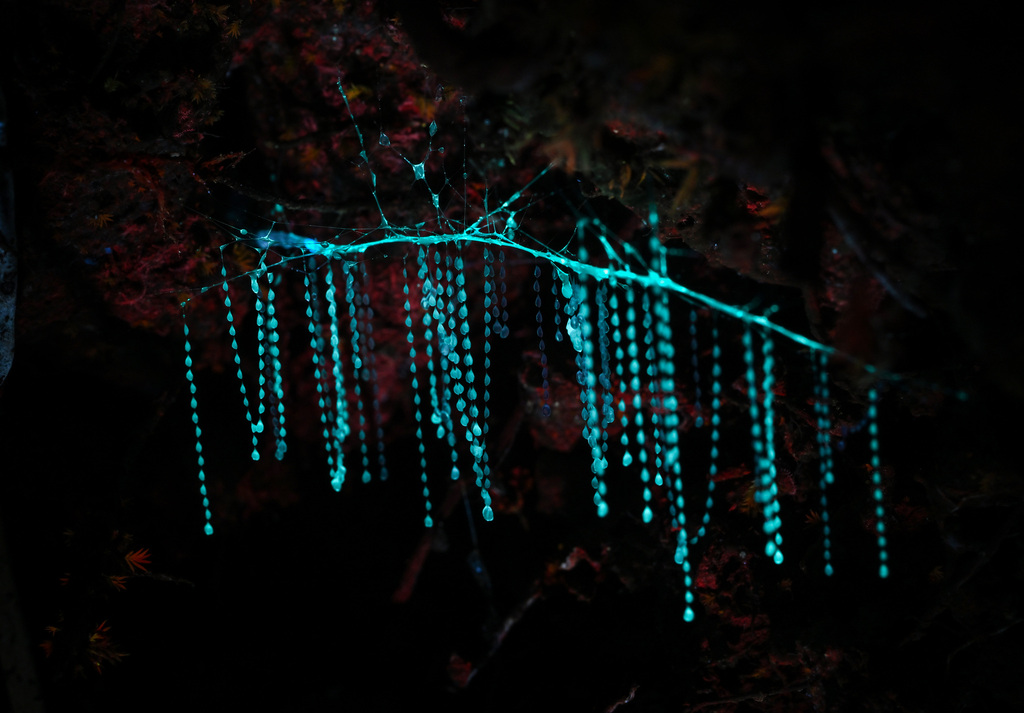
New Zealand glowworm larvae construct delicate horizontal silk nests from which they suspend dozens of vertical sticky threads beaded with droplets of mucus. Producing an ethereal blue-green glow through specialized Malpighian tubules, each larva lures unsuspecting flying insects into its luminous web. Adult gnats emerge with no functional mouthparts, living only a few days entirely dedicated to finding a mate and laying eggs.
Not EvaluatedConservation statusIUCN Red List categoriesLCNTVUENCREWEXNot Evaluated — not placed on the risk ladderRed List categories, explained →
Key facts
Diet & prey
Midges
Mayflies
Caddisflies
Predators
Cave wetas
Harvestmen
Parasitic fungi
ThreatsCave microclimate alteration, habitat desiccation, artificial lighting, and pollution
HabitatsLimestone caves, grottos, and sheltered damp temperate rainforest banks
Life spanLarval stage 6–12 months; adults live 1–5 days
Size / weightNot available
Classification
FamilyKeroplatidae
SpeciesArachnocampa luminosa
Range & activity
Range data is not available yet.
Safe observation
Interaction riskLow
Low
Moderate
High
Very high
Why interaction risk is low
Safe to observe at a normal distance.
What to notice
Look for constellations of tiny, bright blue-green points of light dotting the ceilings of damp caves, overhangs, and wet forest banks after dark.
Support conservation
View strictly from designated paths without using white flashlights or touching the delicate silk threads.
Responsible observation
Lighting etiquette: Switch off torches and avoid flash photography, as artificial light causes larvae to douse their bioluminescence and cease feeding.
Preserve airflow: Keep movement calm and quiet, as even light breezes or drafts can tangle their delicate silk fishing lines.
Stay on tracks: Remain on established cave boardwalks and paths to avoid crushing lower colonies or disturbing the high-humidity microclimate.

 1 / 7
1 / 7 Image unavailable