
Insect · GBIF taxon 1509018
Ferruginous Tiger Crane Fly
Nephrotoma ferrugineaAlso known as Ferruginous Crane Fly, Tiger Crane Fly
Ferruginous tiger crane flies wear striking yellow and rust-orange striping that cleverly mimics yellowjacket wasps to deter hungry predators. Despite their formidable, gangly appearance, adults lack stings or biting mouthparts and spend their short lives fluttering through damp lawns and grassy meadows. Their soil-dwelling larvae break down decaying organic matter and occasionally feed on the roots of turf grasses.
MimicYellow-and-BlackHarmless
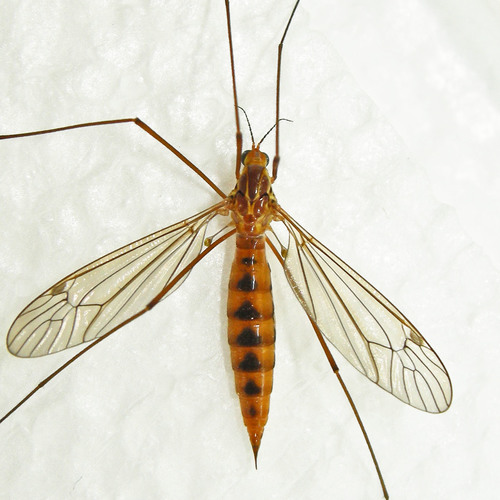
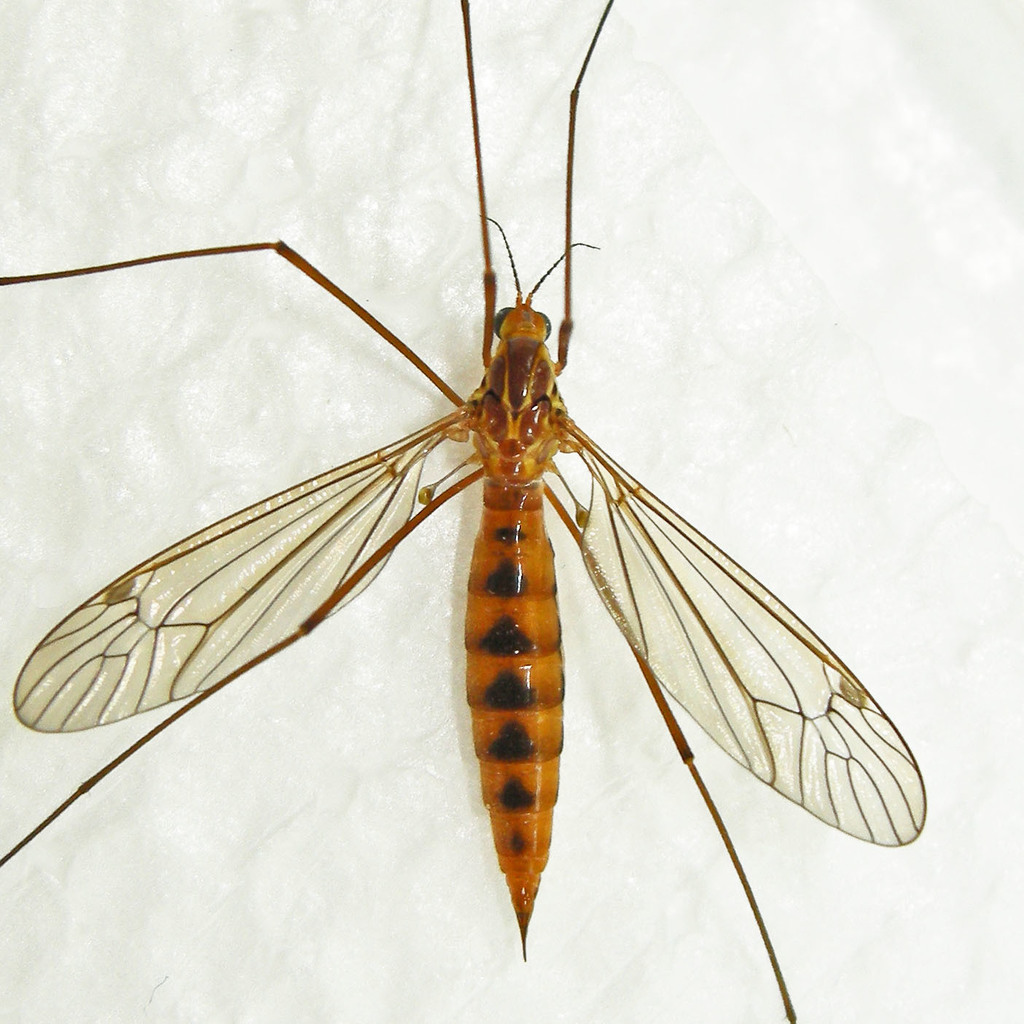
—observations
—countries
—peak records
Not EvaluatedConservation statusIUCN Red List categoriesLCNTVUENCREWEXNot Evaluated — not placed on the risk ladderRed List categories, explained →
Diet & prey
- Plant Roots
- Decaying Organic Matter
- Nectar
Predators
- Birds
- Spiders
- Predatory Insects
ThreatsLawn pesticide treatments and light pollution.
HabitatsLawns, meadows, pastures, open woodlands, and gardens.
Life span1–2 weeks as adults; around 1 year total.
Classification
- OrderDiptera
- FamilyTipulidae
- GenusNephrotoma
- SpeciesNephrotoma ferruginea
Range data is not available yet.
Interaction riskLow
- Low
- Moderate
- High
- Very high
- Why interaction risk is low
- Safe to observe at a normal distance.
Responsible observation
- Observation: Look for them clinging to tall grasses or hovering around porch lights on warm summer nights.
- Identification: Check for high-contrast yellow and black abdominal striping on a long, slender body.
- Relocation: Gently cover indoor strays with a clear glass and slide paper underneath to release them outside.
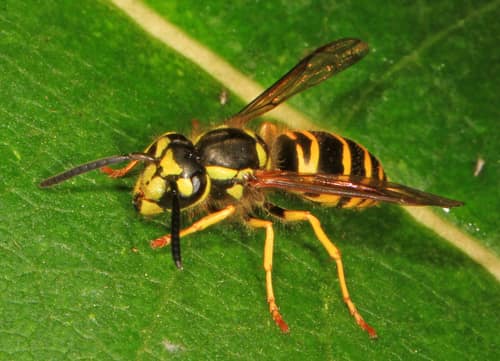
Mimicry Model (c) Judy Gallagher, some rights reserved (CC BY-SA), uploaded by Judy Gallagher · cc-by-sa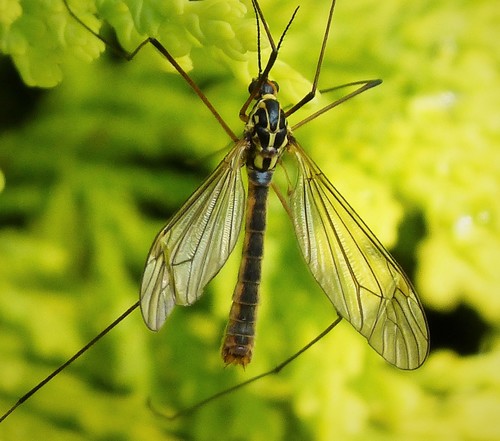
Close Relative (c) gailhampshire, some rights reserved (CC BY) · cc-by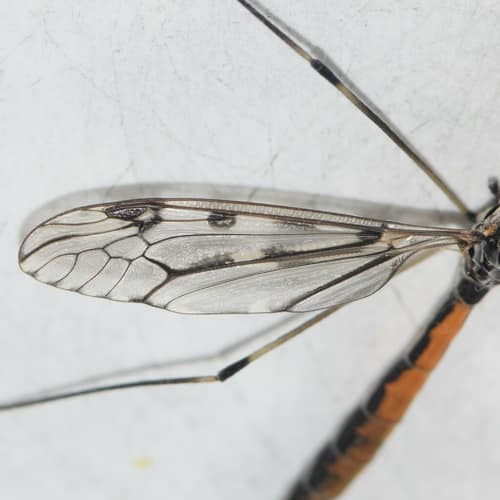
Family Relative (c) Douglas Hooper, some rights reserved (CC BY), uploaded by Douglas Hooper · cc-by
Help improve the field guideSomething wrong?
Checking your Fauna account…Report a name, category, or profile issue for review.