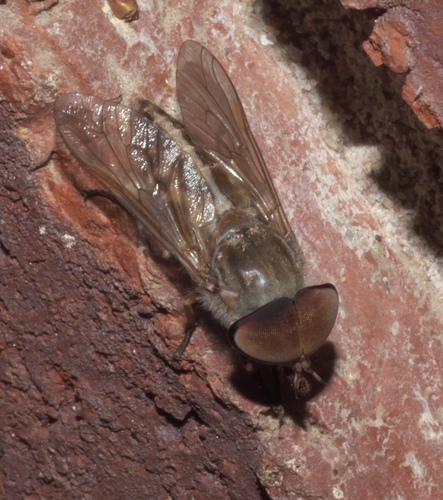
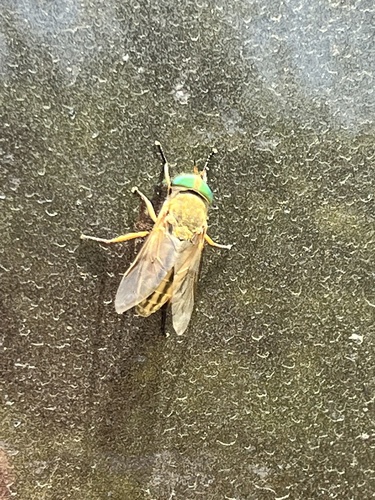
Black horse flies are among the largest flies in North America, easily recognized by their heavy jet-black bodies and smoky dark wings that hum loudly in flight. While males feed harmlessly on floral nectar, females aggressively track carbon dioxide, body heat, and dark silhouettes to secure the blood meals needed to develop eggs. Their stout, cylindrical larvae live buried in muddy wetland shores, actively hunting earthworms and smaller aquatic insects for up to a year before pupating.
Not EvaluatedConservation statusIUCN Red List categoriesLCNTVUENCREWEXNot Evaluated — not placed on the risk ladderRed List categories, explained →
Key facts
Diet & prey
Mammalian blood
Floral nectar
Aquatic invertebrates
Predators
Horse guard wasps
Dragonflies
Barn swallows
ThreatsWetland drainage, aquatic habitat contamination, and wide-scale pesticide use
HabitatsMarshes, ponds, sluggish streams, damp meadows, and livestock pastures
Life span1 to 2 years (mostly as larvae; adults live 3 to 4 weeks)
Size / weightNot available
Classification
OrderDiptera
FamilyTabanidae
GenusTabanus
SpeciesTabanus atratus
Range & activity
Range data is not available yet.
Safe observation
Interaction riskLow
Low
Moderate
High
Very high
Why interaction risk is low
Females deliver painful, lacerating bites to take blood; maintain a safe distance and avoid handling.
Why it is dangerous
Females possess blade-like mouthparts that scissor through skin to pool and lap blood, causing instant sharp pain, localized swelling, and potential secondary infections.
How to recognize a risky encounter
Recognized by its massive size, entirely black body, dark-tinted smoky wings, and large compound eyes.
What to do
Do not attempt to catch or swat with bare hands; step away calmly and brush landing flies off clothing immediately.
Responsible observation
Protective Clothing: Wear thick, light-colored long sleeves and pants, as females are strongly drawn to dark, moving silhouettes.
Basking Spot Observation: Scan sunny fence posts and vegetation near ponds in early summer to find non-biting males resting quietly.
Repellent Application: Use insect repellents containing DEET or picaridin when working outdoors around livestock or wetlands.

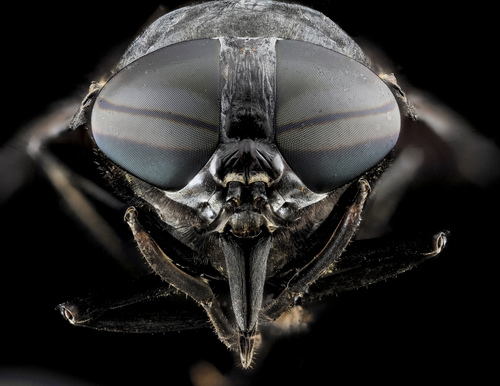
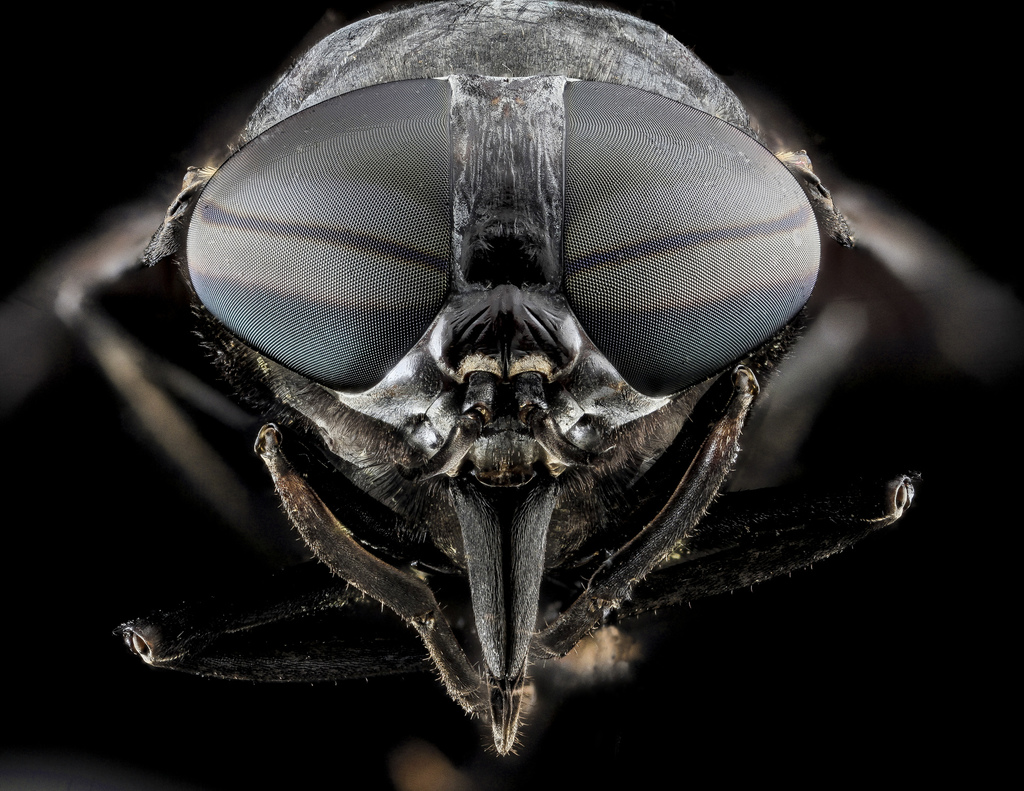
 Image unavailable