
Insect · GBIF taxon 1414630
Western Short-horned Walkingstick
Parabacillus hesperusAlso known as Western Short-horn Walkingstick
Western short-horned walkingsticks inhabit arid scrublands and chaparral across western North America, mastering crypsis by mimicking dried twigs and grass stems. Populations are predominantly female and reproduce frequently via parthenogenesis, dropping seed-like eggs into leaf litter where they overwinter. When approached, an individual often sways gently in the breeze or freezes rigidly with its front legs extended alongside its antennae to evade detection.
CamouflagedHerbivoreNocturnal
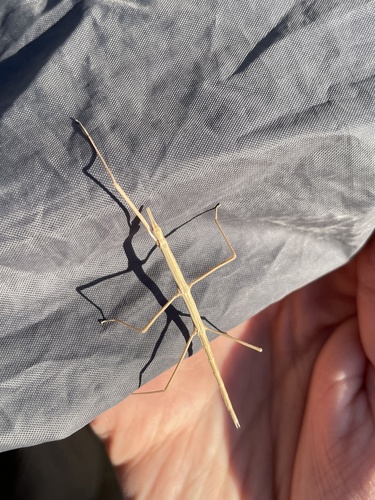
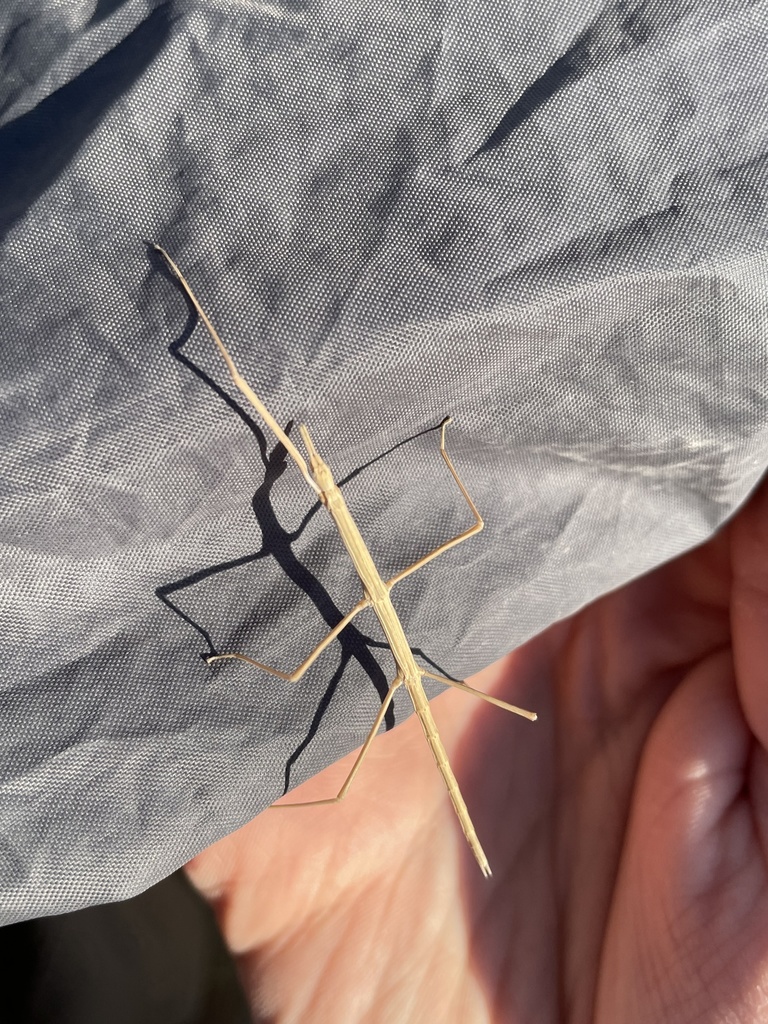
—observations
—countries
—peak records
Not EvaluatedConservation statusIUCN Red List categoriesLCNTVUENCREWEXNot Evaluated — not placed on the risk ladderRed List categories, explained →
Diet & prey
- Sagebrush foliage
- Chamise leaves
- Grass blades
Predators
- Birds
- Lizards
- Rodents
ThreatsHabitat fragmentation, severe wildfires, and pesticide drift
HabitatsArid scrub, chaparral, desert grasslands, and sagebrush flats
Life span8–12 months
Classification
- OrderPhasmida
- FamilyHeteronemiidae
- GenusParabacillus
- SpeciesParabacillus hesperus
Range data is not available yet.
Interaction riskLow
- Low
- Moderate
- High
- Very high
- Why interaction risk is low
- Harmless and non-venomous; safe to observe at close range.
Responsible observation
- Spotting: Search the outer stems of desert shrubs at twilight when individuals become active to feed.
- Handling: Avoid pulling on limbs, as walkingsticks readily shed legs when restrained or stressed.
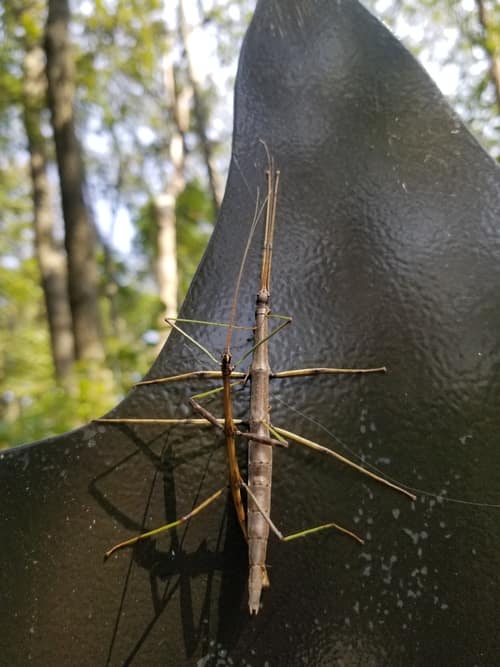
Look-alike (c) Jason E. Farabaugh, some rights reserved (CC BY) · cc-by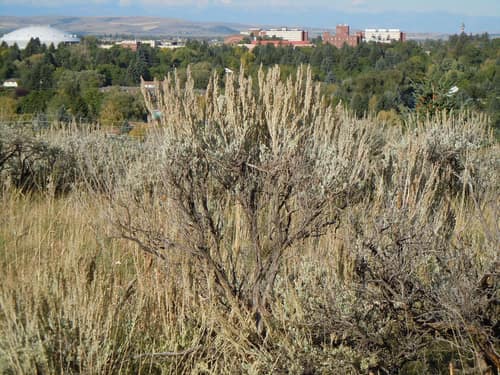
Host Plant (c) Matt Lavin, some rights reserved (CC BY) · cc-by Image unavailable
Family Relative
Help improve the field guideSomething wrong?
Checking your Fauna account…Report a name, category, or profile issue for review.