Also known as Red-legged Digger Bee, Red-footed Centris Bee
These robust, fast-flying solitary bees are quintessential desert pollinators capable of foraging efficiently in intense southwestern heat. Females dig individual nesting tunnels deep into compacted desert soils, provisioning underground brood cells with pollen, nectar, and specialized floral oils gathered from native shrubs. Males maintain watchful territories around flowering plants, darting aggressively at rivals to defend prime mating sites.
Not EvaluatedConservation statusIUCN Red List categoriesLCNTVUENCREWEXNot Evaluated — not placed on the risk ladderRed List categories, explained →
Key facts
Diet & prey
Floral nectar
Pollen
Floral oils
Predators
Robber flies
Velvet ants
Whiptail lizards
ThreatsHabitat destruction, ground disturbance from vehicles, and pesticide application
HabitatsDeserts, arid scrublands, and dry washes
Life span1 year (adults live 3–6 weeks)
Classification
FamilyApidae
SpeciesCentris rhodopus
Range & activity
Range data is not available yet.
Safe observation
Interaction riskLow
Low
Moderate
High
Very high
Why interaction risk is low
Females can deliver a painful sting if handled or swatted; observe safely on flowering shrubs.
Why it is dangerous
Stings deliver venom containing melittin and histamines that cause immediate burning pain, localized swelling, and potential anaphylaxis in allergic individuals.
How to recognize a risky encounter
Look for a stout, fuzzy body with a greyish-yellow thorax, dark abdomen, and conspicuously reddish hind legs.
What to do
Maintain a calm distance while observing blossoms and never swat, pinch, or trap bees against skin or clothing.
Responsible observation
Observation Timing: Scan flowering creosote bushes and mesquites during warm morning hours when adults actively forage.
Ground Awareness: Watch sunny patches of flat, compacted soil for burrow entrances marked by small mounds of excavated dirt.

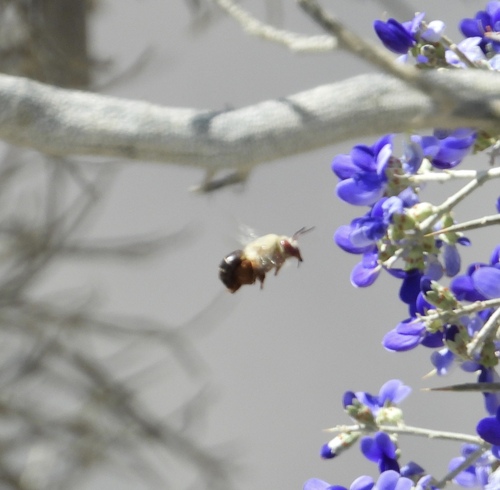
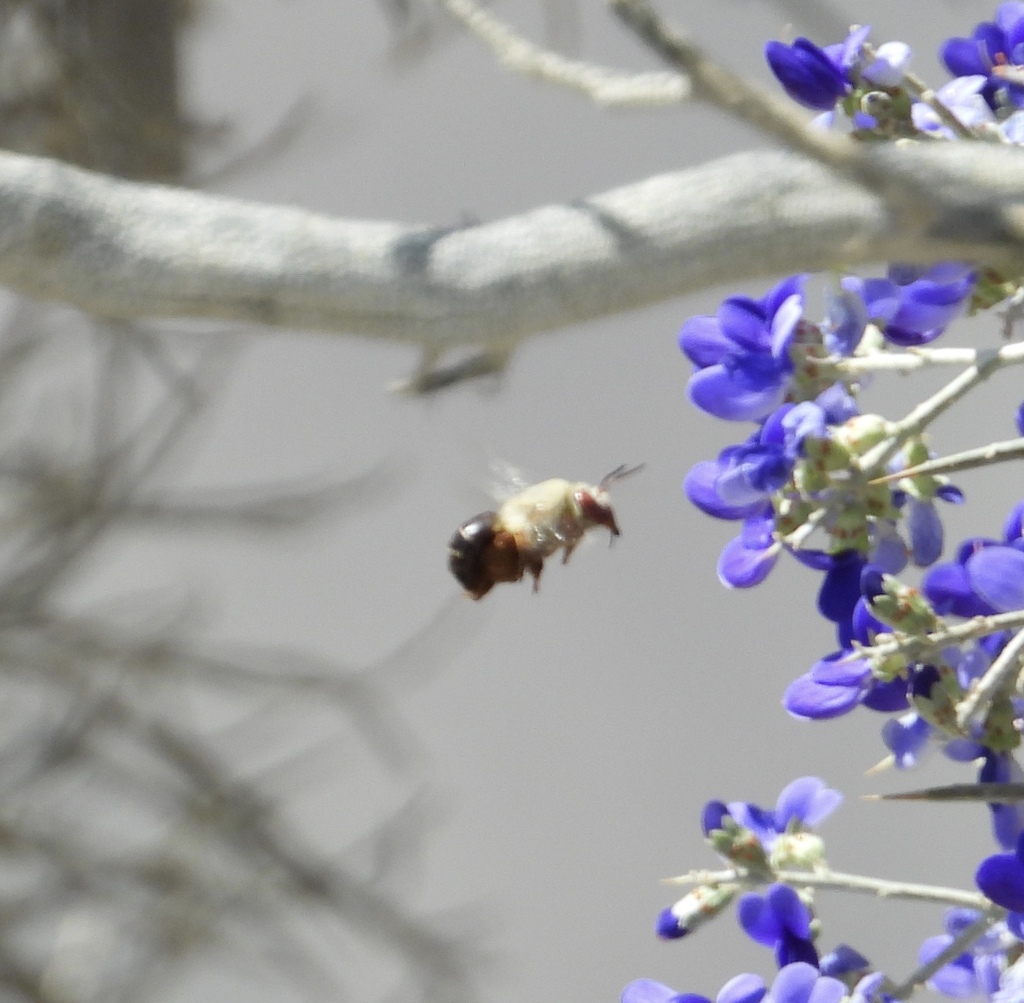
 Image unavailable