
Insect
White-cheeked Carpenter
Xylocopa aestuansAlso known as White-cheeked Carpenter Bee, Asian Carpenter Bee
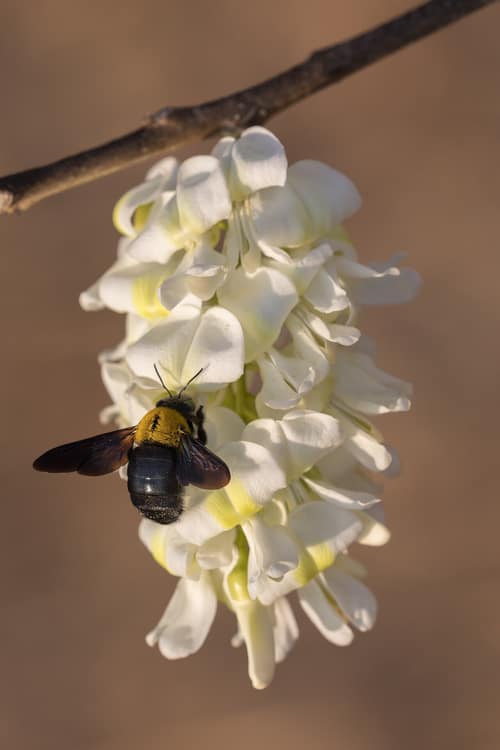
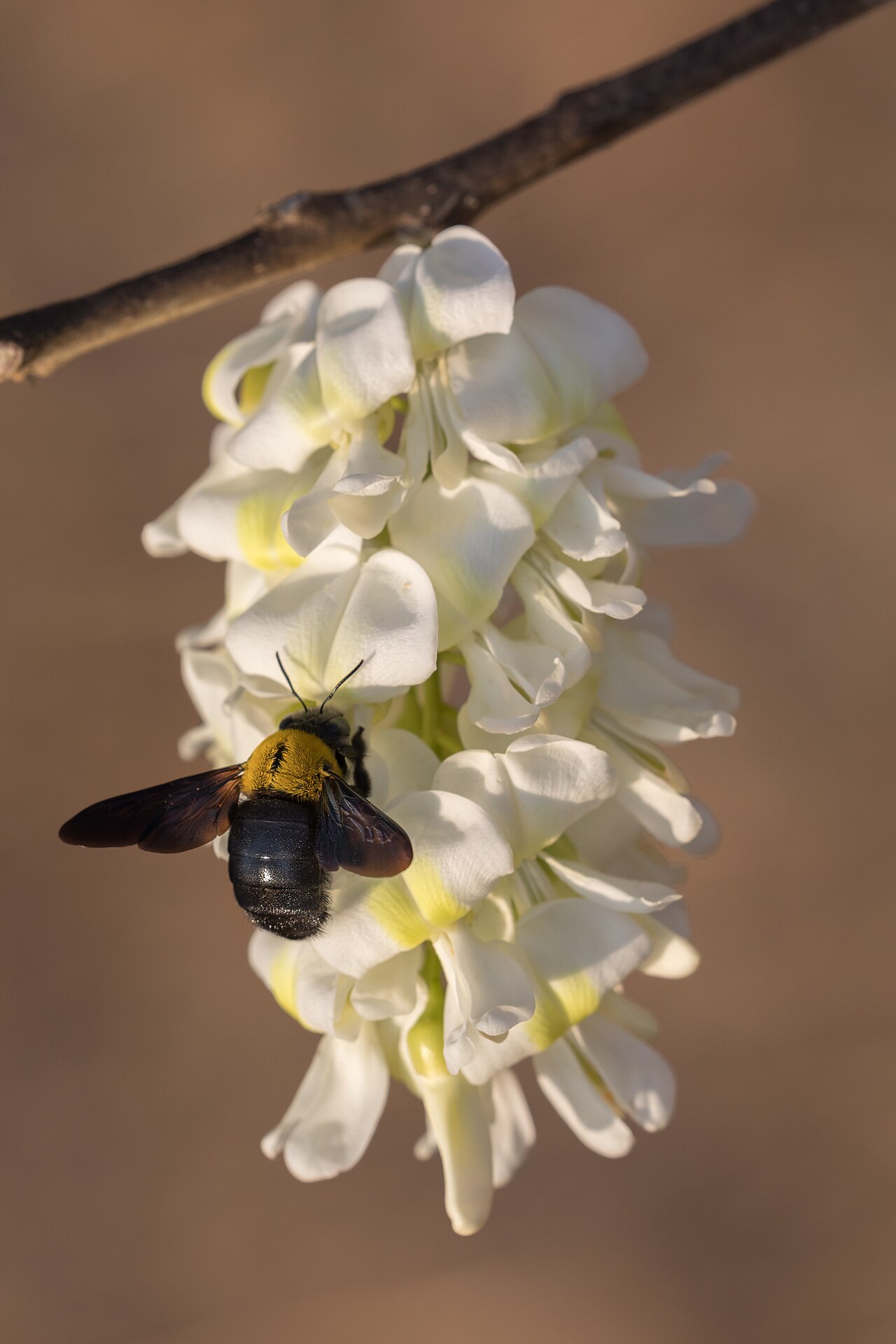
White-cheeked Carpenter Bees are massive, robust solitary bees recognizable by their glossy black bodies and prominent yellow thorax coating. Females excavate deep nesting galleries in soft dead wood or bamboo trunks using powerful mandibles, buzzing loudly as they work. Active throughout warm tropical days, they serve as crucial pollinators for native hardwood trees and agricultural crops across their broad Asian range.
PollinatorSolitary BeeWood-Borer
—observations
—countries
—peak records
Not EvaluatedConservation statusIUCN Red List categoriesLCNTVUENCREWEXNot Evaluated — not placed on the risk ladderRed List categories, explained →
Diet & preyNectar, Pollen
Predators
- Birds
- Praying Mantises
- Spiders
ThreatsPesticide application and loss of deadwood nesting sites
HabitatsTropical forests, agricultural lands, parks, and suburban gardens
Life span1–2 years
Classification
- OrderHymenoptera
- FamilyApidae
- GenusXylocopa
- SpeciesXylocopa aestuans
Range data is not available yet.
Interaction riskLow
- Low
- Moderate
- High
- Very high
- Why interaction risk is low
- Females possess a sting and will defend themselves if grabbed; observe foraging adults from a short distance.
- Why it is dangerous
- Females possess a smooth stinger capable of delivering venom that causes local pain and potential allergic reactions.
- How to recognize a risky encounter
- Look for a large black body with bright yellow thoracic hair and pale whitish patches near the head.
- What to do
- Allow bees to forage unhindered and refrain from blocking or disturbing active nest burrows.
Responsible observation
- Observe Flowers: Look for these large bees hovering near leguminous trees and flowering garden shrubs.
- Listen for Nesting: Listen for loud buzzing and rasping sounds around dead tree limbs and bamboo stalks.
- Maintain Distance: Keep a respectful distance from nest tunnel entrances to avoid defensive stings.
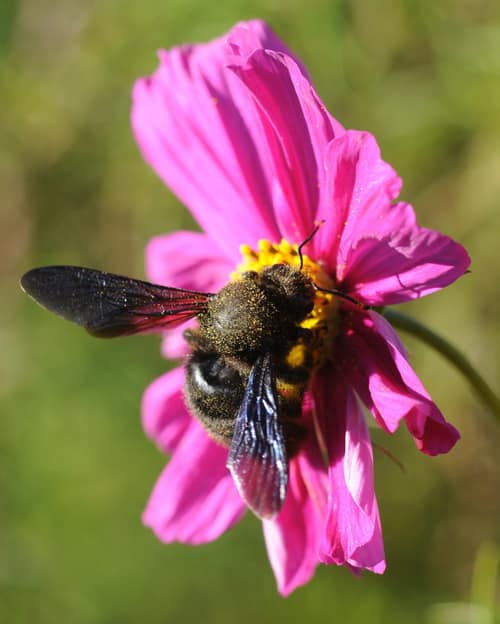
Close Relative (c) Thomas Bresson, some rights reserved (CC BY) · cc-by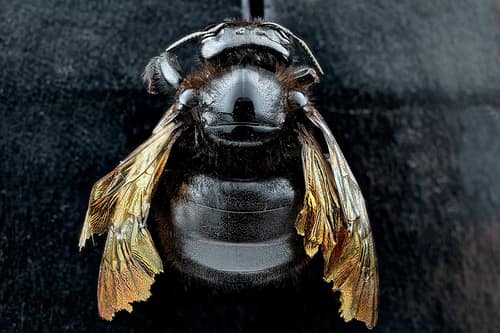
Close Relative (c) Sam Droege, some rights reserved (CC BY) · cc-by
Help improve the field guideSomething wrong?
Checking your Fauna account…Report a name, category, or profile issue for review.