
Insect · GBIF taxon 1340436
Yellow-faced Bumble Bee
Bombus vosnesenskiiAlso known as Vosnesensky Bumble Bee
Yellow-faced bumble bees are crucial native pollinators throughout western North America, recognizable by their bright yellow facial hair and dark black bodies. Queens emerge early in spring to establish underground nests in abandoned rodent burrows, where they build colonies containing hundreds of workers. These adaptable foragers utilize buzz pollination to shake pollen free from nightshades, playing an essential ecological role in both wild chaparral ecosystems and commercial tomato farms.
PollinatorSocialFuzzy
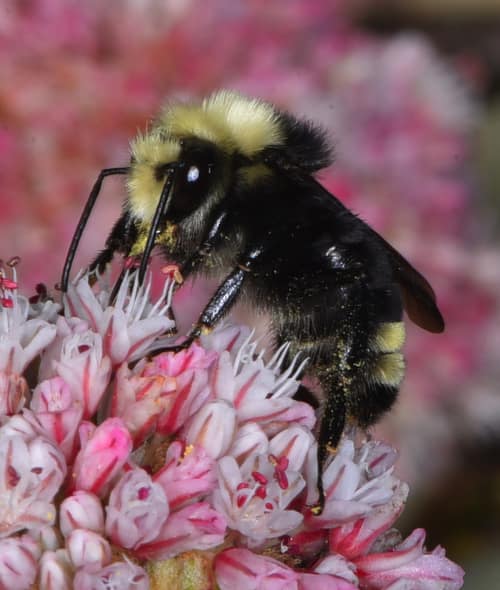
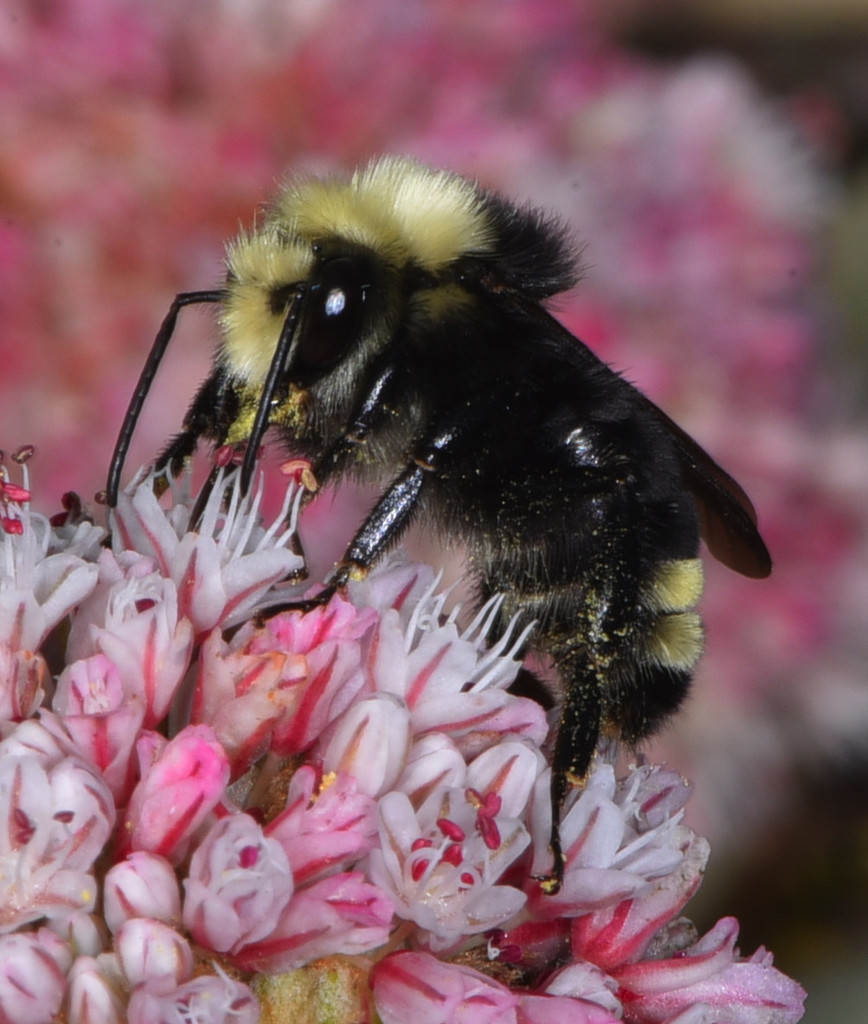
—observations
—countries
—peak records
Least ConcernConservation statusIUCN Red List categoriesLCNTVUENCREWEXLeast ConcernRed List categories, explained →
Diet & prey
- Nectar
- Pollen
Predators
- Crab Spiders
- Robber Flies
- Insectivorous Birds
ThreatsPesticides, habitat fragmentation, pathognes from managed hives
HabitatsFields, gardens, coastal scrub, chaparral, forest edges
Life spanQueens live up to 1 year; workers live 1–2 months
Classification
- OrderHymenoptera
- FamilyApidae
- GenusBombus
- SpeciesBombus vosnesenskii
Range data is not available yet.
Interaction riskVery high
- Low
- Moderate
- High
- Very high
- Why interaction risk is very high
- Females inject venom when defending hives; keep a safe distance from nest entrances.
- Why it is dangerous
- Females inject venom containing protein allergens through a smooth sting mechanism, which can cause intense pain or severe anaphylaxis.
- How to recognize a risky encounter
- Look for a distinct yellow face patch combined with a black thorax and a single yellow abdominal band.
- What to do
- Maintain a distance of several meters from active ground nests, and remain calm if a worker hovers nearby.
Responsible observation
- Observation: Watch workers visit flowers during warm sunny afternoons without interrupting their flight paths.
- Garden Support: Plant continuous blooms of native salvias, lupines, and ceanothus to sustain colonies from spring to autumn.
- Nest Safety: Give ground nests a wide berth, as defending workers will sting if their entry hole is disturbed.
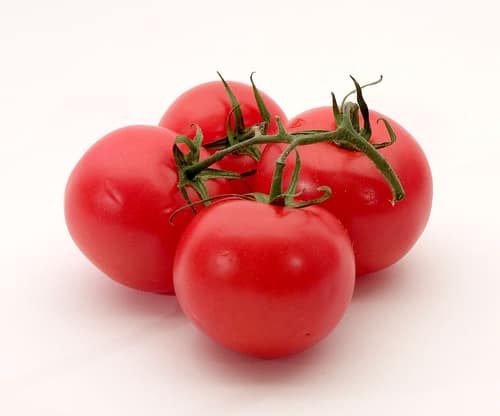
Pollination Partner Softeis / CC BY-SA 3.0 · cc-by-sa
Close Relative (c) Eddie Dunbar, some rights reserved (CC BY-SA), uploaded by Eddie Dunbar · cc-by-sa
Close Relative (c) Pinnacles National Park, some rights reserved (CC BY), uploaded by Pinnacles National Park · cc-by
Help improve the field guideSomething wrong?
Checking your Fauna account…Report a name, category, or profile issue for review.