
Insect
Western Bumble Bee
Bombus occidentalisAlso known as Western Bumblebee
Western bumble bees build underground colonies in abandoned rodent nests and forage across mountain meadows, prairies, and orchards. Queens emerge in early spring to found new nests, gathering pollen through buzz pollination to feed their first brood of workers. Once abundant across western North America, populations have suffered severe declines from commercial bee parasite spillover.
PollinatorNative BeeSocial Insect


—observations
—countries
—peak records
VulnerableConservation statusIUCN Red List categoriesLCNTVUENCREWEXVulnerableRed List categories, explained →
Diet & preyPollen, Nectar
Predators
- Crab spiders
- Birds
- Robber flies
ThreatsParasite transmission from commercial bees, habitat loss, and pesticides
HabitatsMeadows, prairies, mountain valleys, and open woodlands
Life spanColonies last 1 year; queens live up to 1 year
Classification
- FamilyApidae
- SpeciesBombus occidentalis
Range data is not available yet.
Interaction riskVery high
- Low
- Moderate
- High
- Very high
- Why interaction risk is very high
- Females can sting defensively when nests are disturbed; observe from a polite distance.
- Why it is dangerous
- Females possess a smooth sting mechanism capable of injecting venom multiple times, triggering pain or allergic reactions in sensitized individuals.
- How to recognize a risky encounter
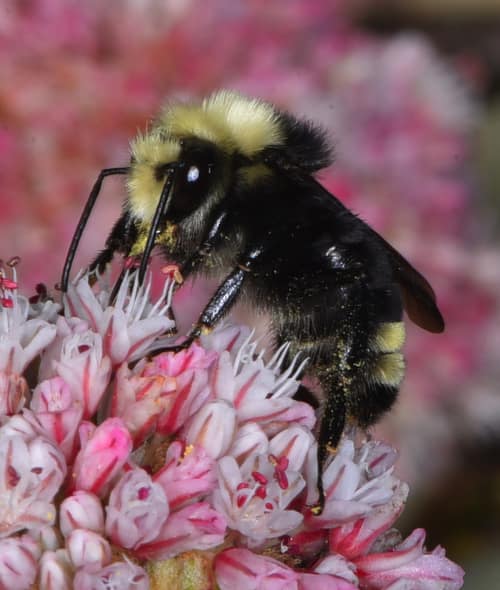
- Look for a yellow thorax band, black front abdomen, and distinctive pale yellow or whitish tail patch.
- What to do
- Observe foraging individuals quietly from a few feet away and never disturb active nest entrances.
- What to notice
- Recognized by yellow thoracic striping, dark middle abdomen, and pale whitish tail tips in western regions.
- Support conservation
- Avoid catching specimens or disturbing ground-nesting burrows in natural habitats.
Responsible observation
- Observation: Approach flowering patches quietly on warm, sunny afternoons when bees forage.
- Garden Planting: Native lupines, penstemons, and clovers offer vital spring and summer nectar.
- Nest Safety: Avoid disturbing ground holes or grassy tussocks where colonies nest.
Competitor (c) Don Loarie, some rights reserved (CC BY) · cc-by
Close Relative (c) Bill Keim, some rights reserved (CC BY) · cc-by Image unavailable
Close Relative
Help improve the field guideSomething wrong?
Checking your Fauna account…Report a name, category, or profile issue for review.