
Insect · GBIF taxon 1325405
California Harvester Ant
Pogonomyrmex californicusAlso known as California Harvester
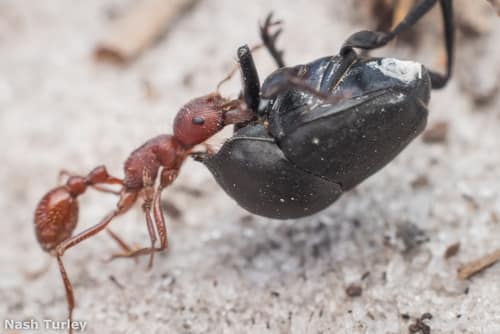
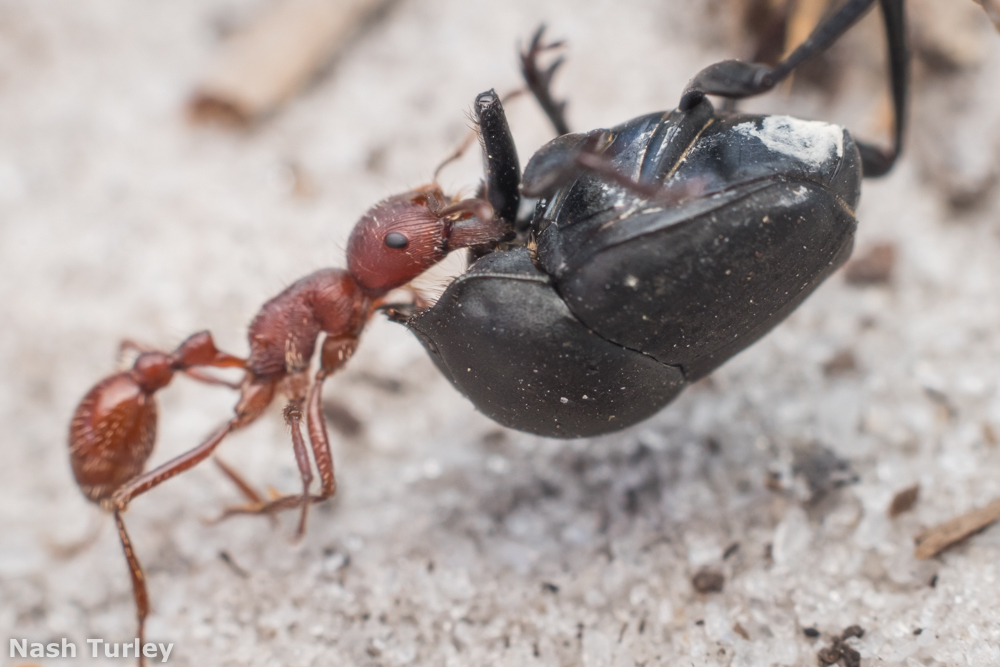
California harvester ants build conspicuous circular clearings in sandy desert soil, stripping surrounding vegetation to optimize sun exposure and colony defense. Worker ants forage along established trails to gather seeds from grasses and wildflowers, storing their haul in underground granaries. Famous for their role in commercial educational ant farms, these vibrant reddish ants are also known for defending their nest with an extraordinarily painful sting.
SocialStingingGranivore
 1 / 7
1 / 7—observations
—countries
—peak records
Not EvaluatedConservation statusIUCN Red List categoriesLCNTVUENCREWEXNot Evaluated — not placed on the risk ladderRed List categories, explained →
Diet & prey
- Grass Seeds
- Wildflower Seeds
- Dead Insects
Predators
- Coast Horned Lizard
- Antlion
- Spiders
ThreatsHabitat loss from urban development and displacement by invasive Argentine ants
HabitatsArid deserts, scrublands, sandy coastal plains, and chaparral
Life spanQueens live up to 20 years; workers live 1 to 3 years
Size / weightNot available
Classification
- FamilyFormicidae
- SpeciesPogonomyrmex californicus
Range data is not available yet.
Interaction riskVery high
- Low
- Moderate
- High
- Very high
- Why interaction risk is very high
- Delivers an intensely painful sting when disturbed; observe nest clearings from a respectful distance.
- Why it is dangerous
- Injects potent venom causing immediate burning pain, severe localized swelling, and possible allergic reactions.
- How to recognize a risky encounter
- Recognizable by their medium size, bright reddish-orange body, and distinct nest clearings.
- What to do
- Avoid standing or sitting near active nest clearings, and do not handle live ants directly.
Responsible observation
- Spotting Nests: Look for wide patches of bare sandy ground surrounding central burrow holes.
- Safe Viewing: Stand back several feet from active foraging trails to avoid stepping on workers.
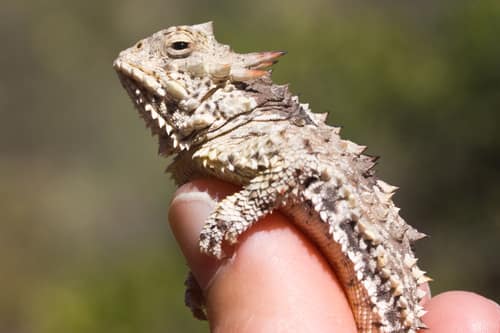
Predator (c) Ken-ichi Ueda, some rights reserved (CC BY) · cc-by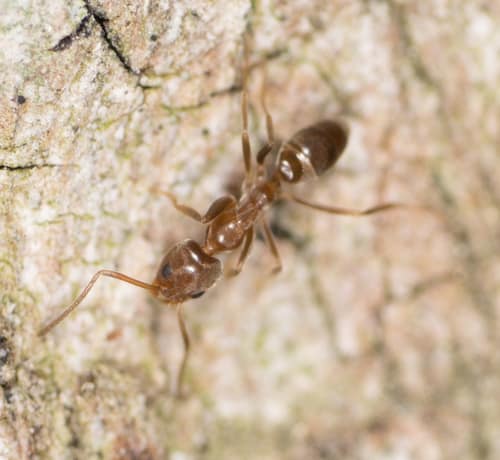
Competitor no rights reserved, uploaded by Jesse Rorabaugh · cc0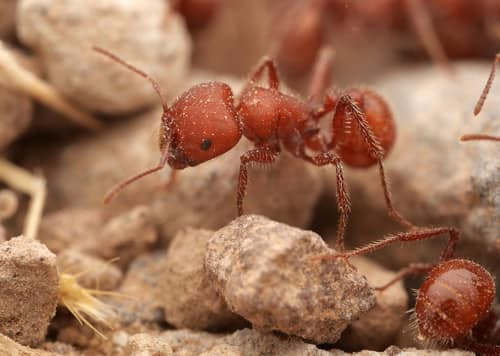
Close Relative no rights reserved, uploaded by Philipp Hoenle · cc0
Help improve the field guideSomething wrong?
Checking your Fauna account…Report a name, category, or profile issue for review.