
Insect · GBIF taxon 1317433
Yellow Crazy Ant
Anoplolepis gracilipesAlso known as Long-legged Ant, Maldive Ant, Crazy Ant
Yellow crazy ants are famous for their frantic, erratic movements when disturbed, darting in unpredictable directions rather than straight paths. They build massive multi-queen supercolonies that blind and overpower animals as large as red land crabs by spraying cloud-like bursts of formic acid. Their intense honeydew-harvesting partnership with scale insects alters forest canopies and disrupts entire island ecosystems across the tropics.
InvasiveSupercolonialAggressive
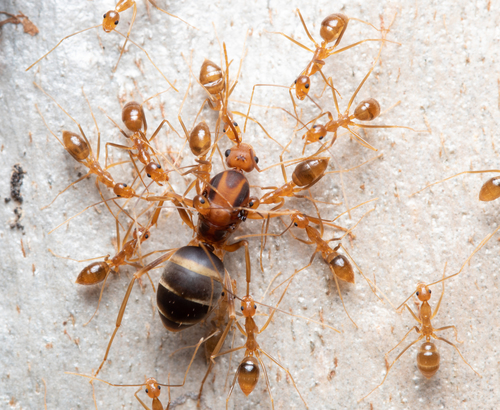
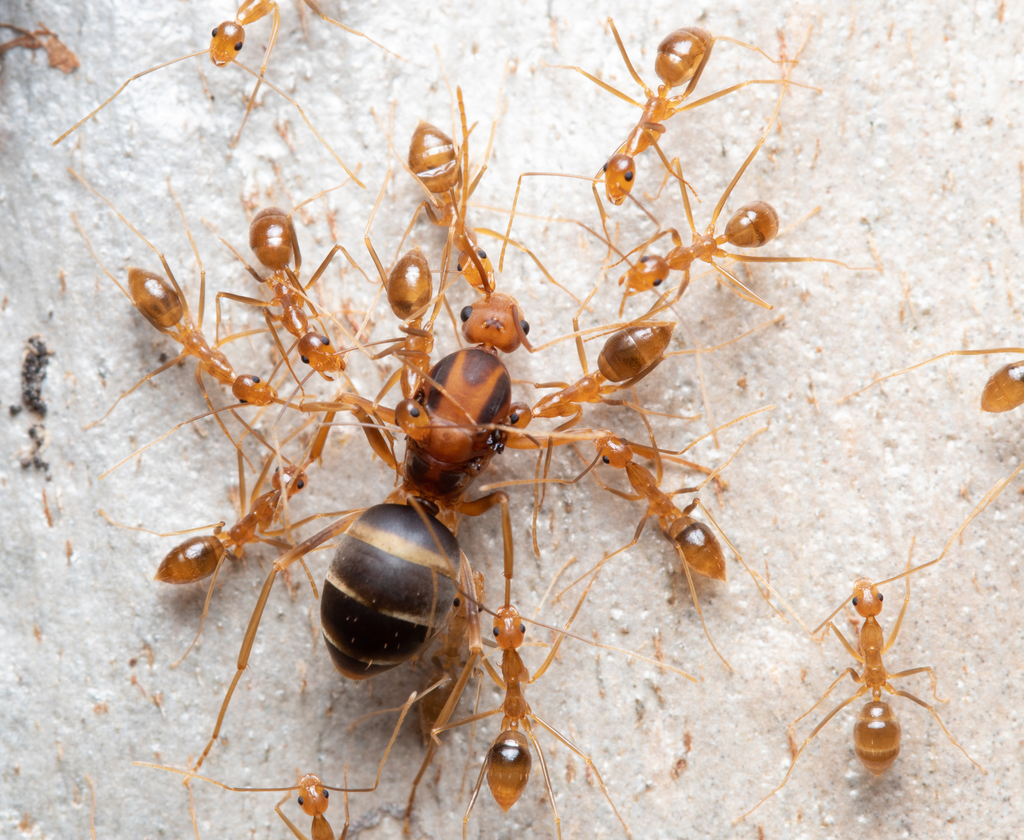 1 / 7
1 / 7—observations
—countries
—peak records
Not EvaluatedConservation statusIUCN Red List categoriesLCNTVUENCREWEXNot Evaluated — not placed on the risk ladderRed List categories, explained →
Diet & prey
- Scale insect honeydew
- Land crabs
- Small invertebrates
Predators
- Lizards
- Spiders
- Predatory beetles
ThreatsTargeted eradication programs, biological control efforts
HabitatsTropical forests, coastal scrub, agricultural land, urban areas
Life spanWorkers live 2–6 months; queens live up to 5 years
Classification
- OrderHymenoptera
- FamilyFormicidae
- GenusAnoplolepis
- SpeciesAnoplolepis gracilipes
Range data is not available yet.
Interaction riskLow
- Low
- Moderate
- High
- Very high
- Why interaction risk is low
- Sprays formic acid when threatened, causing skin and eye irritation; avoid disturbing nests or foraging trails.
- Why it is dangerous
- Sprays localized clouds of formic acid defensively, causing burning sensations, rashes, and intense eye irritation.
- How to recognize a risky encounter
- Recognized by long legs, slender yellow-brown body, long antennae, and erratic, frantic running style.
- What to do
- Do not step into active foraging trails or handle nests; wear eye protection when working near infestations.
Responsible observation
- Watch Movement: Observe their rapid, frantic, erratic foraging trails along tree trunks and ground layer.
- Keep Distance: Avoid standing near disturbed nests to prevent painful formic acid spray on skin and eyes.
- Inspect Gear: Check shoes, backpacks, and vehicles before moving between tropical habitat zones.
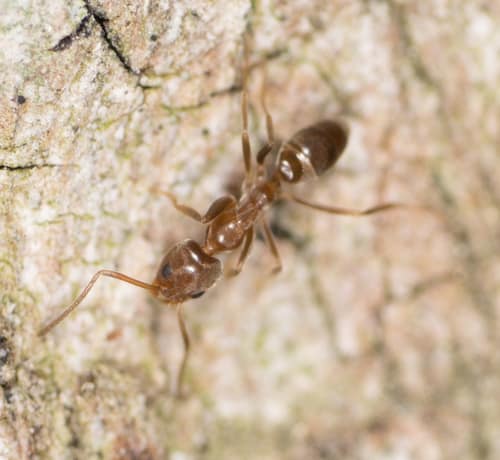
Invasive Competitor no rights reserved, uploaded by Jesse Rorabaugh · cc0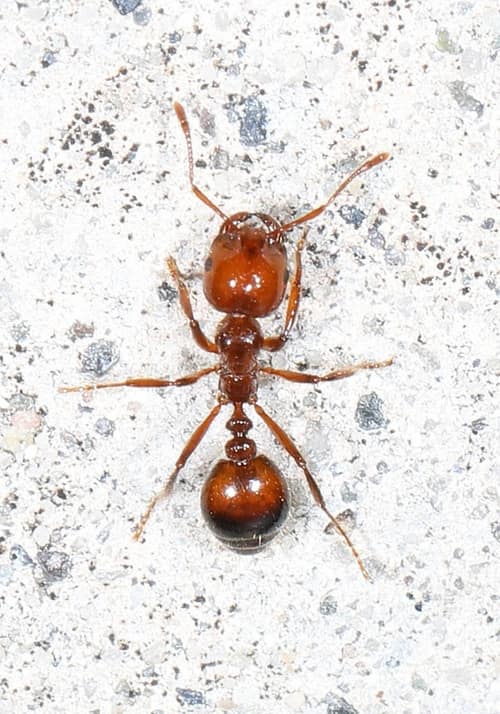
Invasive Competitor (c) Judy Gallagher, some rights reserved (CC BY) · cc-by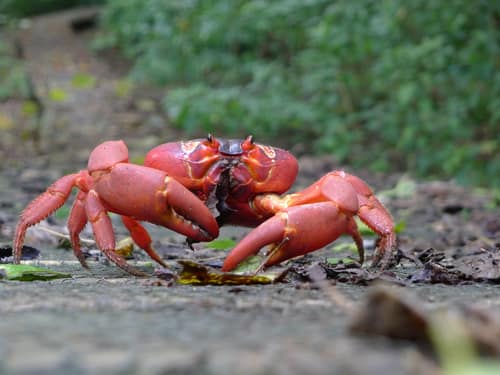
Ecological Victim (c) John Tann, some rights reserved (CC BY) · cc-by
Help improve the field guideSomething wrong?
Checking your Fauna account…Report a name, category, or profile issue for review.