Also known as Green Tree Ant, Green Ant, Weaver Ant
Asian weaver ants are renowned ecosystem engineers that dominate tropical forest canopies by constructing intricate tree nests out of living leaves. Major workers coordinate their collective strength to pull foliage together while other workers gently tap silk-producing larvae against the leaf seams like living glue guns. Extremely territorial and aggressive, a single polydomous colony can occupy dozens of trees, fiercely preying on forest pests while tending honeydew-secreting insects.
Not EvaluatedConservation statusIUCN Red List categoriesLCNTVUENCREWEXNot Evaluated — not placed on the risk ladderRed List categories, explained →
Key facts
Diet & prey
Caterpillars
Treehoppers
Small beetles
Predators
Green ant-mimicking jumping spider
Rufous woodpecker
Tree skink
ThreatsCanopy deforestation, broad-spectrum pesticide spraying, and habitat fragmentation
HabitatsTropical rainforests, coastal woodlands, mangroves, and fruit orchards
Life spanWorkers live 3–6 months; queens live up to 8 years
Size / weightNot available
Classification
FamilyFormicidae
SpeciesOecophylla smaragdina
Range & activity
Range data is not available yet.
Safe observation
Interaction riskLow
Low
Moderate
High
Very high
Why interaction risk is low
Workers defend their tree aggressively, delivering painful bites and spraying formic acid; avoid disturbing foliage.
Why it is dangerous
Large workers use powerful mandibles to pierce skin and simultaneously spray formic acid into the puncture, causing intense stinging pain and local inflammation.
How to recognize a risky encounter
Recognizable by their slender orange-brown to green bodies, large heads, long legs, and spherical leaf nests bound with white larval silk.
What to do
Do not touch hanging leaf nests or shake inhabited tree branches; brush stray ants off clothing immediately without crushing them against skin.
Responsible observation
Canopy Vigilance: Watch low-hanging branches in orchards or rainforest trails to avoid brushing against nesting clusters.
Observing Construction: Look for rows of workers clutching leaf edges during late morning to see active nest building.

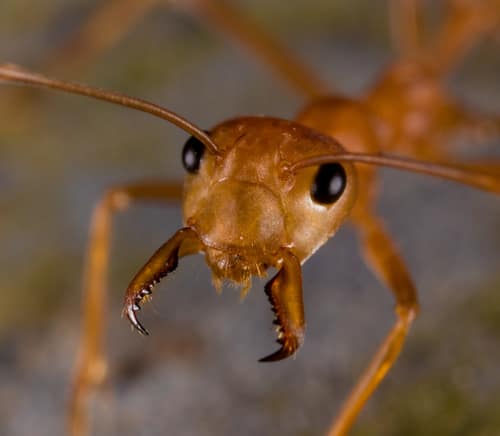
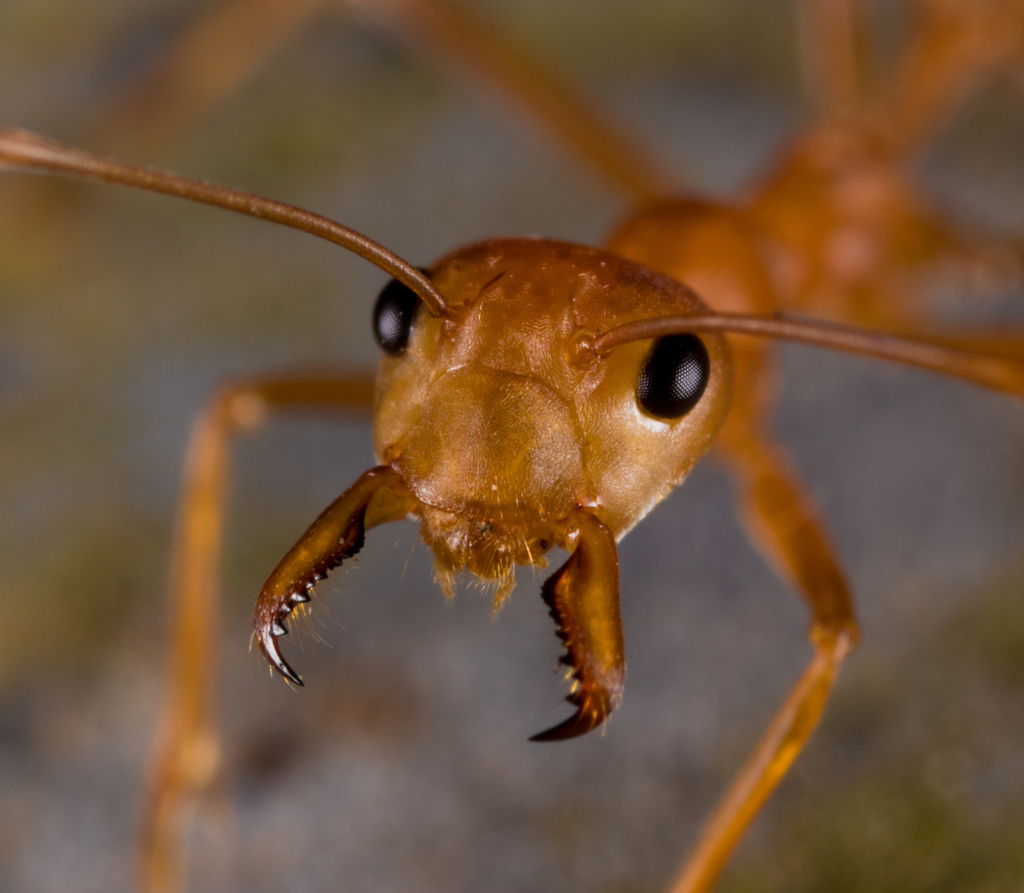
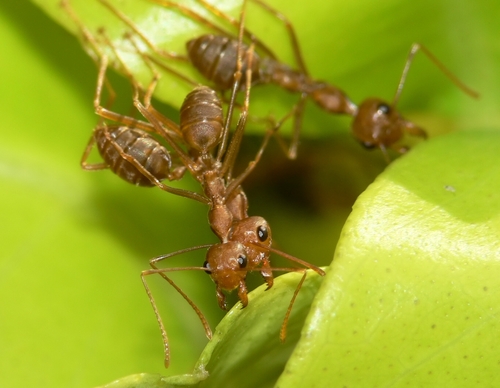
 Image unavailable