
Insect · GBIF taxon 1316908
Argentine Ant
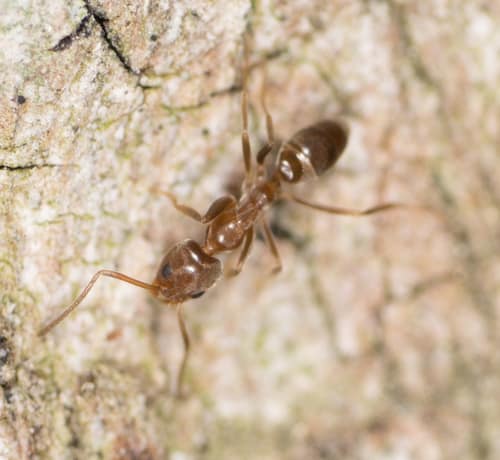
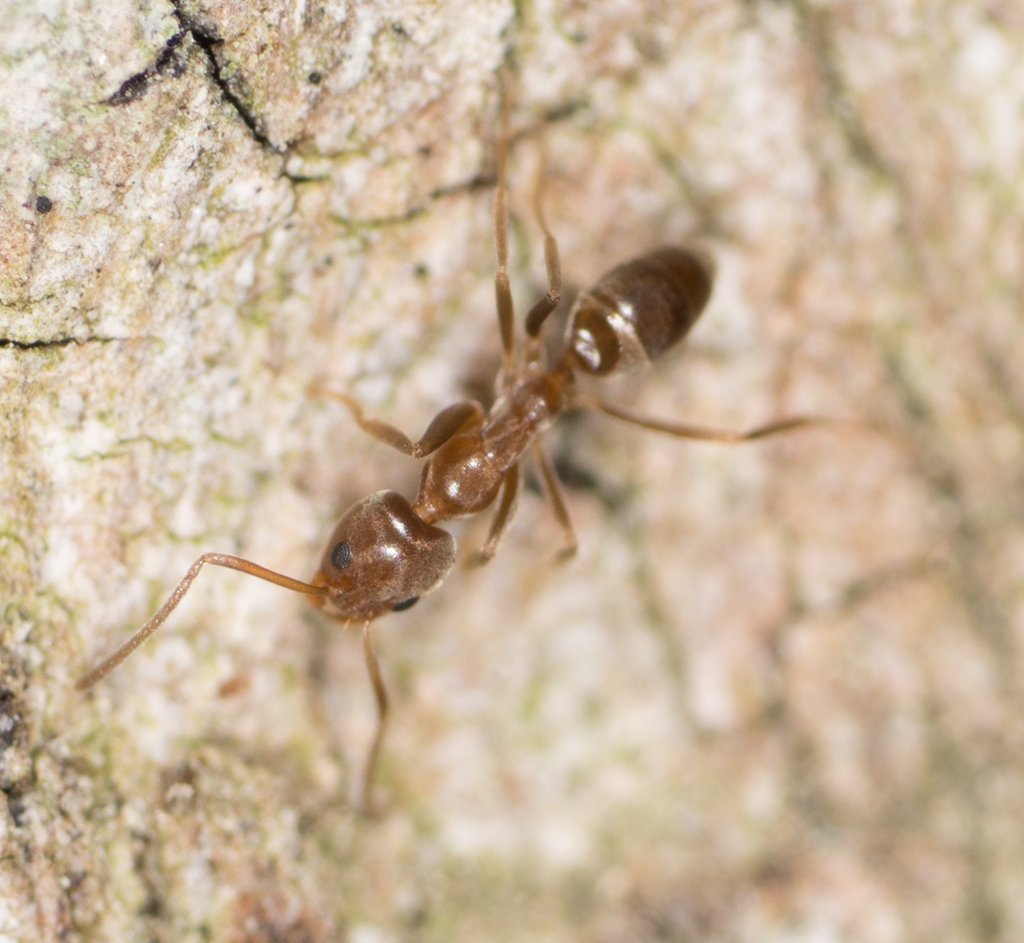
Linepithema humileArgentine ants form massive global supercolonies where workers from separate nests recognize each other as kin and coexist without territorial friction. They forage along dense, rapid trails to tend honeydew-producing insects or collect household carbohydrates, aggressively displacing native ant species in invaded areas. Multiple queens reproduce cooperatively within a single nest, allowing colonies to expand rapidly across urban and agricultural landscapes.
InvasiveSocial InsectSupercolony
—observations
—countries
—peak records
Least ConcernConservation statusIUCN Red List categoriesLCNTVUENCREWEXLeast ConcernRed List categories, explained →
Diet & prey
- Aphid Honeydew
- Small Arthropods
- Plant Nectar
Predators
- Spiders
- Lizards
- Small Birds
ThreatsTargeted pest control, extreme drought, freezing temperatures
HabitatsUrban landscapes, orchards, riparian zones, Mediterranean scrub
Life spanWorkers 10–12 months; queens 1–2 years
Classification
- OrderHymenoptera
- FamilyFormicidae
- GenusLinepithema
- SpeciesLinepithema humile
Range data is not available yet.
Interaction riskLow
- Low
- Moderate
- High
- Very high
- Why interaction risk is low
- Safe to observe at a normal distance.
Responsible observation
- Trail Observation: Look along sidewalk cracks and fence rails to spot their fast-moving foraging columns.
- Garden Inspection: Check plants with aphid infestations where worker ants protect pests to harvest honeydew.
- Pest Prevention: Seal exterior foundation entry points and keep indoor surfaces free of food residue.
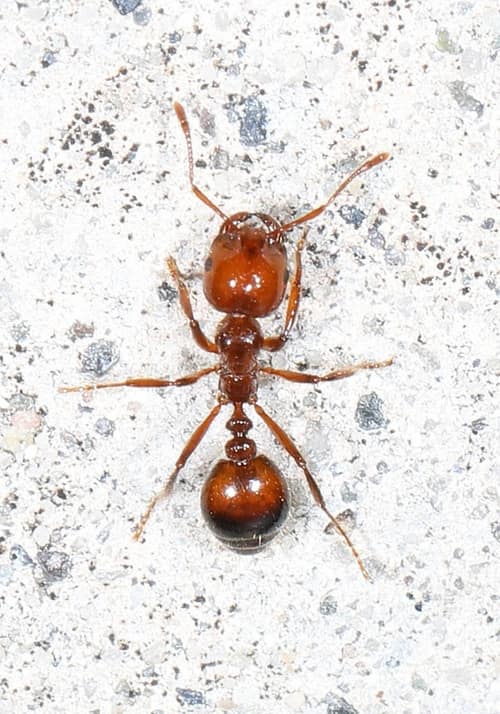
Competitor (c) Judy Gallagher, some rights reserved (CC BY) · cc-by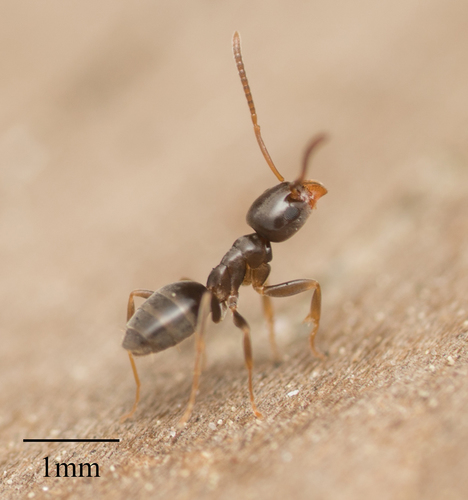
Look-alike no rights reserved, uploaded by Jesse Rorabaugh · cc0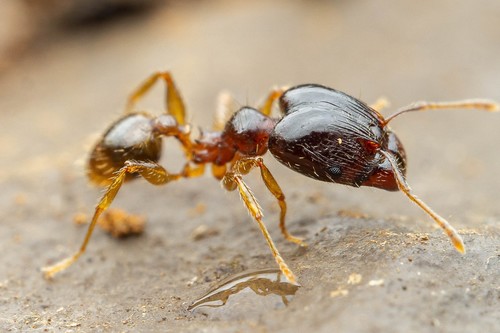
Invasive Rival (c) Jake Nitta, some rights reserved (CC BY), uploaded by Jake Nitta · cc-by
Help improve the field guideSomething wrong?
Checking your Fauna account…Report a name, category, or profile issue for review.