
Insect
Rimose Fungus-farming Ant
Cyphomyrmex rimosusRimose fungus-farming ants cultivate a specialized yeast-like fungus rather than the filamentous mycelium grown by larger leafcutter ants, nourishing their gardens with insect droppings, dead arthropods, and decaying plant bits. These tiny, rough-textured ants move slowly through leaf litter and curl up to feign death when disturbed, blending seamlessly into soil grains. Colonies remain small, often housing only a few dozen to a few hundred workers beneath stones, rotting logs, or shallow soil.
Fungus-farmingCrypticGround-dwelling
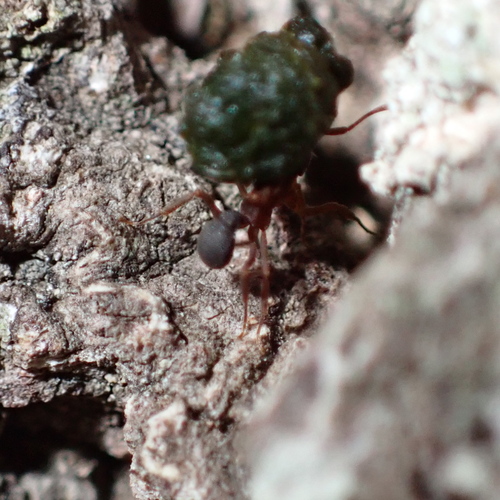
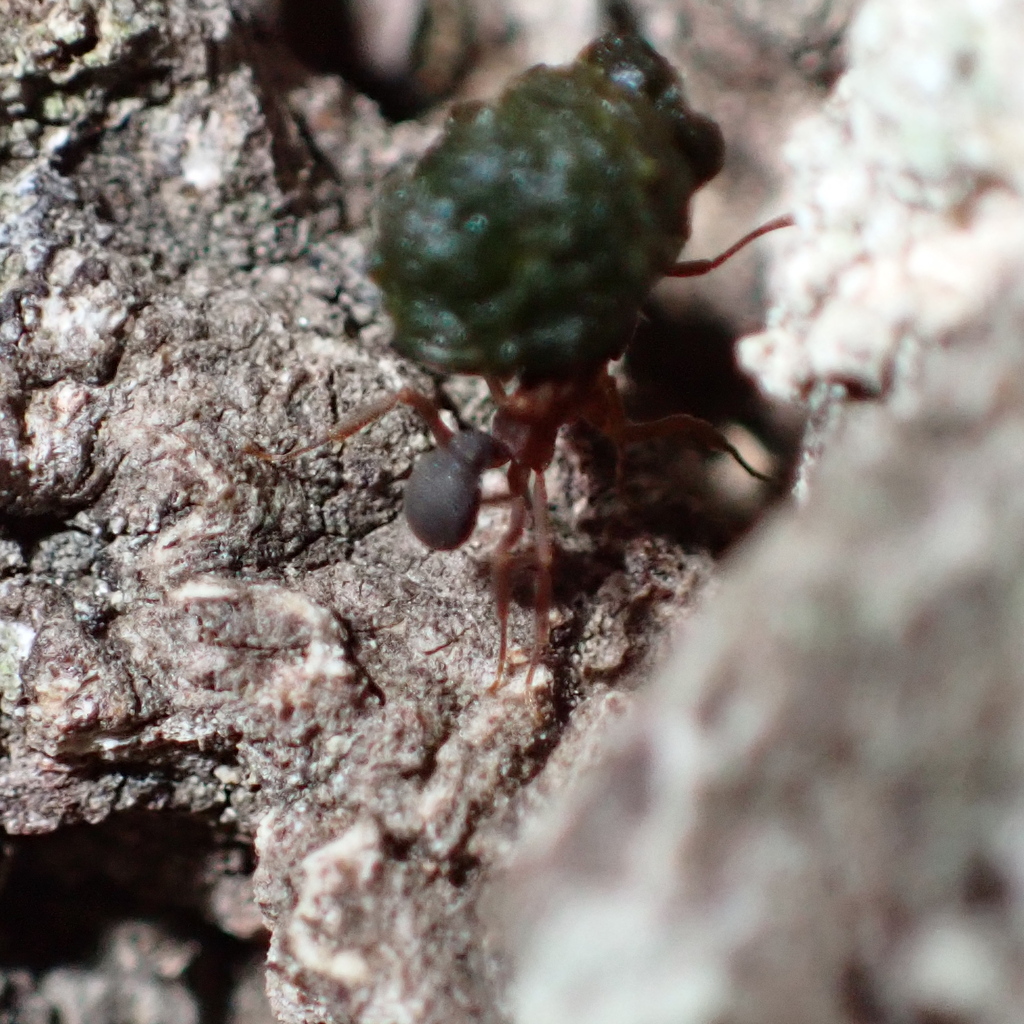
—observations
—countries
—peak records
Not EvaluatedConservation statusIUCN Red List categoriesLCNTVUENCREWEXNot Evaluated — not placed on the risk ladderRed List categories, explained →
Diet & preySymbiotic yeast-like fungus, Caterpillar frass (as garden substrate), Dead insects (as garden substrate)
Predators
- Nine-banded Armadillo
- Ant-eating spiders
- Ground-foraging lizards
ThreatsHabitat loss, invasive fire ants, and pesticide use
HabitatsLeaf litter, rotting wood, soil beneath stones, tropical and subtropical forests, and shaded gardens
Life spanWorkers live several months; queens can live several years
Classification
- FamilyFormicidae
- SpeciesCyphomyrmex rimosus
Range data is not available yet.
Interaction riskLow
- Low
- Moderate
- High
- Very high
- Why interaction risk is low
- Harmless to humans and pets; safe to observe at close range.
Responsible observation
- Where to look: Gently lift flat stones or pieces of damp, decaying bark in shaded woods to spot slow-moving workers.
- Observation: Use a hand lens to see their ridged exoskeleton and the pale yeast nodules inside exposed nest chambers.
- Disturbance: Replace any turned rocks or logs carefully in their original position to protect the fragile fungus garden.
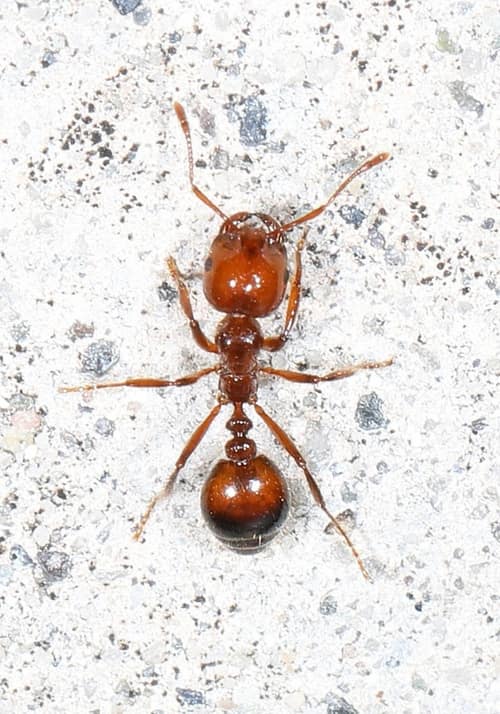
Competitor (c) Judy Gallagher, some rights reserved (CC BY) · cc-by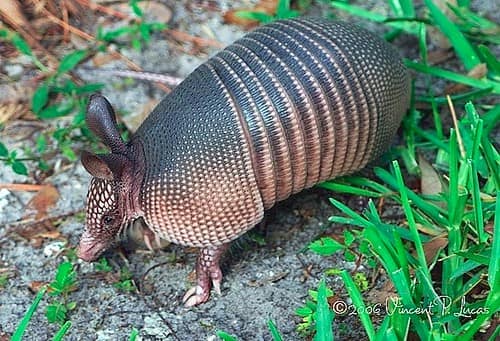
Predator "Nine-banded Armadillo" by leppyone is licensed under CC BY 2.0. To view a copy of this license, visit https://creativecommons.org/licenses/by/2.0/. · cc-by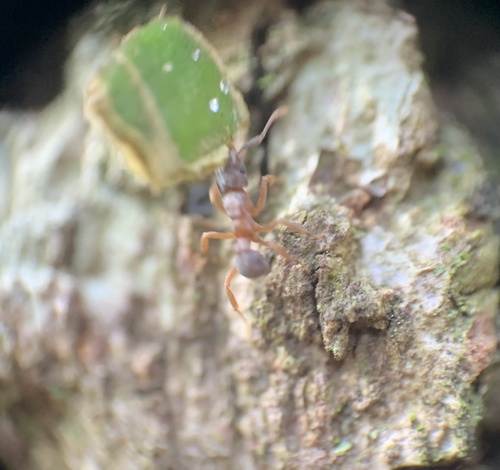
Close Relative no rights reserved · cc0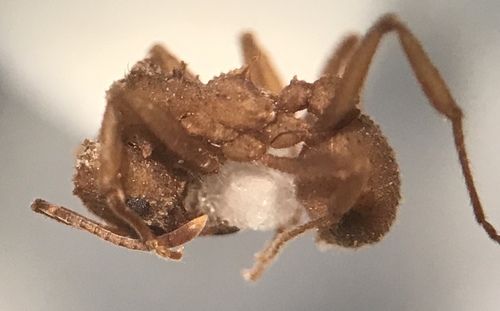
Same Family no rights reserved, uploaded by Raven Dandridge · cc0
Help improve the field guideSomething wrong?
Checking your Fauna account…Report a name, category, or profile issue for review.