Southern wood ants build towering, dome-shaped nests out of pine needles, twigs, and resin that can house hundreds of thousands of workers and persist for decades. Colonies maintain bustling highway networks along forest floors to tend aphid herds for honeydew while simultaneously hunting woodland insects. When threatened, workers rear up on their hind legs, bite with strong mandibles, and spray jets of pungent formic acid from the tips of their abdomens.
ThreatsHabitat fragmentation, intensive forestry, and climate change
HabitatsConiferous and mixed woodlands, forest edges, and heathlands across Eurasia
Life spanWorkers 1–3 years; queens up to 15–20 years
Classification
OrderHymenoptera
FamilyFormicidae
GenusFormica
SpeciesFormica rufa
Range & activity
Range data is not available yet.
Safe observation
Interaction riskLow
Low
Moderate
High
Very high
Why interaction risk is low
Bites with strong mandibles and sprays stinging formic acid when nests are disturbed; observe mounds from a step back.
Why it is dangerous
Defending workers bite with serrated mandibles and spray concentrated formic acid, which causes sharp stinging on bare skin and severe irritation if it reaches the eyes.
How to recognize a risky encounter
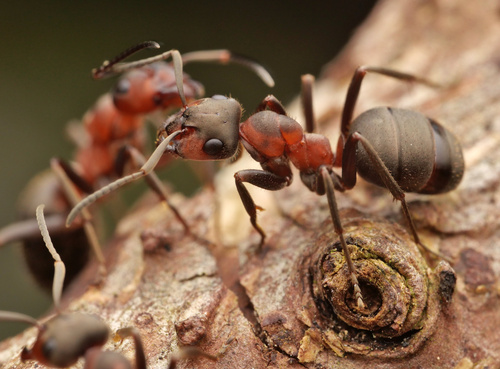
Look for large, dome-shaped mounds of pine needles and twigs on sunny woodland floors, guarded by red-and-black workers measuring up to 9 mm long.
What to do
Keep hands, feet, and pets off the nest mound and busy foraging trails; if sprayed, rinse skin or eyes promptly with clean water.
What to notice
Recognize colonies by their prominent thatched mounds of conifer needles at sunny forest edges and dense worker trails climbing nearby trees.
Support conservation
Never poke, kick, or dig into nest mounds, as disturbing the core structure can expose brood to cold and collapse a decades-old colony.
Responsible observation
Watch the Mound: Observe the constant stream of workers repairing the dome and regulating nest temperature in sunny clearings.
Follow the Trails: Trace busy ant highways up nearby pine trunks to spot workers tending aphids for sweet honeydew.
Smell the Defense: Keep a respectful distance from agitated trails, where defensive sprays release a sharp, vinegar-like scent of formic acid.

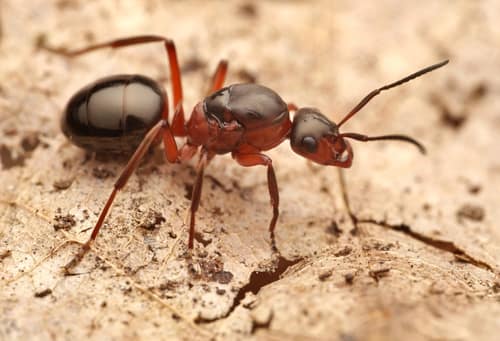
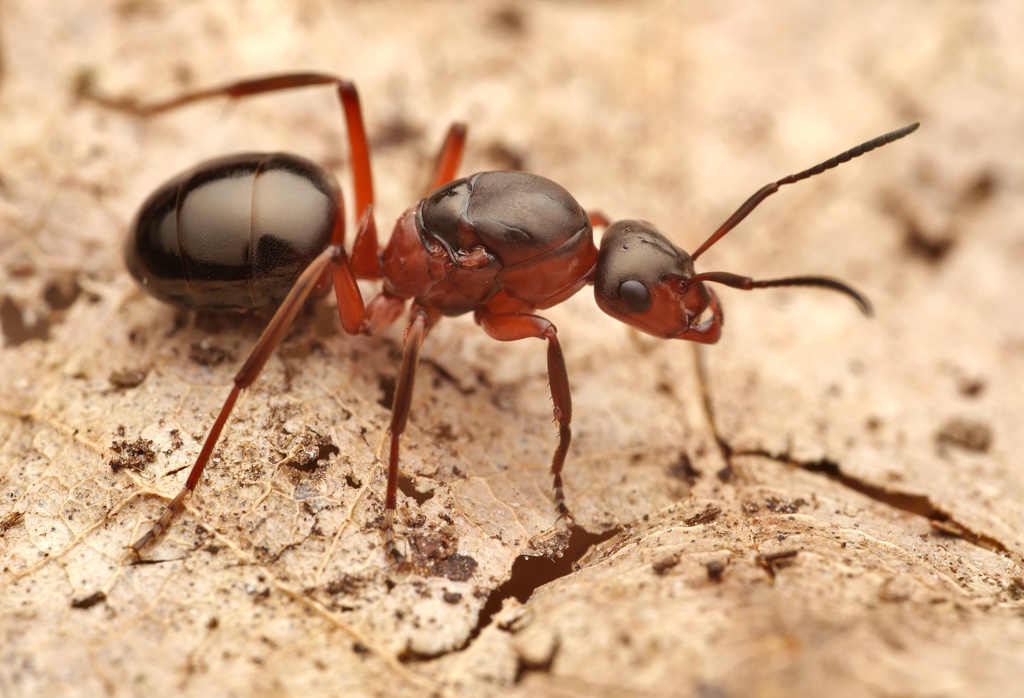
 Image unavailable