
Insect · GBIF taxon 1311815
Bald-faced Hornet
Dolichovespula maculataAlso known as White-Faced Hornet, Bald-Faced Aerial Yellowjacket, Blackjacket, Bull Wasp
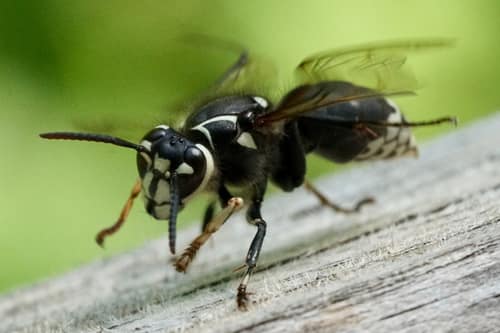
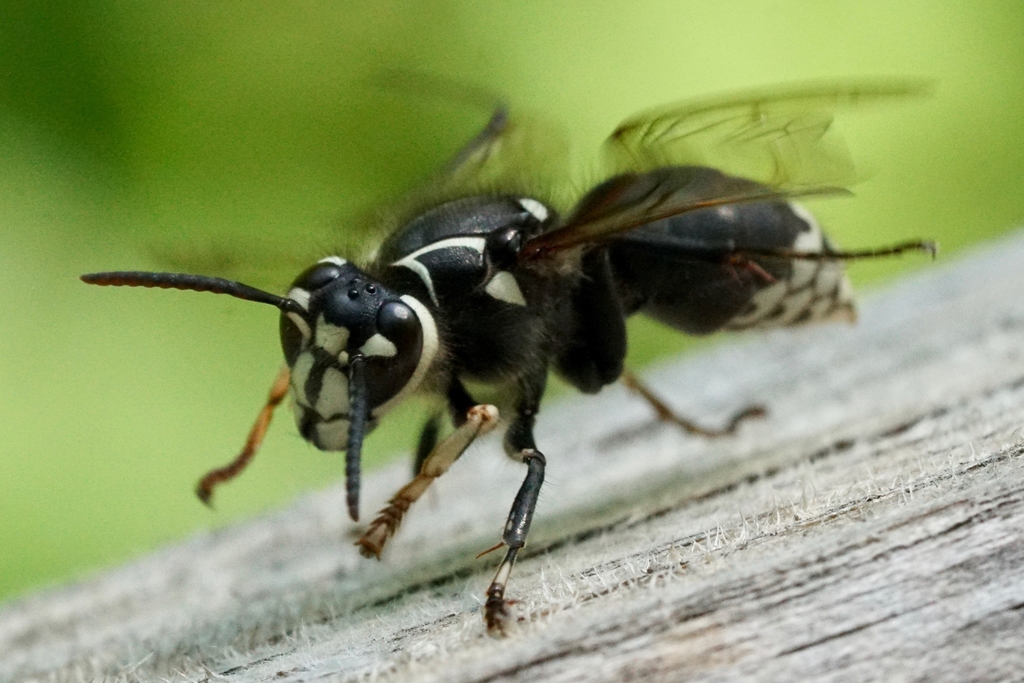
Bald-faced hornets are eusocial aerial yellowjackets famed for constructing large, grey, paper-like teardrop nests suspended high in trees and structures. Recognizable by their striking black body and ivory-white markings across the face and abdomen tip, these wasps are active predators of pest insects like flies and caterpillars. Queens start new colonies alone each spring, raising workers that vigorously protect the nest through late autumn.
Social InsectStingingPredatory
 1 / 7
1 / 7—observations
—countries
—peak records
Not EvaluatedConservation statusIUCN Red List categoriesLCNTVUENCREWEXNot Evaluated — not placed on the risk ladderRed List categories, explained →
Diet & prey
- Flies
- Caterpillars
- Spiders
Predators
- Summer Tanagers
- Black Bears
- Praying Mantises
ThreatsPesticides, intentional nest destruction, late spring freezes
HabitatsDeciduous forests, suburban gardens, orchards, woodland edges
Life spanWorkers 2–4 weeks; queens 1 year
Size / weightNot available
Classification
- OrderHymenoptera
- FamilyVespidae
- GenusDolichovespula
- SpeciesDolichovespula maculata
Range data is not available yet.
Interaction riskVery high
- Low
- Moderate
- High
- Very high
- Why interaction risk is very high
- Workers defend nests forcefully with repeated stings; keep a distance of several meters from active paper nests.
- Why it is dangerous
- Stings inject protein venom that causes intense pain, swelling, and potential anaphylaxis in sensitive individuals.
- How to recognize a risky encounter
- Recognized by jet-black body color with stark white facial and tail accents alongside hanging grey paper nests.
- What to do
- Keep a safe distance of at least 5 meters from active paper nests and never vibrate host branches.
Responsible observation
- Nest Clearance: Give active hanging paper nests a wide berth to avoid triggering a defensive response.
- Visual Cue: Look for distinct white facial markings on an otherwise jet-black wasp body.
- Garden Role: Appreciate them from a distance as natural predators of garden pests like flies and caterpillars.
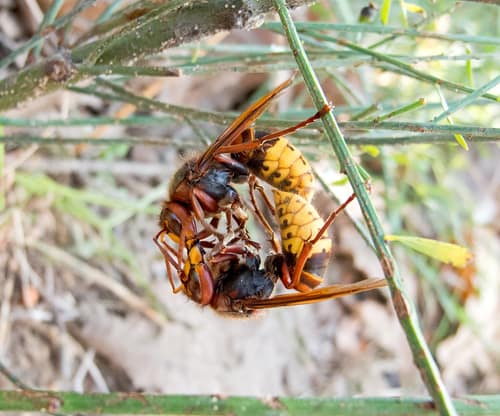
True Hornet (c) katunchik, some rights reserved (CC BY), uploaded by katunchik · cc-by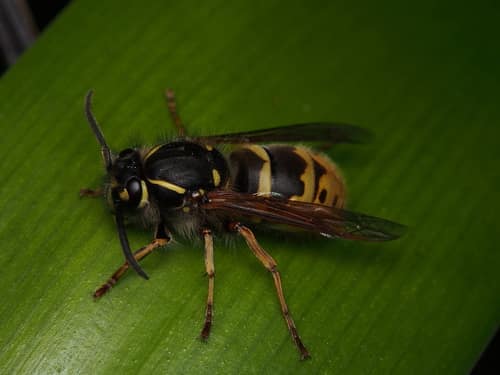
Close Relative (c) Tom, some rights reserved (CC BY), uploaded by Tom · cc-by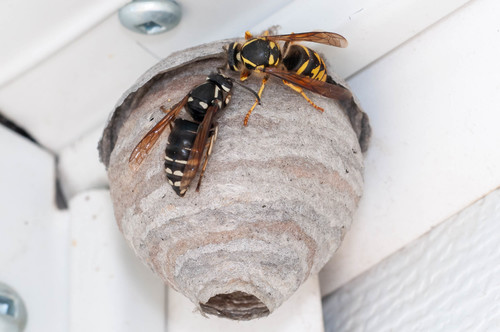
Genus Relative (c) Chris O'Donoghue, some rights reserved (CC BY) · cc-by
Help improve the field guideSomething wrong?
Checking your Fauna account…Report a name, category, or profile issue for review.