
Insect · GBIF taxon 1311698
Western Yellowjacket
Vespula pensylvanicaAlso known as Western Yellow Jacket, Californian Yellowjacket
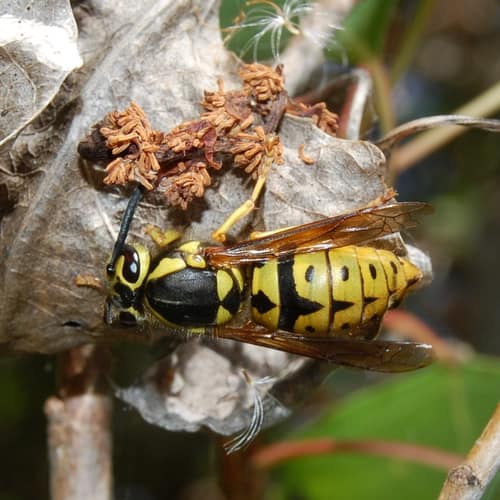
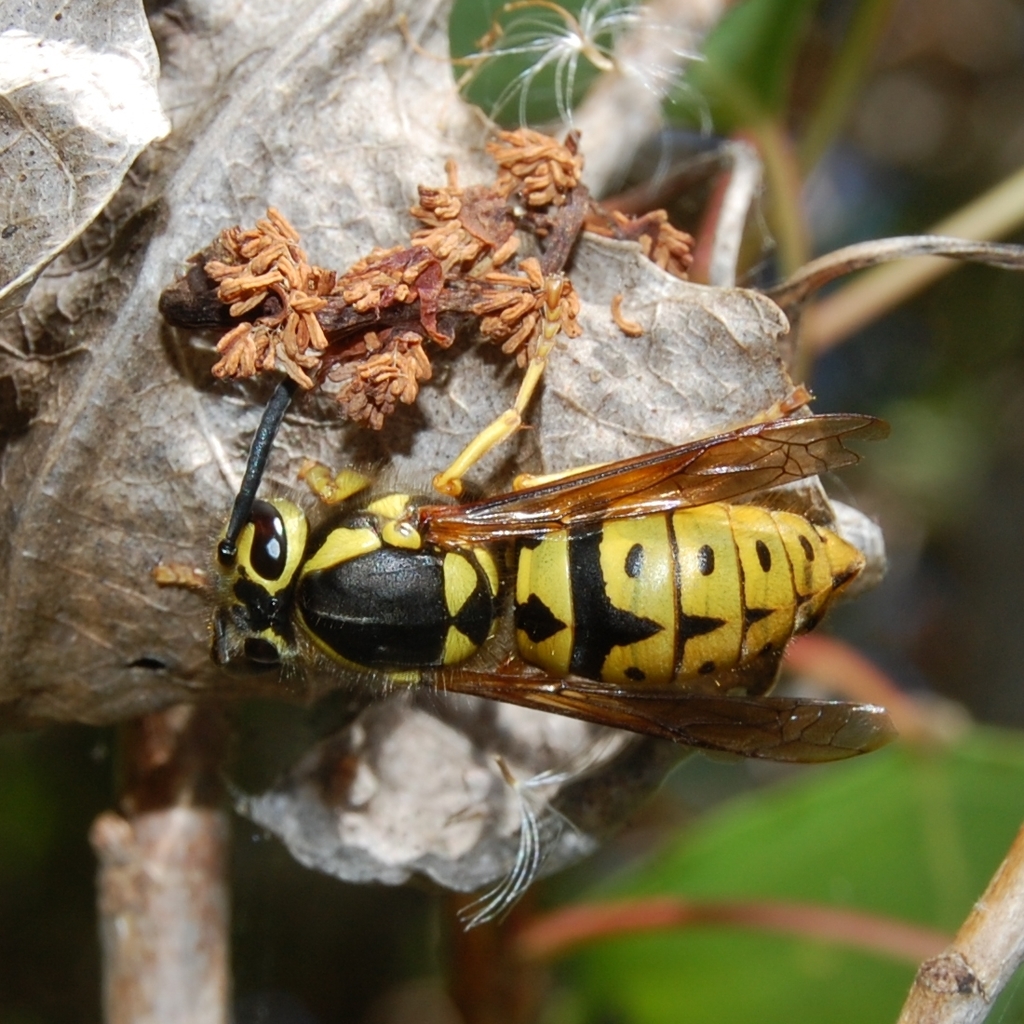
Western yellowjackets are energetic social wasps recognized by their striking black and bright yellow abdominal stripes and hairless bodies. Colonies construct complex paper nests underground, inside rodent burrows, or within hollow logs, often housing thousands of workers by late summer. They act as essential natural pest controls by hunting caterpillars and flies, though they aggressively forage for protein and sugar near human picnics.
Social InsectStingingVenomous
—observations
—countries
—peak records
Not EvaluatedConservation statusIUCN Red List categoriesLCNTVUENCREWEXNot Evaluated — not placed on the risk ladderRed List categories, explained →
Diet & prey
- Caterpillars
- Flies
- Spiders
Predators
- Bears
- Skunks
- Birds
ThreatsFreezing winter temperatures, pesticides, and nest destruction
HabitatsForests, meadows, agricultural land, and urban areas
Life spanWorkers live 2–4 weeks, queens live about 1 year
Classification
- OrderHymenoptera
- FamilyVespidae
- GenusVespula
- SpeciesVespula pensylvanica
Range data is not available yet.
Interaction riskVery high
- Low
- Moderate
- High
- Very high
- Why interaction risk is very high
- Delivers painful stings when defending nests or food, observe nests from a safe distance.
- Why it is dangerous
- Delivers painful venom via repeated stings that cause localized swelling or life-threatening anaphylaxis in allergic individuals.
- How to recognize a risky encounter
- Recognized by bold black-and-yellow striped abdomens and a yellow ring completely encircling the eye.
- What to do
- Back away slowly if a subterranean nest entrance is found, and avoid swatting at flying individuals.
Responsible observation
- Food management: Keep outdoor meats, sweet food, and beverages covered during summer meals.
- Nest avoidance: Scan lawns for ground holes with active insect traffic before mowing.
- Calm demeanor: Remain still and slowly walk away if a yellowjacket approaches you.
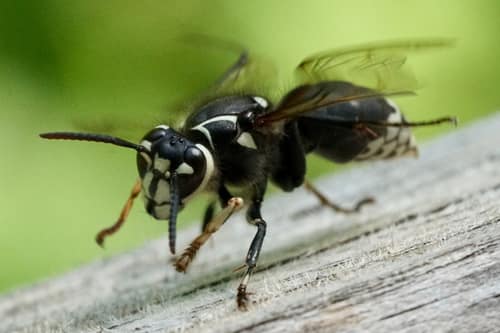
Co-occurring Vespid (c) Amy Schnebelin, some rights reserved (CC BY), uploaded by Amy Schnebelin · cc-by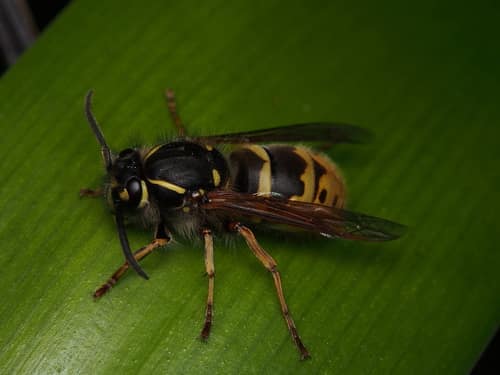
Close Relative (c) Tom, some rights reserved (CC BY), uploaded by Tom · cc-by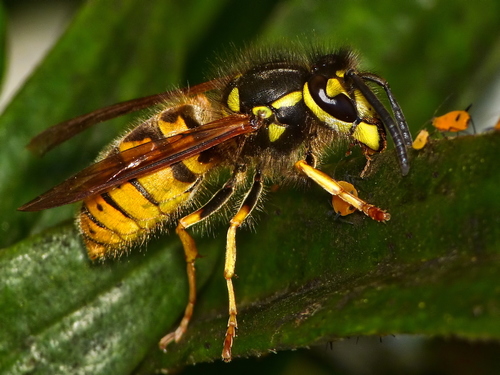
Close Relative (c) Sid Mosdell, some rights reserved (CC BY) · cc-by
Help improve the field guideSomething wrong?
Checking your Fauna account…Report a name, category, or profile issue for review.