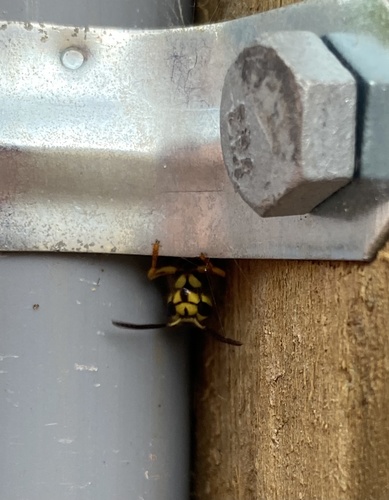
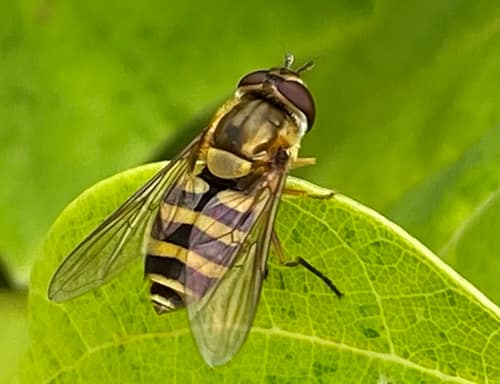
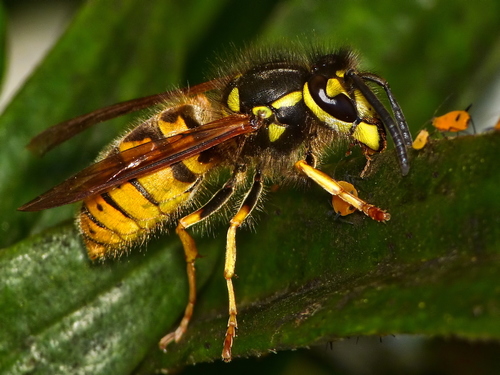
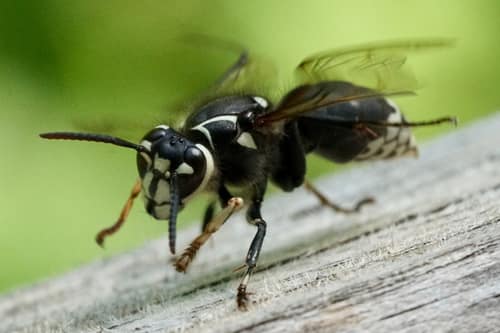
Eastern yellowjackets construct underground paper nests lined with chewed wood fiber, often in abandoned rodent burrows or wall cavities. Each spring, a solitary overwintered queen initiates the colony, eventually producing thousands of sterile female workers that forage for nectar and protein. By late summer and autumn, workers actively hunt insect pests and scavenge food to support the colony's final reproductive generation.
Not EvaluatedConservation statusIUCN Red List categoriesLCNTVUENCREWEXNot Evaluated — not placed on the risk ladderRed List categories, explained →
Key facts
Diet & prey
Caterpillars
Flies
Spiders
Predators
Bears
Skunks
Birds
ThreatsPesticide application, nest destruction, and severe winter cold
HabitatsDeciduous forests, meadows, suburban yards, parks, and urban areas
Life span1 year for queens; 12–22 days for workers
Size / weightNot available
Classification
OrderHymenoptera
FamilyVespidae
GenusVespula
SpeciesVespula maculifrons
Range & activity
Range data is not available yet.
Safe observation
Interaction riskVery high
Low
Moderate
High
Very high
Why interaction risk is very high
Females deliver painful stings when defending nests or food; give nests a wide berth.
Why it is dangerous
Delivers a painful, repeated venomous sting that contains proteins causing severe pain, local swelling, or life-threatening anaphylaxis in allergic individuals.
How to recognize a risky encounter
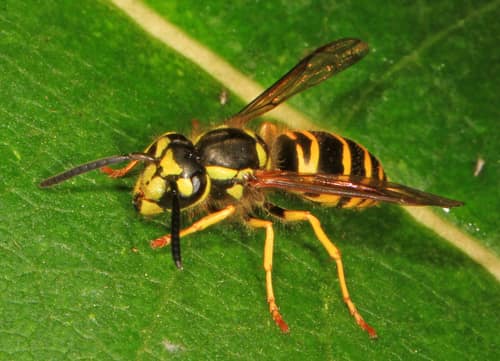
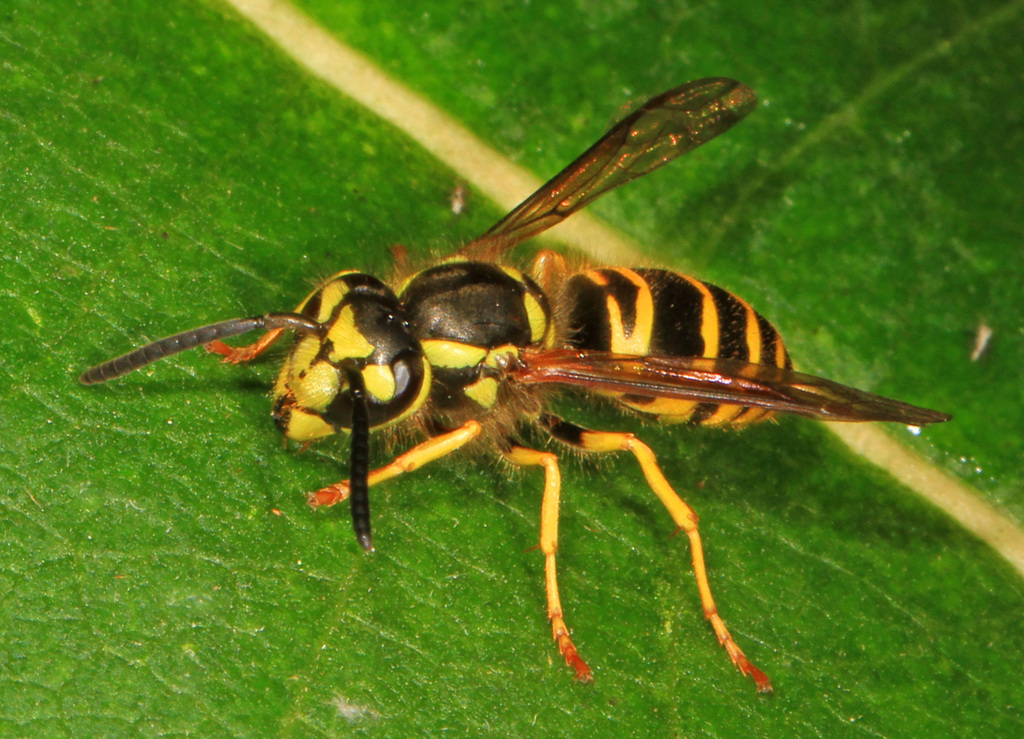
Identified by black-and-yellow striped abdomen, a black anchor-shaped pattern on the face, and ground-nesting entrances.
What to do
Never disturb nest openings or swat at foraging workers; step back slowly if stings begin and head indoors.
Responsible observation
Avoid Nests: Look for steady insect traffic entering holes in lawns before mowing.
Cover Food: Keep outdoor food and sugary drinks sealed during late summer picnics.
Stay Calm: Avoid swatting at approaching workers, as sudden movements incite stinging.

 1 / 7
1 / 7