
Insect · GBIF taxon 1311671
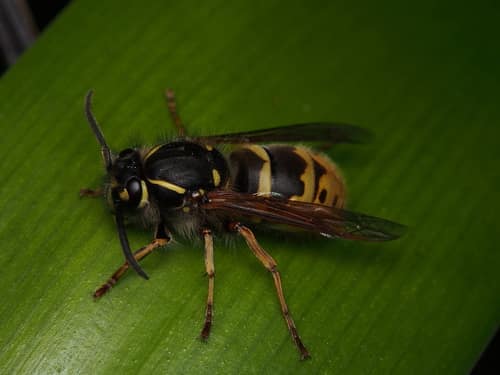
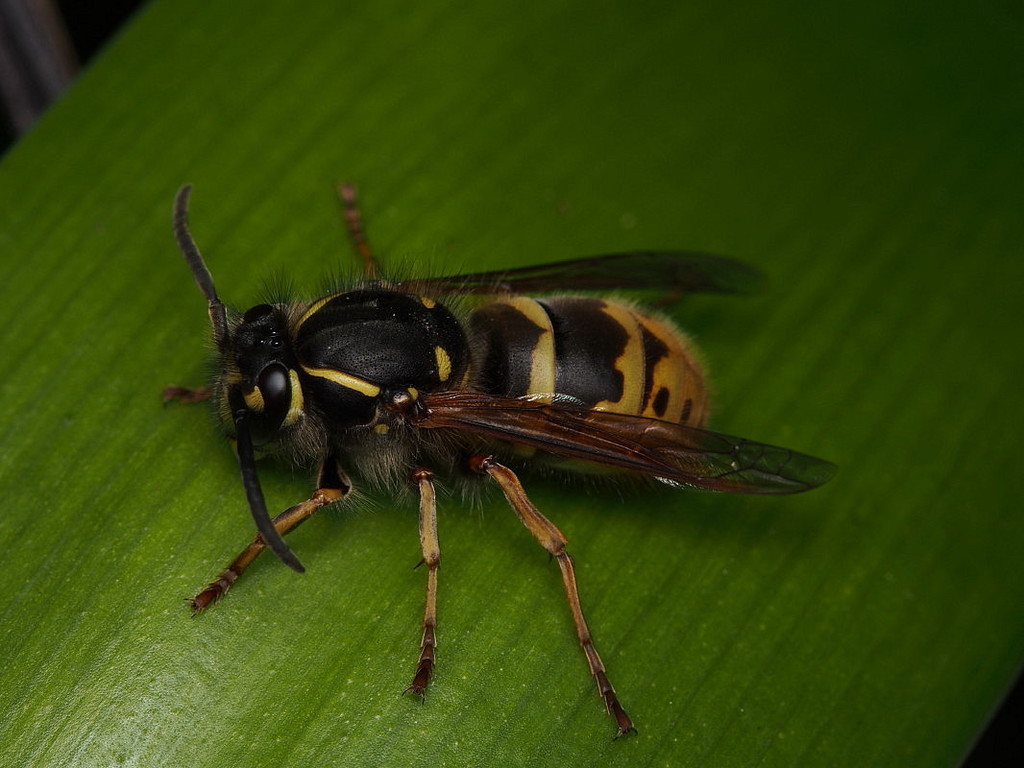
Common European Yellowjacket
Vespula vulgarisAlso known as Common Wasp, European Wasp
Common European yellowjackets construct intricate subterranean paper nests from chewed wood pulp and saliva to shelter thousands of individuals. Sterile female workers actively hunt soft-bodied insect pests and gather sugary plant secretions to feed developing larvae and their queen throughout the spring and summer. Colony populations peak in autumn, driving workers to scavenge aggressively for sugars and proteins before the onset of winter.
Social InsectVenomousCommon Insect
—observations
—countries
—peak records
Not EvaluatedConservation statusIUCN Red List categoriesLCNTVUENCREWEXNot Evaluated — not placed on the risk ladderRed List categories, explained →
Diet & prey
- Caterpillars
- Flies
- Spiders
Predators
- European Honey Buzzard
- Eurasian Badger
- Robber Flies
ThreatsPesticide exposure, severe winter freezes, and nest destruction
HabitatsWoodlands, meadows, gardens, urban areas, and hedge rows
Life spanWorkers 12–22 days; Queens up to 1 year
Classification
- OrderHymenoptera
- FamilyVespidae
- GenusVespula
- SpeciesVespula vulgaris
Range data is not available yet.
Interaction riskVery high
- Low
- Moderate
- High
- Very high
- Why interaction risk is very high
- Stings defensively when nests are approached; observe foraging workers from a safe distance without sudden movements.
- Why it is dangerous
- Injected venom causes sharp localized pain and can provoke severe allergic anaphylaxis in sensitized individuals.
- How to recognize a risky encounter
- Recognized by black-and-yellow bands across the abdomen and an anchor-shaped black mark on the face.
- What to do
- Remain stationary or back away slowly if a wasp hovers near you, avoiding sudden arm motions.
Responsible observation
- Nest Safety: Keep at least five meters clear of ground nest openings to avoid defensive mass swarming.
- Outdoor Dining: Cover sweet beverages and protein foods at picnic tables to prevent attracting foraging workers.
- Calm Demeanor: Move slowly and avoid swatting if a yellowjacket approaches, as rapid movements incite stinging.
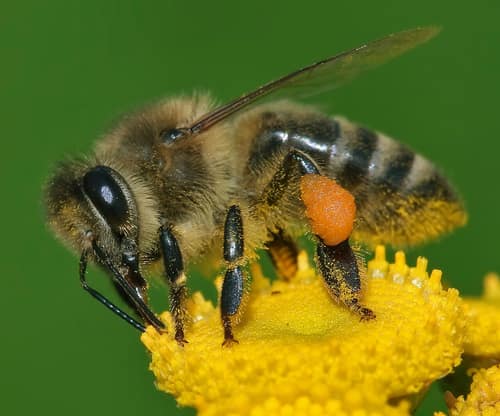
Frequent Competitor Andreas Trepte / CC BY-SA 2.5 · cc-by-sa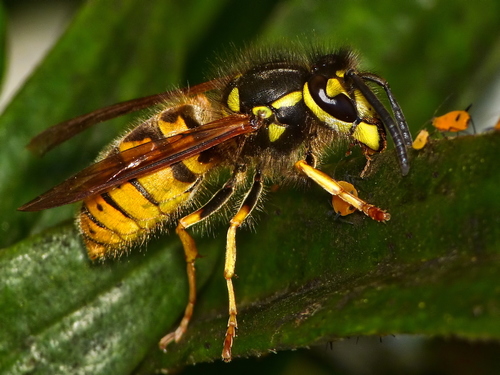
Close Relative (c) Sid Mosdell, some rights reserved (CC BY) · cc-by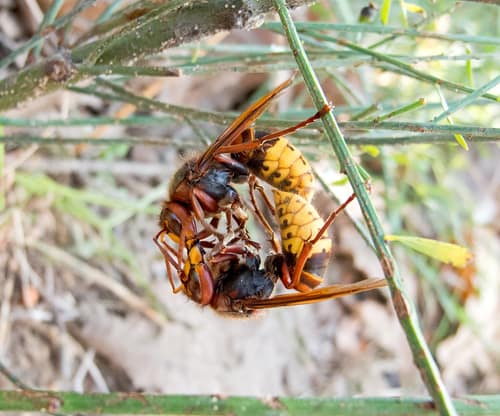
Larger Relative (c) katunchik, some rights reserved (CC BY), uploaded by katunchik · cc-by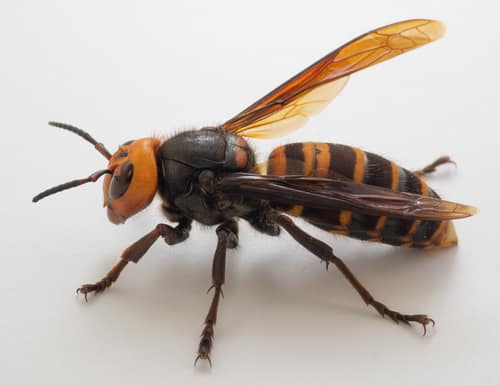
Family Relative (c) Yasunori Koide, some rights reserved (CC BY-SA) · cc-by-sa
Help improve the field guideSomething wrong?
Checking your Fauna account…Report a name, category, or profile issue for review.