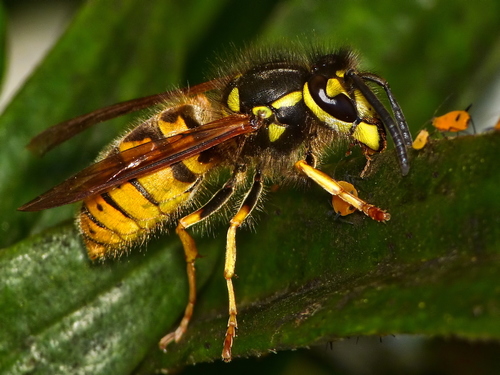
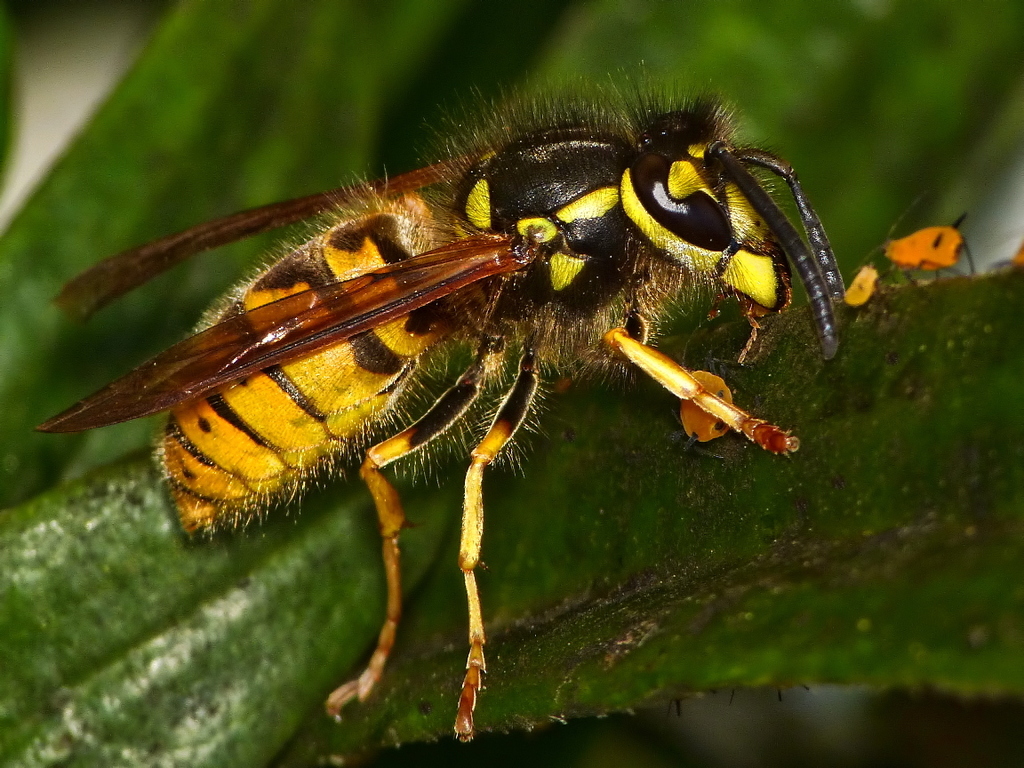
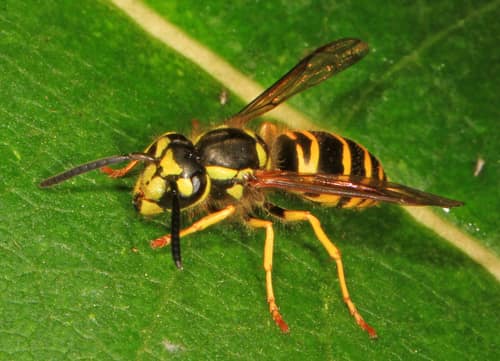
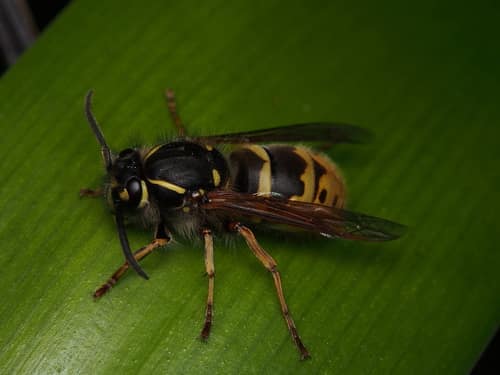
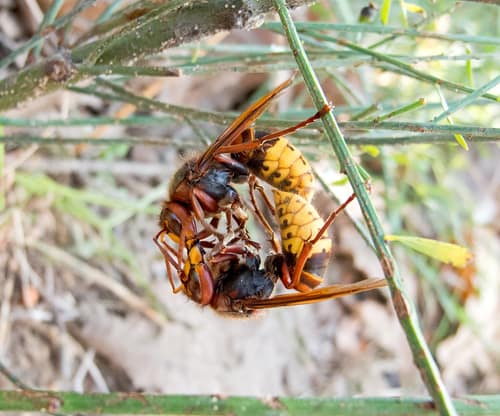
German yellowjackets construct subterranean or cavity-enclosed nests made from chewed wood fibers, producing a distinctive grayish, brittle paper. Colonies operate under a strict social hierarchy dominated by a single queen, with thousands of sterile female workers aggressively foraging for carbohydrates and protein to feed developing larvae. In introduced temperate regions like Australia and New Zealand, mild winters occasionally allow nests to survive year-round, resulting in massive perennial colonies containing millions of individuals.
HabitatsTemperate forests, agricultural landscapes, grasslands, urban gardens, and human dwellings.
Life spanQueens live 10–12 months; workers and drones live 3–6 weeks.
Size / weightNot available
Classification
OrderHymenoptera
FamilyVespidae
GenusVespula
SpeciesVespula germanica
Range & activity
Range data is not available yet.
Safe observation
Interaction riskLow
Low
Moderate
High
Very high
Why interaction risk is low
Can sting repeatedly when disturbed, posing a severe reaction risk for allergic individuals.
Why it is dangerous
Venom contains melittin, hyaluronidase, and kinins that trigger painful localized swelling and can induce life-threatening anaphylactic shock in sensitized individuals.
How to recognize a risky encounter
Distinguished by bright yellow and black abdominal banding with three tiny black dots arranged on a predominantly yellow face.
What to do
Never handle live individuals or swat near a nest; retreat slowly and calmly if targeted by guard wasps.
Responsible observation
Observation Distance: Keep a distance of at least 3 meters from active ground or wall nest entrances.
Food Management: Cover outdoor food, sugary drinks, and pet meals to prevent attracting aggressive foragers.
Calm Demeanor: Avoid swatting if one approaches, as sudden movements often trigger a defensive sting.