
Insect · GBIF taxon 1311527
European Hornet
Vespa crabroAlso known as European Giant Hornet, Brown Hornet
European Hornets are large social wasps with reddish-brown heads and thoraxes and yellow abdomens patterned with dark brown. Colonies build papery combs in hollow trees, buildings, or other cavities and defend the nest area when disturbed.
social waspcavity nesterinsect predator
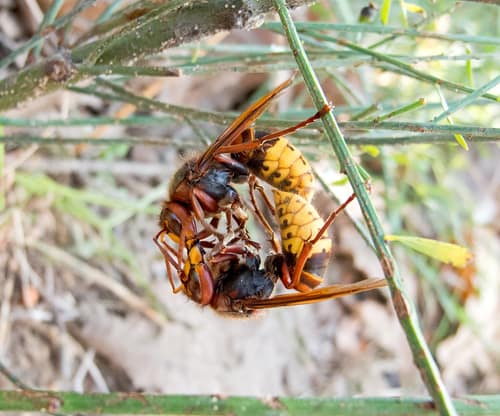
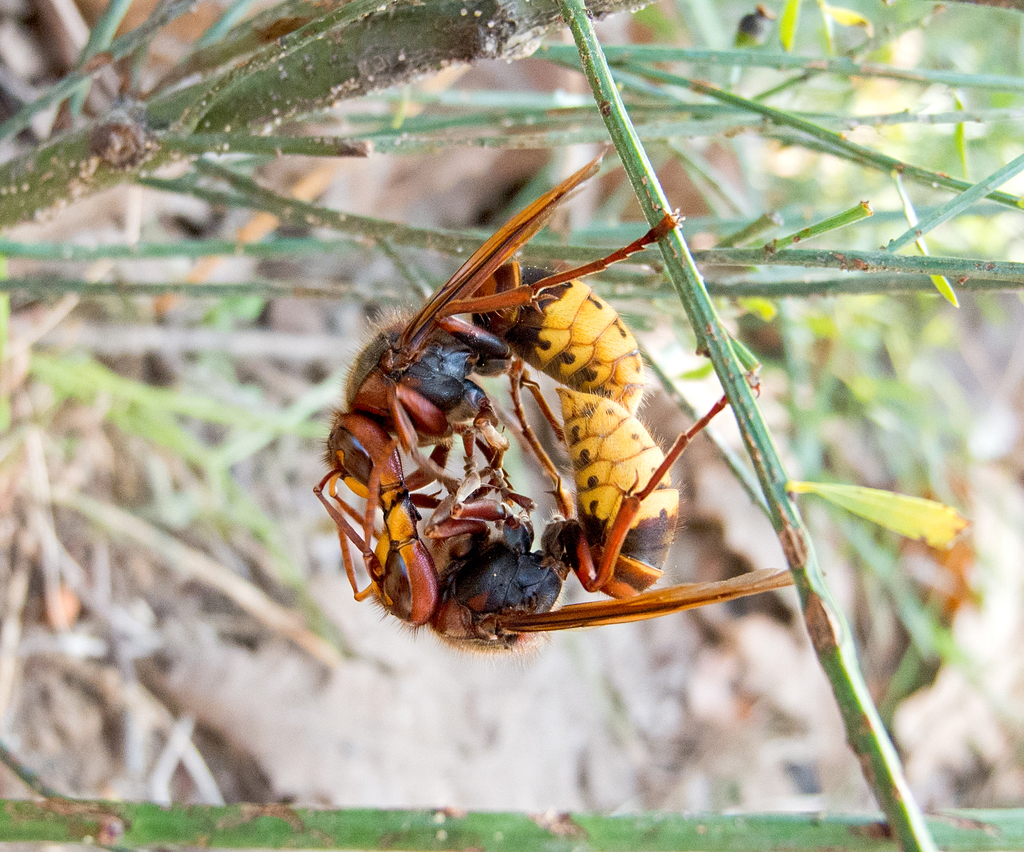
—observations
—countries
—peak records
Not EvaluatedConservation statusIUCN Red List categoriesLCNTVUENCREWEXNot Evaluated — not placed on the risk ladderRed List categories, explained →
Diet & prey
- flies
- moths
- other wasps
Predators
- honey buzzards
- badgers
- spiders
ThreatsNest destruction, pesticide use, loss of old hollow trees, and prolonged severe weather
HabitatsDeciduous woodland, orchards, parks, gardens, farms, and buildings with sheltered cavities
Life spanWorkers live for weeks to months; a queen may survive about one year
Size / weightNot available
Classification
- OrderHymenoptera
- FamilyVespidae
- GenusVespa
- SpeciesVespa crabro
Range data is not available yet.
Interaction riskVery high
- Low
- Moderate
- High
- Very high
- Why interaction risk is very high
- Venomous stings can trigger anaphylaxis; avoid nests and seek emergency help for systemic symptoms.
- Why it is dangerous
- Workers can sting repeatedly, and venom may cause anaphylaxis in a sensitized person.
- How to recognize a risky encounter
- Look for a very large reddish-brown and yellow wasp, but never approach a cavity to confirm a nest.
- What to do
- Do not swat, trap, or disturb the colony; call emergency services for breathing difficulty or widespread swelling.
Responsible observation
- Distance: Back away calmly if repeated hornet traffic reveals a nest entrance.
- Prevent: Keep lights, food, and sweet drinks managed when hornets are active.
Help improve the field guideSomething wrong?
Checking your Fauna account…Report a name, category, or profile issue for review.