Lesser banded hornets build large, teardrop-shaped paper nests suspended high in trees, cliff faces, or under eaves of rural and suburban buildings. These adaptable predators actively hunt flies, caterpillars, and honeybees to provision developing larvae while adults sustain themselves on tree sap and flower nectar. Colonies aggressively defend their nest perimeter with coordinated, mass stinging attacks when disturbed.
Not EvaluatedConservation statusIUCN Red List categoriesLCNTVUENCREWEXNot Evaluated — not placed on the risk ladderRed List categories, explained →
Key facts
Diet & preyHoneybees, Caterpillars, Flies
Predators
Honey Buzzards
Bee-eaters
Parasitic wasps
ThreatsPesticide spraying and targeted nest destruction near human settlements
HabitatsTropical forests, agricultural lands, plantations, and suburban gardens
Life spanWorkers live 3–5 weeks; queens live up to 1 year
Classification
OrderHymenoptera
FamilyVespidae
GenusVespa
SpeciesVespa affinis
Range & activity
Range data is not available yet.
Safe observation
Interaction riskVery high
Low
Moderate
High
Very high
Why interaction risk is very high
Venomous sting causes intense pain and swelling; keep a safe distance from active nests.
Why it is dangerous
Delivers an alkaline venom rich in mastoparans and neurotoxins that causes intense pain, localized necrosis, and potentially fatal anaphylaxis or organ damage from multiple stings.
How to recognize a risky encounter
Recognized by a dark body with a conspicuous broad, bright yellow-to-orange band across the first and second abdominal segments.
What to do
Do not swat or provoke foraging hornets, and retreat slowly without flailing if you discover an active nest.
Responsible observation
Distance: Maintain at least 5 to 10 meters of clearance from hanging nests.
Movement: Avoid sudden swatting or rapid retreats if an adult buzzes nearby.
Attire: Steer clear of vibrant floral scents or dark, rough fabrics in nesting areas.

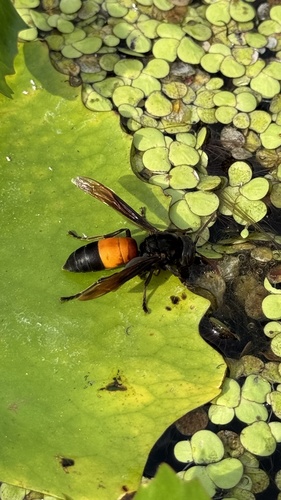
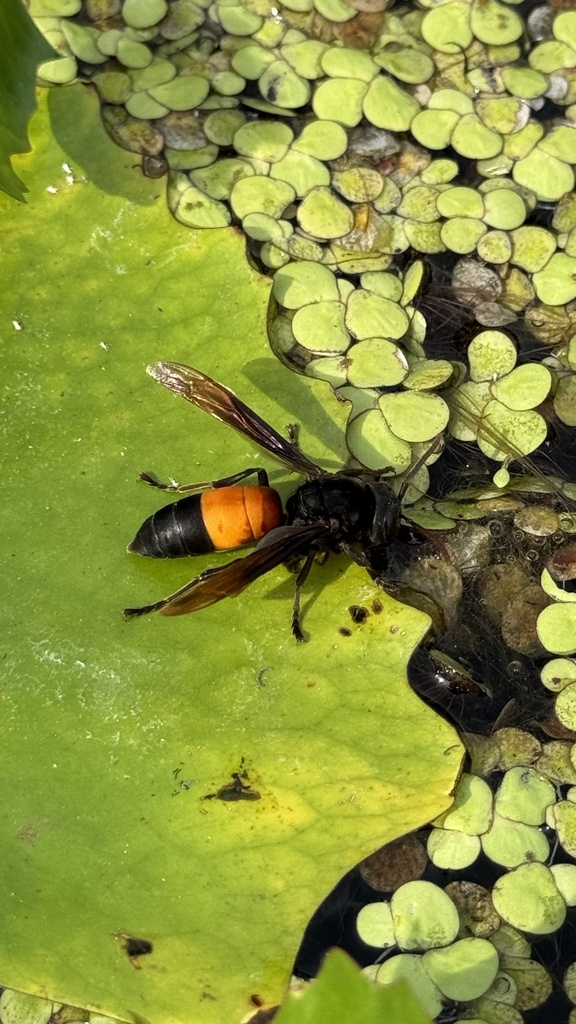
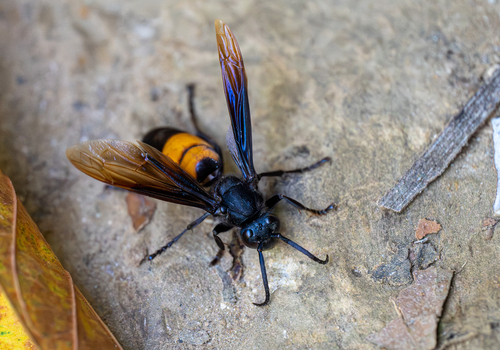
 Image unavailable