
Insect · GBIF taxon 1309715
Blue-winged Scoliid Wasp
Scolia dubiaAlso known as Two-Spotted Scoliid Wasp, Blue-Winged Wasp, Double-Spotted Scoliid Wasp
Blue-winged scoliid wasps are solitary parasitoids that cruise low over lawns and sunny meadows in search of beetle larvae underground. Females dig into the soil, sting grubs such as Japanese beetles or June beetles to paralyze them, and lay a single egg on each host. Their striking blue-black wings and yellow abdomen spots make them conspicuous late-summer allies in controlling turf pests.
PollinatorParasitoidBeneficial Insect
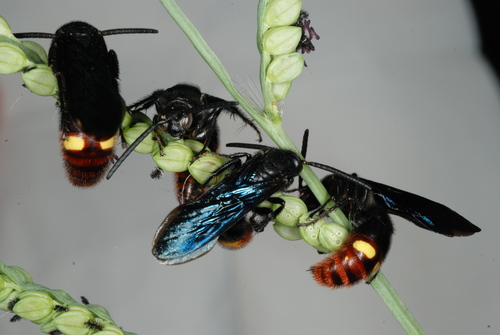
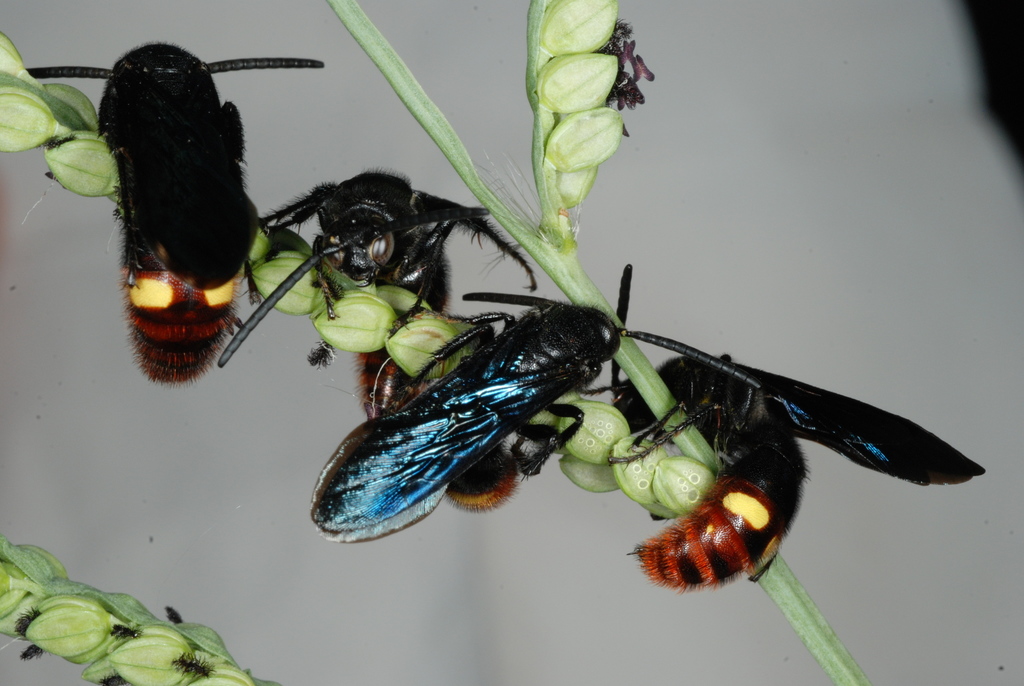 1 / 7
1 / 7—observations
—countries
—peak records
Not EvaluatedConservation statusIUCN Red List categoriesLCNTVUENCREWEXNot Evaluated — not placed on the risk ladderRed List categories, explained →
Diet & prey
- Japanese beetle grubs
- Green June beetle grubs
- Floral nectar
Predators
- Birds
- Robber flies
- Toads
ThreatsBroad-spectrum lawn insecticides and loss of flowering plants
HabitatsLawns, pastures, meadows, and gardens
Life span1 year
Classification
- OrderHymenoptera
- FamilyScoliidae
- GenusScolia
- SpeciesScolia dubia
Range data is not available yet.
Interaction riskLow
- Low
- Moderate
- High
- Very high
- Why interaction risk is low
- Females can sting if squeezed or stepped on; observe these docile pollinators from a short distance without touching.
Responsible observation
- Observe Low Swarms: Watch adults flying low in figure-eight patterns over sunny lawns during late summer.
- Provide Nectar Sources: Plant late-season composite flowers like goldenrod and mountain mint to attract adults.
- Avoid Lawn Insecticides: Refrain from broad chemical treatments that kill both the wasps and their larval hosts.
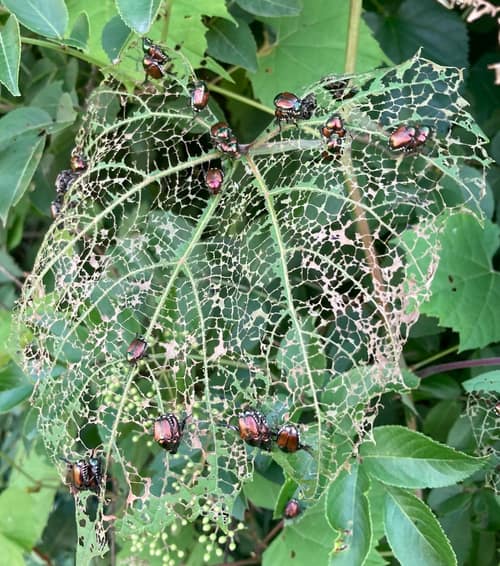
Larval Host no rights reserved, uploaded by bgirardot · cc0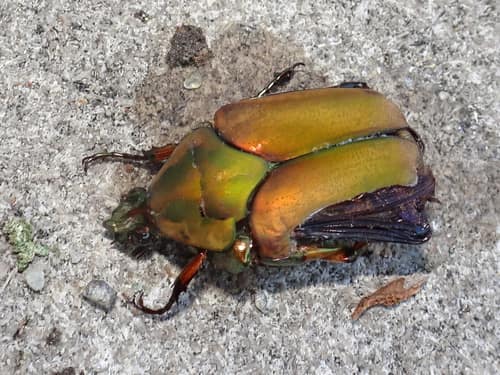
Larval Host (c) Thomas Koffel, some rights reserved (CC BY), uploaded by Thomas Koffel · cc-by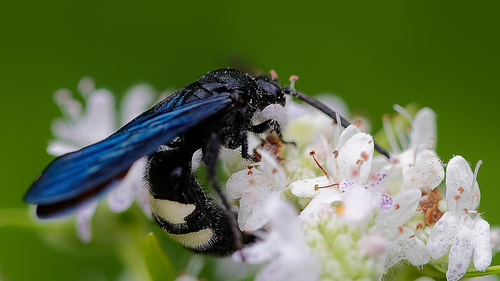
Close Relative (c) Daughter Dad, some rights reserved (CC BY) · cc-by Image unavailable
Close Relative
Help improve the field guideSomething wrong?
Checking your Fauna account…Report a name, category, or profile issue for review.