
Insect
Black Giant Ichneumonid Wasp
Megarhyssa atrataAlso known as Dark Giant Ichneumon Wasp, Giant Ichneumon Wasp
Black giant ichneumonid wasps are remarkable parasitoid insects that cruise deciduous woodlands in search of wood-boring grubs concealed deep beneath tree bark. Females detect vibrations and scent cues from wood-wasp larvae inside dying hardwood trees, then use their extraordinarily elongated, flexible ovipositor to drill several inches into the solid wood to lay a single egg. Despite their formidable size and menacing appearance, these wasps lack venom and cannot sting humans.
ParasitoidWoodlandNon-stinging
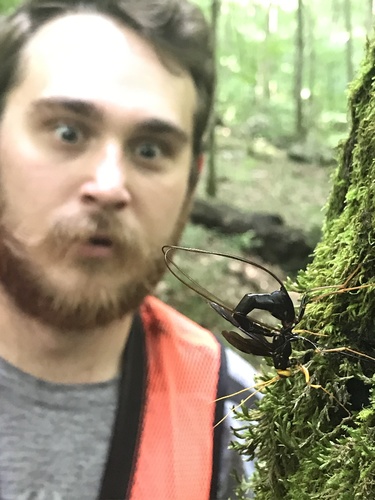
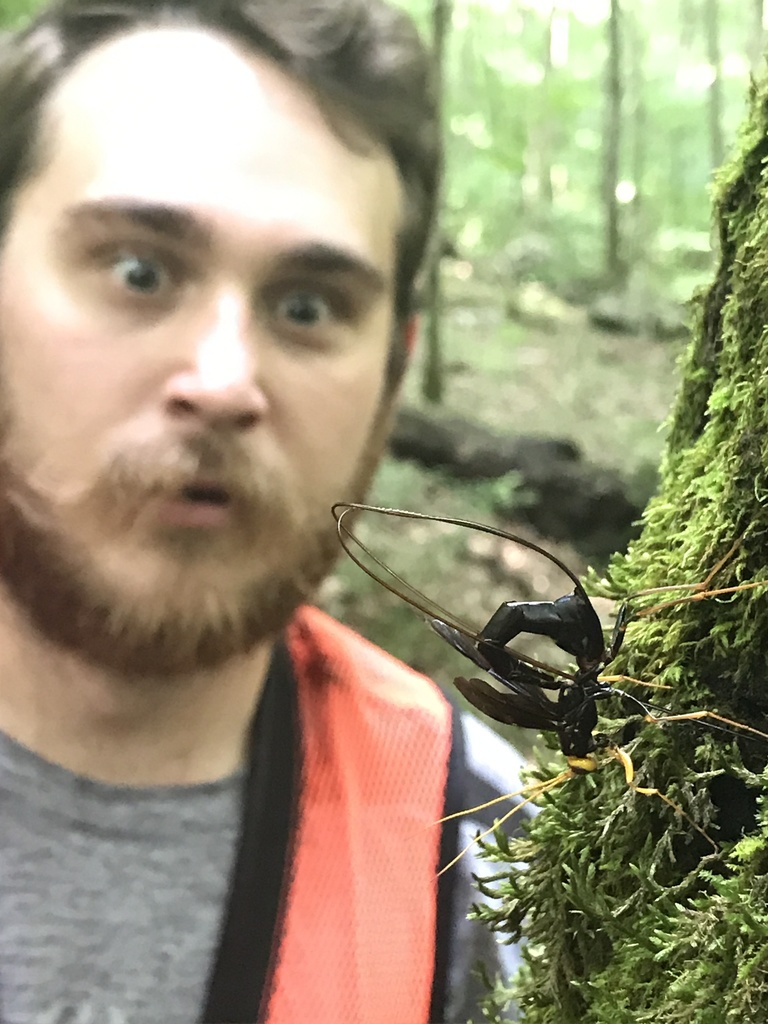
—observations
—countries
—peak records
Not EvaluatedConservation statusIUCN Red List categoriesLCNTVUENCREWEXNot Evaluated — not placed on the risk ladderRed List categories, explained →
Diet & preyPigeon tremex larvae, Floral nectar, Tree sap
Predators
- Woodpeckers
- Flycatchers
- Orb-weaver spiders
ThreatsDeforestation and the removal of dead snags in managed timber stands.
HabitatsDeciduous and mixed forests with dead standing trees and decaying logs.
Life span1–2 years (mostly spent as a subterranean larva; adults live several weeks).
Classification
- FamilyIchneumonidae
- SpeciesMegarhyssa atrata
Range data is not available yet.
Interaction riskLow
- Low
- Moderate
- High
- Very high
- Why interaction risk is low
- Harmless to humans despite its huge ovipositor; completely safe to observe.
Responsible observation
- Look at Snags: Inspect dead or dying hardwood trunks in midsummer to spot egg-laying females.
- Watch the Drilling: Observe quietly from a meter away to watch the ovipositor bore into wood.
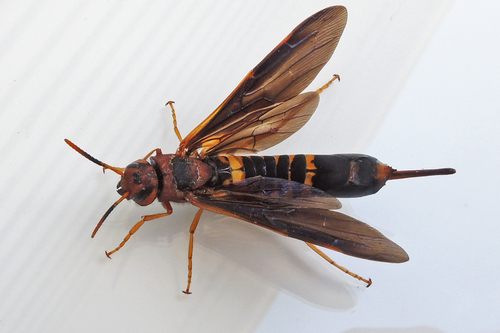
Host (c) Bill Keim, some rights reserved (CC BY) · cc-by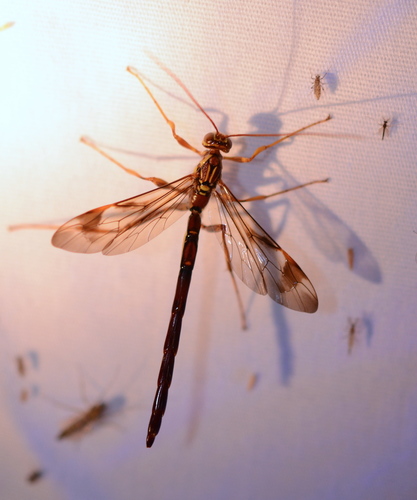
Same Genus (c) Amber M. King, some rights reserved (CC BY), uploaded by Amber M. King · cc-by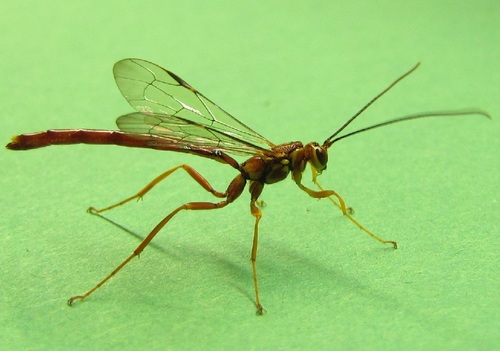
Same Genus no rights reserved, uploaded by Ken Kneidel · cc0
Help improve the field guideSomething wrong?
Checking your Fauna account…Report a name, category, or profile issue for review.