
Fungus · GBIF taxon 11601808
Wandering Creamsicle
Marasmius vagusAlso known as Wandering Parachute
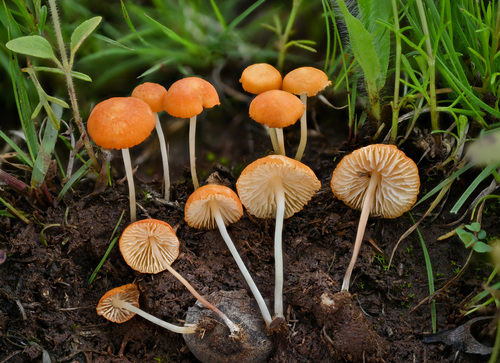
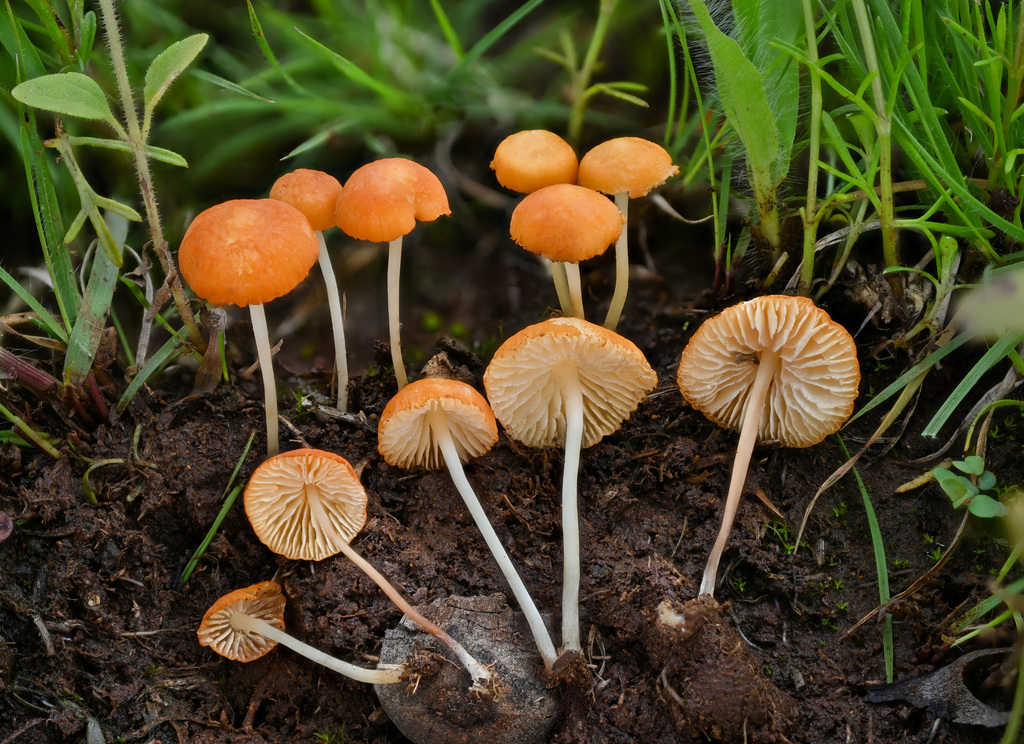
Wandering creamsicles display striking bright orange, pleated caps perched atop slender, wiry dark stems. Emerging in clusters across suburban lawns and wood-mulched garden beds after warm rains, they possess marcescent qualities, meaning shriveled dry specimens can revive and shed spores when remoistened. First recognized in Australia, this adaptable saprobe has steadily colonized urban landscapes across multiple continents.
FungusSaprobicUrban Nature
 1 / 7
1 / 7—observations
—countries
—peak records
Not EvaluatedConservation statusIUCN Red List categoriesLCNTVUENCREWEXNot Evaluated — not placed on the risk ladderRed List categories, explained →
Diet & prey
- Decaying grass thatch
- Wood chip mulch
- Leaf litter
Predators
- Slugs
- Fungus gnat larvae
- Springtails
ThreatsLawn fungicides, prolonged drought, and intensive soil cultivation
HabitatsLawns, mulched gardens, parks, and roadside verges
Life spanFruiting body persists 2–5 days; mycelium lives multiple years
Size / weightNot available
Classification
- OrderAgaricales
- FamilyMarasmiaceae
- GenusMarasmius
- SpeciesMarasmius vagus
Range data is not available yet.
Interaction riskLow
- Low
- Moderate
- High
- Very high
- Why interaction risk is low
- Many edible mushrooms have toxic look-alikes; never eat wild fungi based on app identification alone.
Responsible observation
- Lawn Scouting: Check well-watered turf and fresh wood mulch after heavy summer rainstorms.
- Moisture Observation: Watch dried, shriveled caps revive and rehydrate after morning mist or showers.
- Spore Prints: Place a fresh cap gills-down on dark paper to reveal white spore deposits.
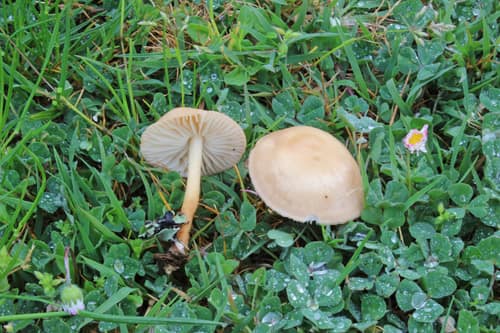
Close Relative (c) Davide Puddu, some rights reserved (CC BY), uploaded by Davide Puddu · cc-by Image unavailable
Close Relative 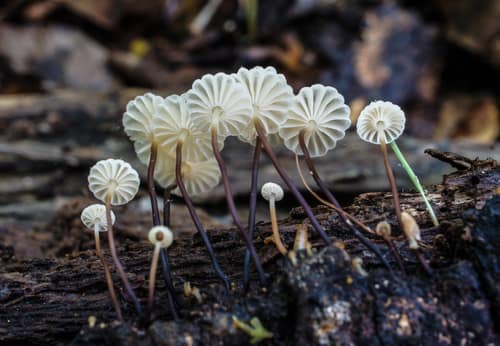
Close Relative (c) Bill Sheehan, some rights reserved (CC BY-SA), uploaded by Bill Sheehan · cc-by-sa
Help improve the field guideSomething wrong?
Checking your Fauna account…Report a name, category, or profile issue for review.