
Mammal
Mouflon
Ovis isphahanicaAlso known as Isfahan Mouflon, Esfahan Wild Sheep, Isfahan Wild Sheep
Agile climbers of arid, rugged mountains, mouflon navigate near-vertical rocky slopes with ease using flexible, shock-absorbing hooves. Mature rams engage in dramatic head-clashing duels during the autumn rut, their heavy spiraling horns absorbing collisions that echo across valleys. Small maternal bands graze high steppe pastures in spring, descending to sheltered ravines when harsh winter conditions set in.
MountainHerbivoreHorned
—observations
—countries
—peak records
VulnerableConservation statusIUCN Red List categoriesLCNTVUENCREWEXVulnerableRed List categories, explained →
Diet & preySteppe grasses, Wild legumes, Shrub foliage
Predators
- Gray Wolf
- Persian Leopard
- Golden Eagle
ThreatsPoaching, livestock competition, and habitat fragmentation
HabitatsArid mountain steppes, rocky crags, and open scrublands
Life span8–14 years
Classification
- FamilyBovidae
- SpeciesOvis isphahanica
Range data is not available yet.
Interaction riskLow
- Low
- Moderate
- High
- Very high
- Why interaction risk is low
- Safe to observe from a normal distance; animals are shy and retreat quickly.
- What to notice
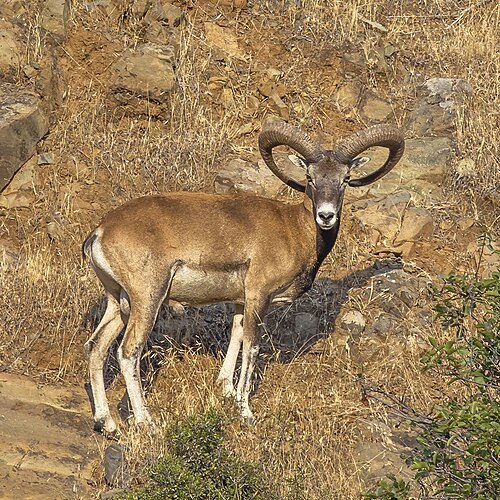
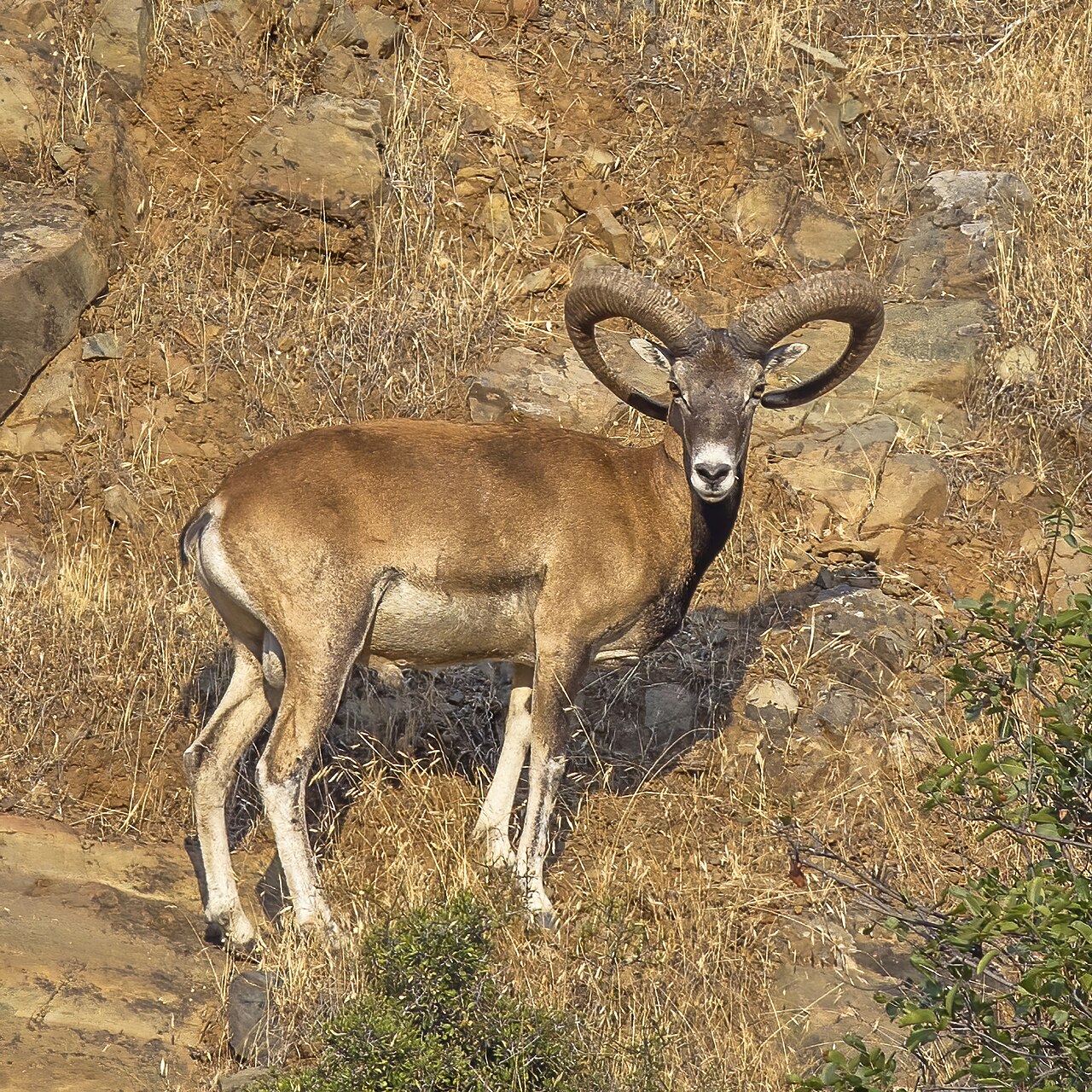
- Look for compact, reddish-brown wild sheep with pale undersides and dramatic, backward-curling horns on mature rams.
- Support conservation
- Keep an extensive buffer to prevent flight stress, especially in spring when ewes rear young lambs.
Responsible observation
- Observation Distance: Use a spotting scope or telephoto lens from ridges to avoid spooking herds.
- Seasonal Timing: Scan wind-sheltered slopes during early morning and late afternoon for grazing groups.
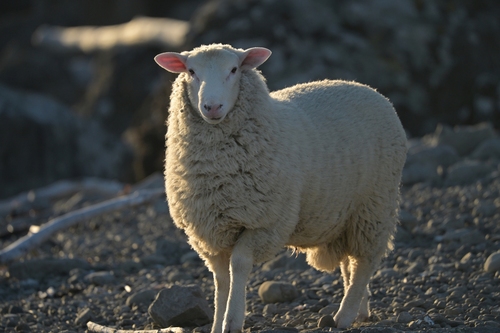
Descendant (c) Christopher Stephens, some rights reserved (CC BY-SA), uploaded by Christopher Stephens · cc-by-sa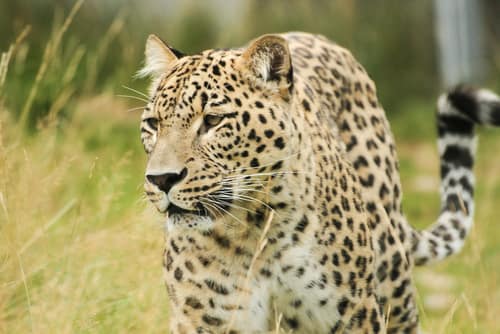
Predator "Persian Leopard at Orsa Björnpark" by fridabredesen is marked with CC0 1.0. To view the terms, visit https://creativecommons.org/publicdomain/zero/1.0/. · cc0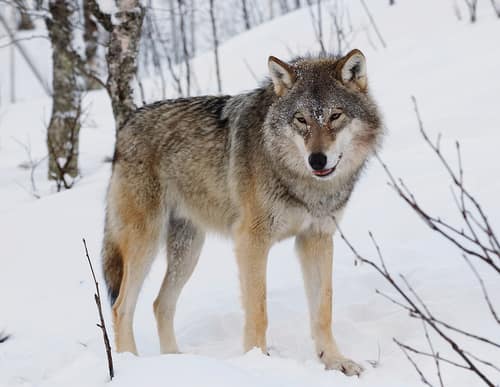
Predator User:Mas3cf / CC BY-SA 4.0 · cc-by-sa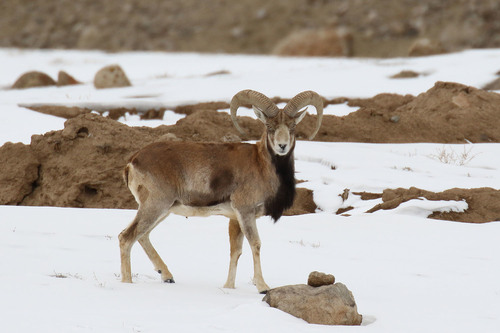
Close Relative (c) Fabrice Stoger, some rights reserved (CC BY-SA) · cc-by-sa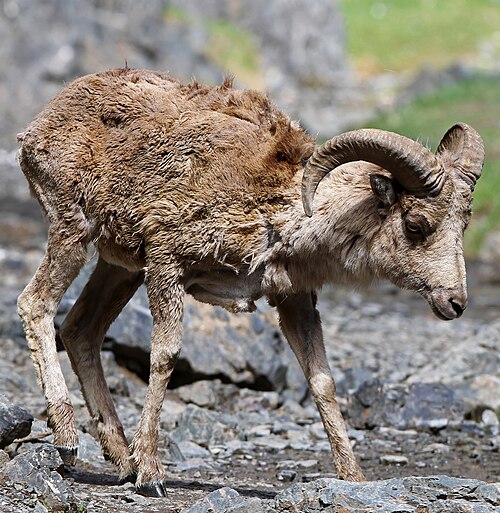
Close Relative James Eaton / CC0 · cc0
Help improve the field guideSomething wrong?
Checking your Fauna account…Report a name, category, or profile issue for review.