
Insect · GBIF taxon 1118064
Harlequin Beetle
Acrocinus longimanusAlso known as Harlequin Longhorn
Harlequin beetles are magnificent Neotropical longhorn beetles recognized by their intricate geometric patterns of red, black, and greenish-yellow on their elytra. Males possess astonishingly elongated forelegs that can extend over twice their body length, using them to navigate tree trunks and compete for mates. Beneath their wing covers, these large insects frequently carry tiny pseudoscorpions in a beneficial phoretic hitchhiking partnership.
NeotropicalArborealLarge
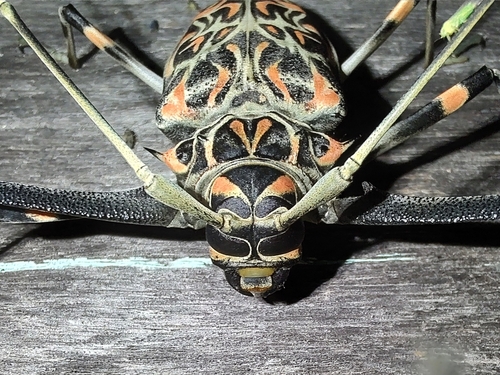
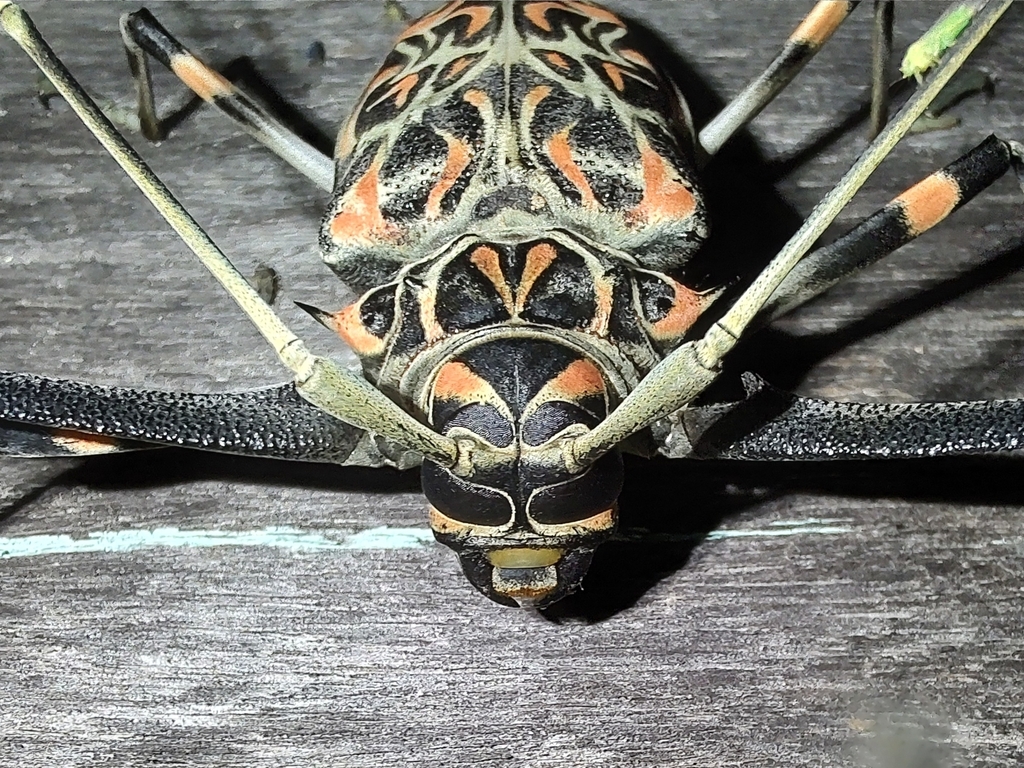
—observations
—countries
—peak records
Not EvaluatedConservation statusIUCN Red List categoriesLCNTVUENCREWEXNot Evaluated — not placed on the risk ladderRed List categories, explained →
Diet & prey
- Tree sap, bark, and decaying wood
Predators
- Birds
- Lizards
- Monkeys
ThreatsDeforestation and rainforest habitat fragmentation
HabitatsTropical rainforests and lowland humid forests
Life span1–2 years
Size / weightNot available
Classification
- FamilyCerambycidae
- SpeciesAcrocinus longimanus
Range data is not available yet.
Interaction riskLow
- Low
- Moderate
- High
- Very high
- Why interaction risk is low
- Possesses powerful mandibles capable of delivering a painful bite; observe without touching.
- Why it is dangerous
- Large, powerful mandibles can puncture skin and cause a sharp bite if the beetle is grabbed or pinched.
- How to recognize a risky encounter
- Look for bold, geometric red-and-black elytra and exceptionally long front legs in males.
- What to do
- Avoid picking up live specimens by hand; use a twig or observe in place without physical contact.
Responsible observation
- Observation distance: Watch from a few feet away on fallen logs or tree trunks where they feed on sap.
- Night searching: Look near artificial light sources near forest edges where adults are frequently attracted at night.

Help improve the field guideSomething wrong?
Checking your Fauna account…Report a name, category, or profile issue for review.