
Reptile · GBIF taxon 11119162
Oculudentavis khaungraae
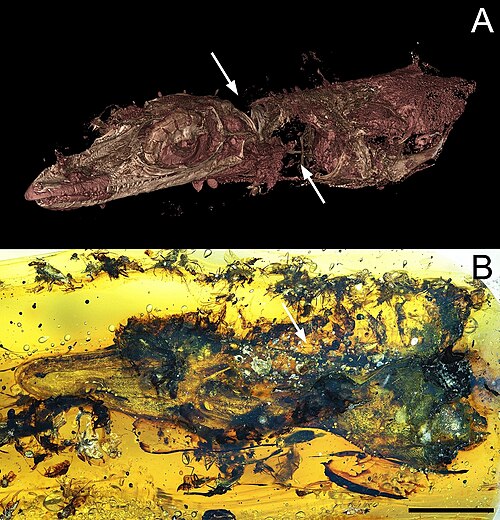
Oculudentavis khaungraaeOculudentavis khaungraae was a diminutive Cretaceous reptile preserved in 99-million-year-old amber from northern Myanmar, famous for initially being mistaken for the smallest known fossil bird. Its slender skull bore large, bulging eyes with tightly interlocking scleral ossicles that formed cone-like structures, suggesting acute daytime vision. Ringed with numerous tiny, sharply pointed teeth, its jaws allowed it to snatch small insects and other invertebrates from tree trunks and foliage in ancient tropical forests.
FossilPrehistoric
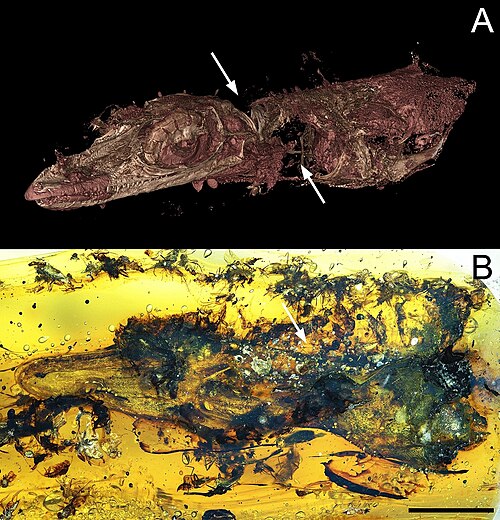
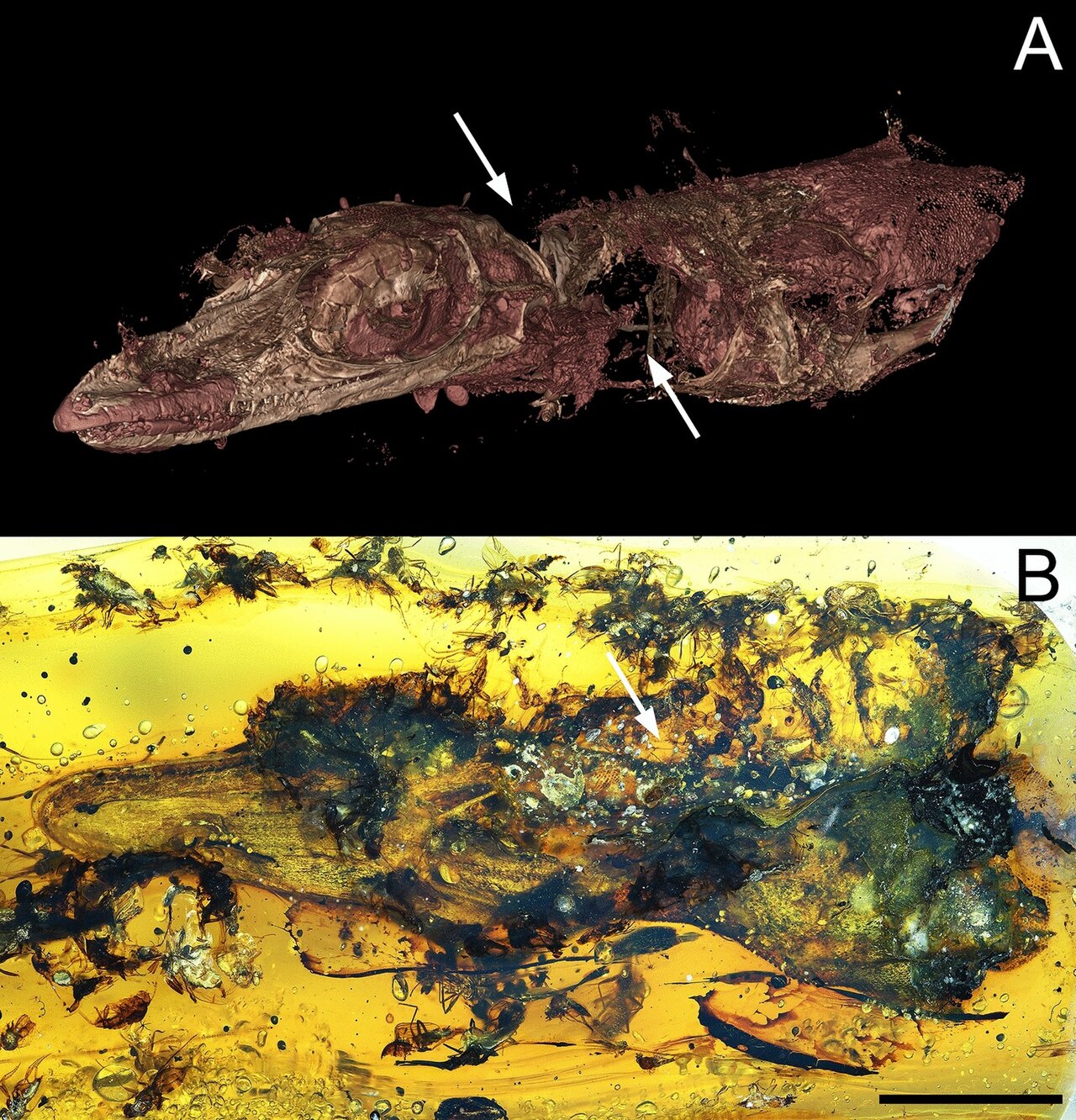
—observations
—countries
—peak records
ExtinctConservation statusIUCN Red List categoriesLCNTVUENCREWEXExtinctRed List categories, explained →
Diet & prey
- Insects
- Mites
- Small spiders
Predators
- Pterosaurs
- Larger predatory reptiles
- Early carnivorous birds
ThreatsEnvironmental changes and Cretaceous extinction events
HabitatsCretaceous tropical resin-producing forests
Life spanUnknown (estimated 2–5 years)
Size / weightNot available
Classification
- OrderDiptera
- FamilyCeratopogonidae
- GenusOculudentavis
- SpeciesOculudentavis khaungraae
Range data is not available yet.
Interaction riskLow
- Low
- Moderate
- High
- Very high
- Why interaction risk is low
- Extinct fossil organism; safe to examine in museum collections.
Responsible observation
- Museum display: Examine high-resolution CT scans or amber specimens behind glass.
- Scientific literature: Follow ongoing paleontological research on Burmese amber biota.
Help improve the field guideSomething wrong?
Checking your Fauna account…Report a name, category, or profile issue for review.