
Bird · GBIF taxon 10986504
Hispaniolan Emerald
Riccordia swainsoniiAlso known as Hispaniolan Emerald Hummingbird, Swainson's Emerald
Hispaniolan emeralds zipping through Caribbean mountain forests display shimmering green plumage paired with a dramatically long, deeply forked blackish tail. Males defend rich patches of flowering shrubs, hovering effortlessly while sipping nectar and hawking small insects mid-air. These energetic hummingbirds serve as essential pollinators for native high-elevation plants across Hispaniola.
EndemicPollinatorMountain Dweller

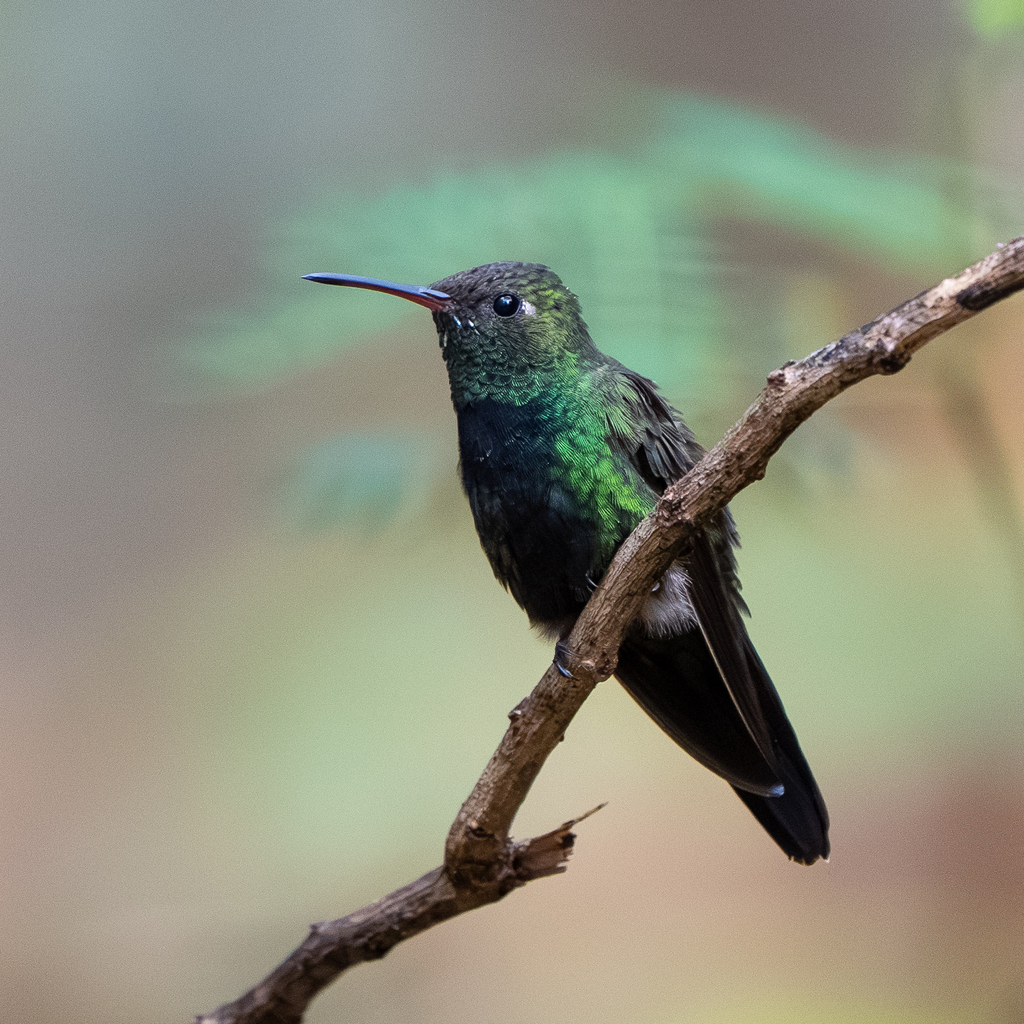
—observations
—countries
—peak records
Least ConcernConservation statusIUCN Red List categoriesLCNTVUENCREWEXLeast ConcernRed List categories, explained →
Diet & prey
- Nectar
- Small Flies
- Spiders
Predators
- Feral Cats
- Hawks
- Snakes
ThreatsDeforestation, agricultural expansion, and severe hurricane events
HabitatsHumid montane forests, pine woodlands, forest edges, and shade coffee plantations
Life span3–5 years
Size / weightNot available
Classification
- FamilyTrochilidae
- SpeciesRiccordia swainsonii
Range data is not available yet.
Interaction riskLow
- Low
- Moderate
- High
- Very high
- Why interaction risk is low
- Safe to observe at a normal distance.
Responsible observation
- Observation Location: Scan flowering shrubs and canopy edges in high-elevation montane parks.
- Photography: Use high shutter speeds to freeze rapid wingbeats in bright daylight.
- Habitat Protection: Stick to marked trails to protect fragile montane understory vegetation.
Co-Occurring Species no rights reserved · cc0 Image unavailable
Co-Occurring Species 
Close Relative (c) Ruestz, some rights reserved (CC BY-SA) · cc-by-sa
Help improve the field guideSomething wrong?
Checking your Fauna account…Report a name, category, or profile issue for review.