
Insect
Tile-horned Prionus
Prionus imbricornisAlso known as Tile-horned Root Borer, Tile-horned Longhorn Beetle
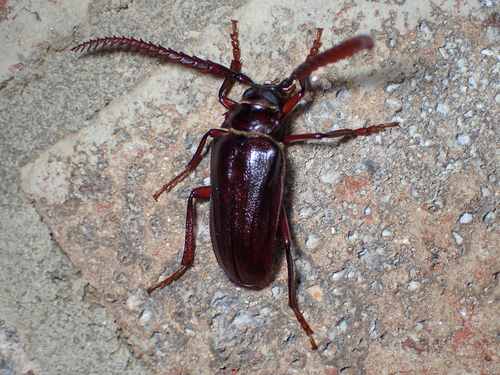
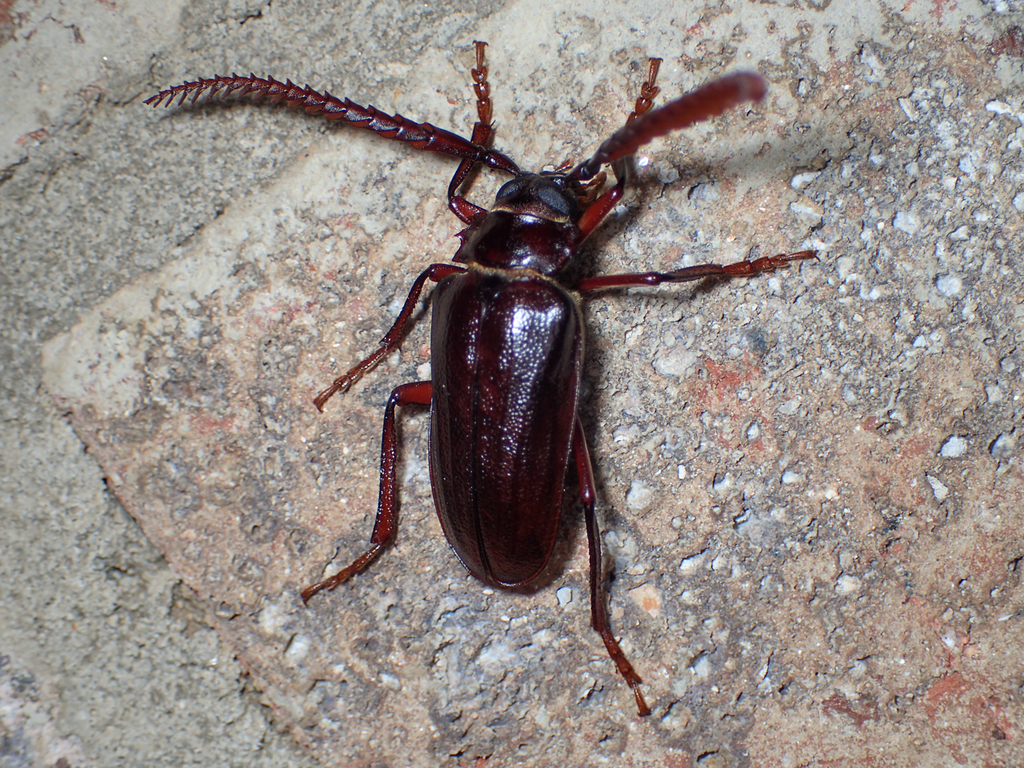
Tile-horned prionus beetles spend up to five years underground as heavy grubs chewing through the roots of hardwoods, fruit trees, and berry bushes. Upon emerging in early summer, large adults take flight after dark, attracted to porch lights and outdoor lamps. Males are readily recognized by their remarkable antennae, which feature 16 to 20 overlapping, tile-like segments.
NocturnalAttracted to LightRoot Borer
—observations
—countries
—peak records
Not EvaluatedConservation statusIUCN Red List categoriesLCNTVUENCREWEXNot Evaluated — not placed on the risk ladderRed List categories, explained →
Diet & preyOak roots, Apple roots, Pecan roots
Predators
- Bats
- Owls
- Small Mammals
ThreatsPesticide application in agricultural orchards and light pollution.
HabitatsHardwood forests, orchards, suburban yards, and crop fields.
Life span3–5 years as larvae; 1–3 weeks as adults
Classification
- OrderColeoptera
- FamilyCerambycidae
- GenusPrionus
- SpeciesPrionus imbricornis
Range data is not available yet.
Interaction riskLow
- Low
- Moderate
- High
- Very high
- Why interaction risk is low
- Powerful mandibles can inflict a sharp pinch if handled; observe safely without picking up.
- Why it is dangerous
- Equipped with thick, muscular mandibles capable of chewing solid root wood, this beetle can deliver a painful bite if squeezed.
- How to recognize a risky encounter
- Look for a robust, shiny reddish-brown beetle exceeding two centimeters in length with fan-like, overlapping antennal segments.
- What to do
- Avoid picking up the insect directly by hand, and use a container if relocating away from foot traffic.
Responsible observation
- Lighting: Look around porch lights and lighted windows on warm summer nights.
- Handling: Gently coax the beetle onto a stick or paper if it needs to be moved.
- Garden Inspection: Check near the base of mature fruit trees for emergence holes in early summer.
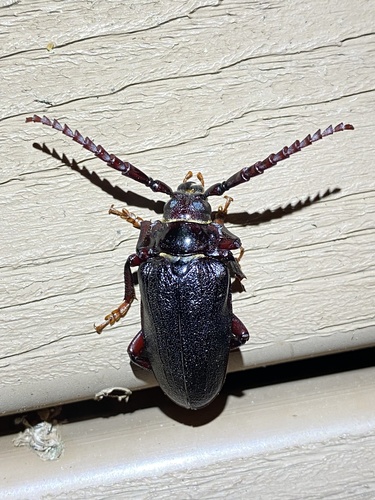
Close Relative no rights reserved, uploaded by Samuel Paul Galick · cc0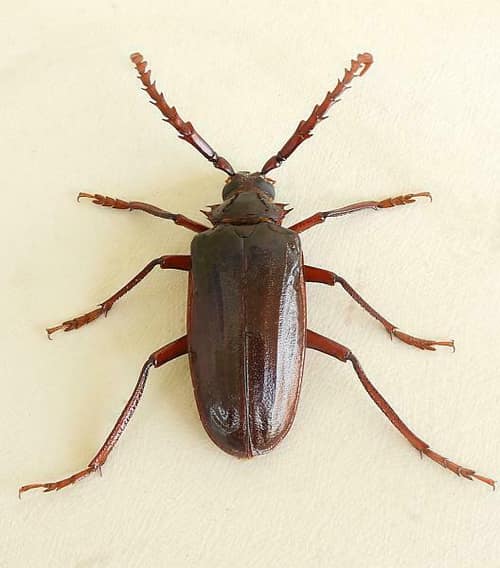
Close Relative (c) jimeckert49, some rights reserved (CC BY) · cc-by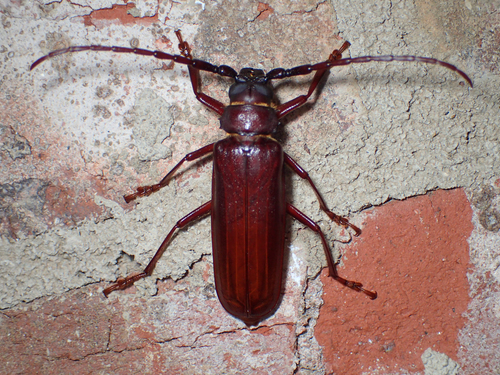
Close Relative (c) John P Friel, some rights reserved (CC BY), uploaded by John P Friel · cc-by
Help improve the field guideSomething wrong?
Checking your Fauna account…Report a name, category, or profile issue for review.