
Insect
Fancy Dung Beetle
Bolbocerosoma farctumFancy dung beetles stand out among earth-boring scarabs thanks to their striking bicolored pattern of bright rusty orange and glossy black. Adults spend the vast majority of their lives tunneling deep beneath well-drained or sandy soils, emerging primarily on warm summer nights to disperse or seek mates. Despite their common name, they feed largely on subterranean mycorrhizal fungi and buried organic matter rather than vertebrate dung.
NocturnalBurrowingColorful
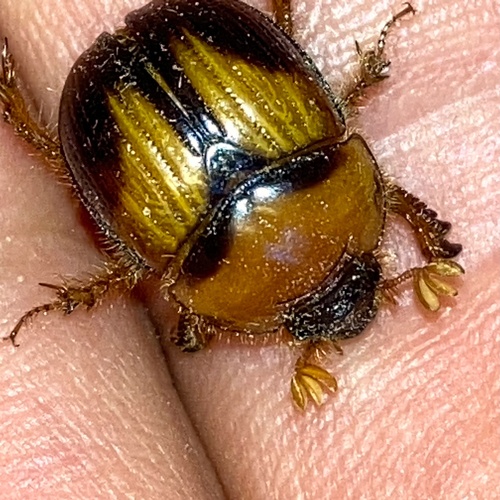
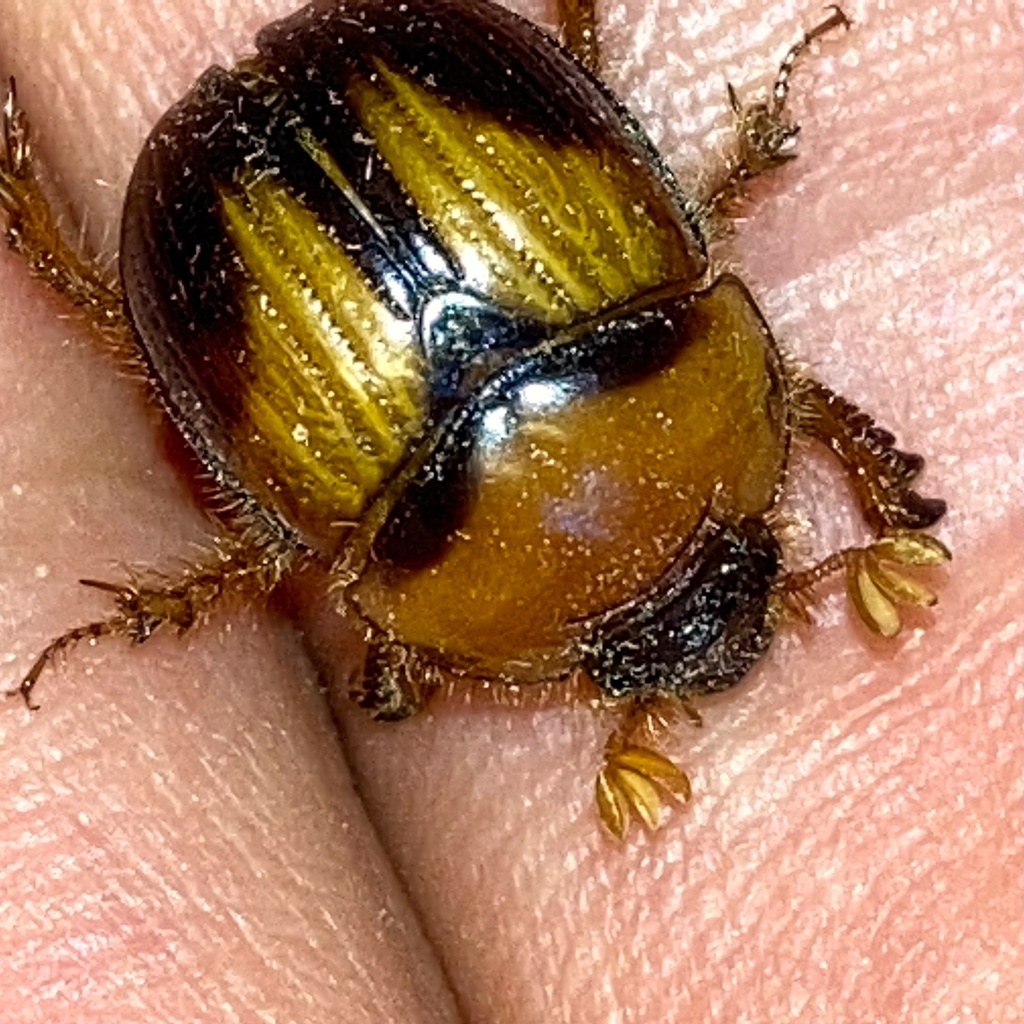
—observations
—countries
—peak records
Not EvaluatedConservation statusIUCN Red List categoriesLCNTVUENCREWEXNot Evaluated — not placed on the risk ladderRed List categories, explained →
Diet & preySubterranean fungi, Underground mold spores, Decaying humus
Predators
- Toads
- Insectivorous birds
- Small rodents
ThreatsHabitat fragmentation, soil compaction, and light pollution
HabitatsSandy woodlands, open grasslands, and old fields
Life span1–2 years
Classification
- FamilyGeotrupidae
- SpeciesBolbocerosoma farctum
Range data is not available yet.
Interaction riskLow
- Low
- Moderate
- High
- Very high
- Why interaction risk is low
- Harmless to humans; safe to observe at close range.
Responsible observation
- Night Lighting: Look around porch lights or UV light traps on warm, humid summer nights when adults take flight.
- Soil Respect: Avoid digging up burrows in sandy soil patches, as adults excavate chambers deep below the surface.
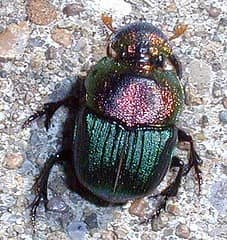
Ecological Neighbor "Rainbow Scarab" by thatredhead4 is licensed under CC BY 2.0. To view a copy of this license, visit https://creativecommons.org/licenses/by/2.0/. · cc-by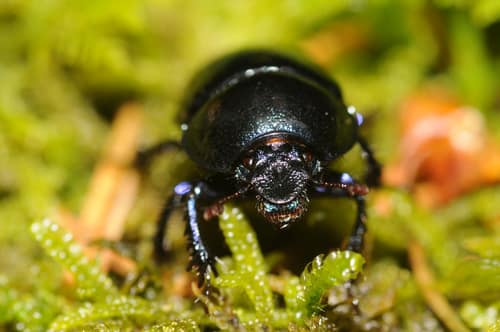
Same Family (c) Thomas Bresson, some rights reserved (CC BY) · cc-by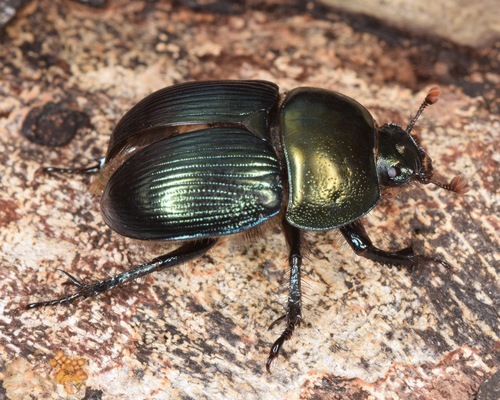
Same Family (c) skitterbug, some rights reserved (CC BY) · cc-by
Help improve the field guideSomething wrong?
Checking your Fauna account…Report a name, category, or profile issue for review.