
Bird
Oceanic Eclectus
Eclectus infectusAlso known as Oceanic Eclectus Parrot, Tongan Eclectus
Oceanic eclectus parrots were large, canopy-dwelling birds that once inhabited the lush tropical islands of Tonga, Vanuatu, and possibly Fiji. Bearing proportionally smaller wings and sturdier limbs than their surviving western kin, they were adapted for life on isolated island archipelagos with fewer native aerial predators. Like modern eclectus parrots, they likely relied on dense old-growth forests for hollow nesting trees and fruit before overhunting and land clearing following human settlement drove them to extinction.
FrugivoreTropical


—observations
—countries
—peak records
ExtinctConservation statusIUCN Red List categoriesLCNTVUENCREWEXExtinctRed List categories, explained →
Diet & preyFicus figs, Native forest drupes, Rainforest seeds
Predators
- Humans (historical)
- Pacific rats (historical nest predators)
ThreatsOverhunting by early human settlers, habitat loss, and introduced predators
HabitatsTropical lowland moist rainforests
Life span20–30 years (estimated from living congeners)
Classification
- FamilyPsittacidae
- SpeciesEclectus infectus
Range data is not available yet.
Interaction riskLow
- Low
- Moderate
- High
- Very high
- Why interaction risk is low
- Extinct; safe to study via museum specimens and fossil collections.
Responsible observation
- Museum Collections: Examine subfossil bones preserved in academic and natural history institutions.
- Historical Records: Study 18th-century sketches from the d'Entrecasteaux expedition to explore potential late survival in Vanuatu.
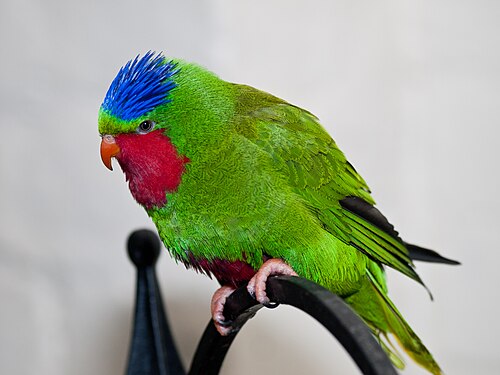
Former Neighbor William Warby from London, England / CC BY 2.0 · cc-by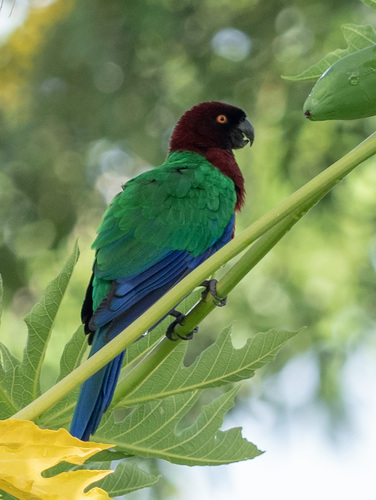
Former Neighbor (c) William Stephens, some rights reserved (CC BY), uploaded by William Stephens · cc-by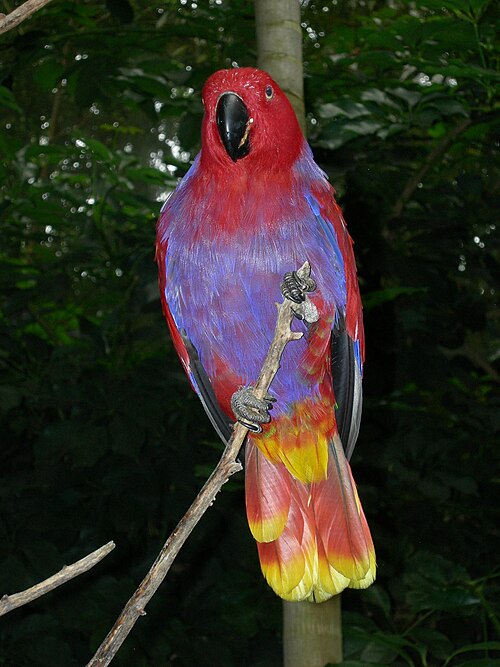
Close Relative Selena N. B. H. from Carrboro, USA / CC BY 2.0 · cc-by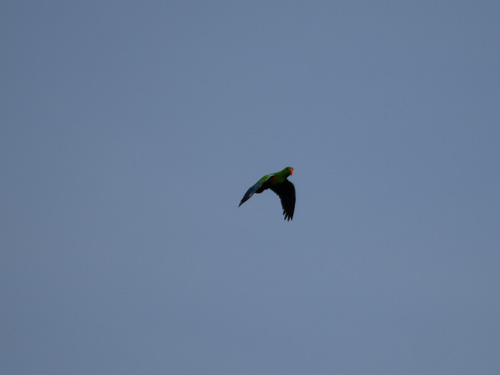
Close Relative no rights reserved · cc0
Help improve the field guideSomething wrong?
Checking your Fauna account…Report a name, category, or profile issue for review.