
Reptile · GBIF taxon 10666039
Armenian Viper
Vipera raddeiAlso known as Radde's Viper, Armenian Mountain Viper, Rock Viper
Armenian vipers blend seamlessly into high-altitude scree slopes and boulder fields across the Armenian Highlands, relying on cryptic patterning to ambush small rodents and lizards. Raised horn-like supraocular scales give their heads a fierce profile while shielding their eyes from glare among sun-baked rocks. During cool mountain mornings, they bask on exposed stone before retreating deep into underground crevices to escape midday heat.
VenomousAlpineReptile
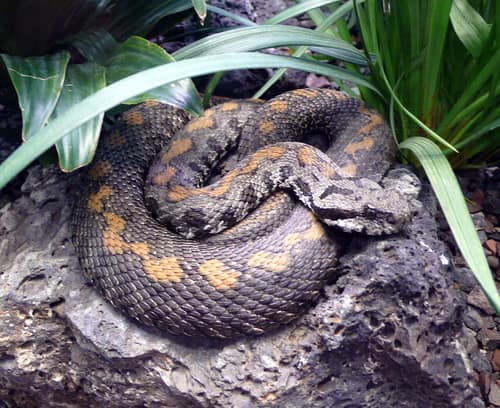
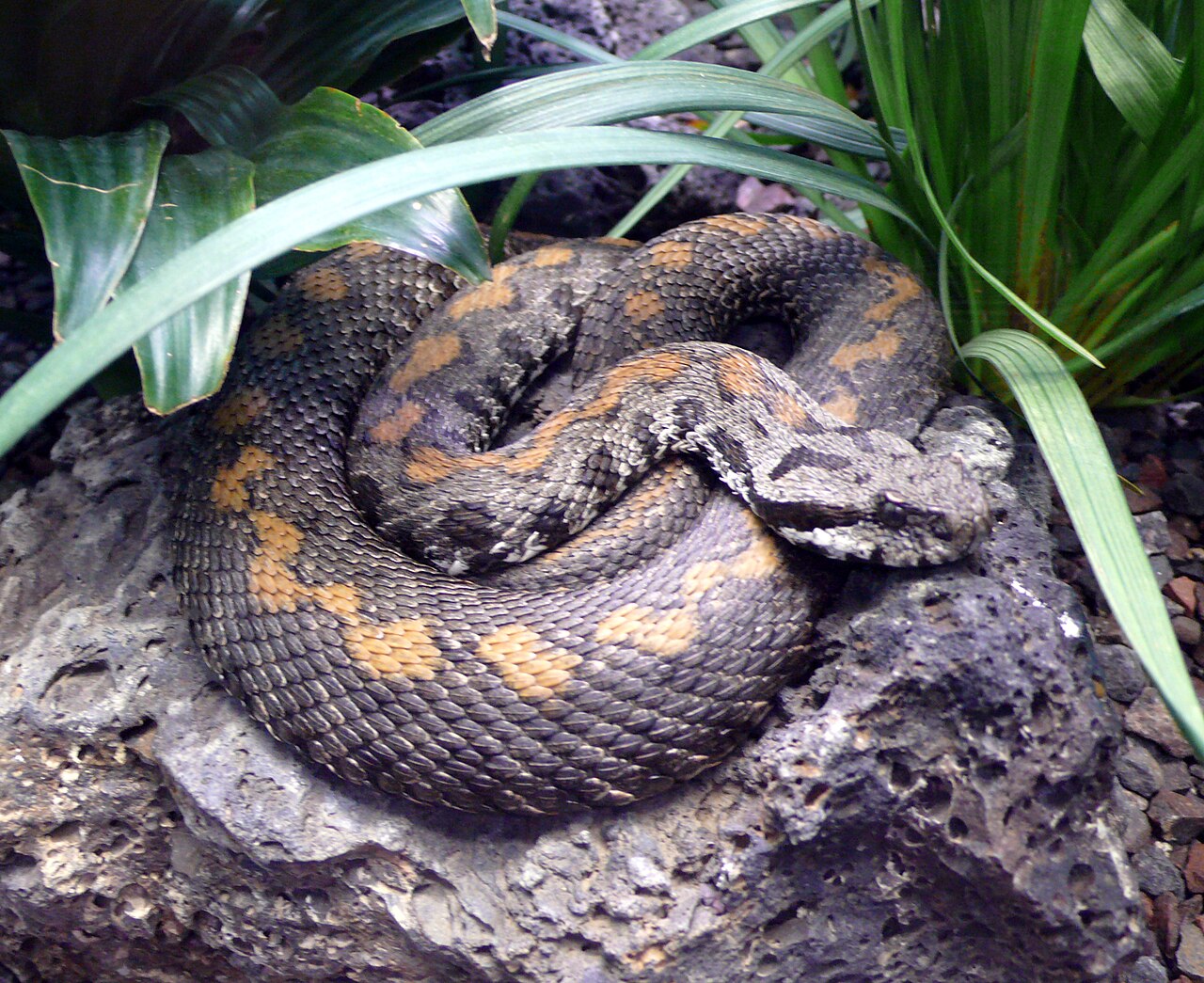
Licensed referenceTim Vickers / Public domain · cc0
—observations
—countries
—peak records
Near ThreatenedConservation statusIUCN Red List categoriesLCNTVUENCREWEXNear ThreatenedRed List categories, explained →
Diet & prey
- Rodents
- Lizards
- Small birds
Predators
- Eagles
- Hawks
- Badgers
ThreatsPoaching for pet trade, venom collection, and habitat loss
HabitatsRocky mountain slopes, alpine meadows, and stone scree fields
Life span10 to 15 years
Size / weightNot available
Classification
- FamilyViperidae
- SpeciesVipera raddei
Range data is not available yet.
Interaction riskVery high
- Low
- Moderate
- High
- Very high
- Why interaction risk is very high
- Venomous bite requires urgent medical care; maintain a safe distance and never attempt to handle.
- Why it is dangerous
- Cytotoxic and hemotoxic venom causes severe local tissue damage, intense pain, and potential systemic hemorrhaging.
- How to recognize a risky encounter
- Look for prominent horn-like scales above each eye, a broad triangular head, and an orange-brown spotted pattern.
- What to do
- Keep at least two meters back, never corner the snake, and avoid reaching into rock crevices or under loose stones.
- What to notice
- Medium-sized stout viper with raised eye scales, restricted to high-altitude rocky terrain in the Caucasus region.
- Support conservation
- Obscure location data on public photos and refrain from disturbing stone piles or thermal basking spots.
Responsible observation
- Maintain Distance: Stand at least two meters away to allow the snake space to retreat into rock crevices.
- Watch Your Step: Scan rocky ledges and crevices carefully before placing hands or feet during alpine hikes.
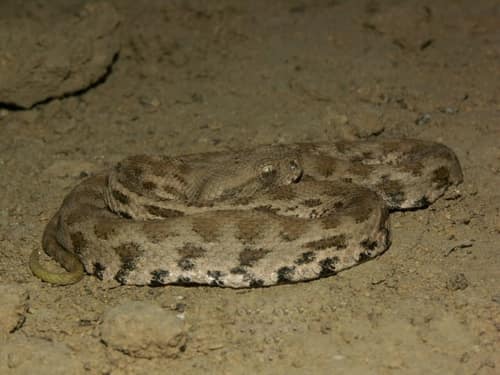
Sympatric Competitor Václav Gvoždík / CC BY-SA 2.5 · cc-by-sa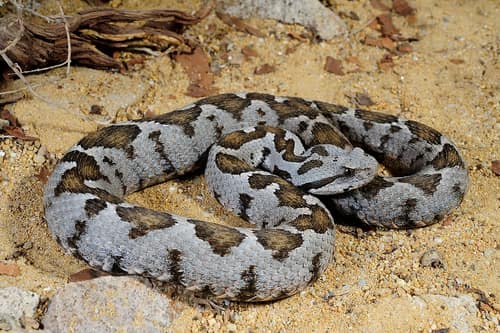
Close Relative Benny Trapp / CC BY 3.0 · cc-by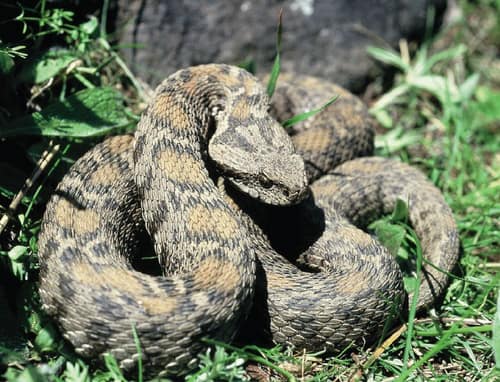
Close Relative Zuhair Amr / CC BY 3.0 · cc-by
Help improve the field guideSomething wrong?
Checking your Fauna account…Report a name, category, or profile issue for review.